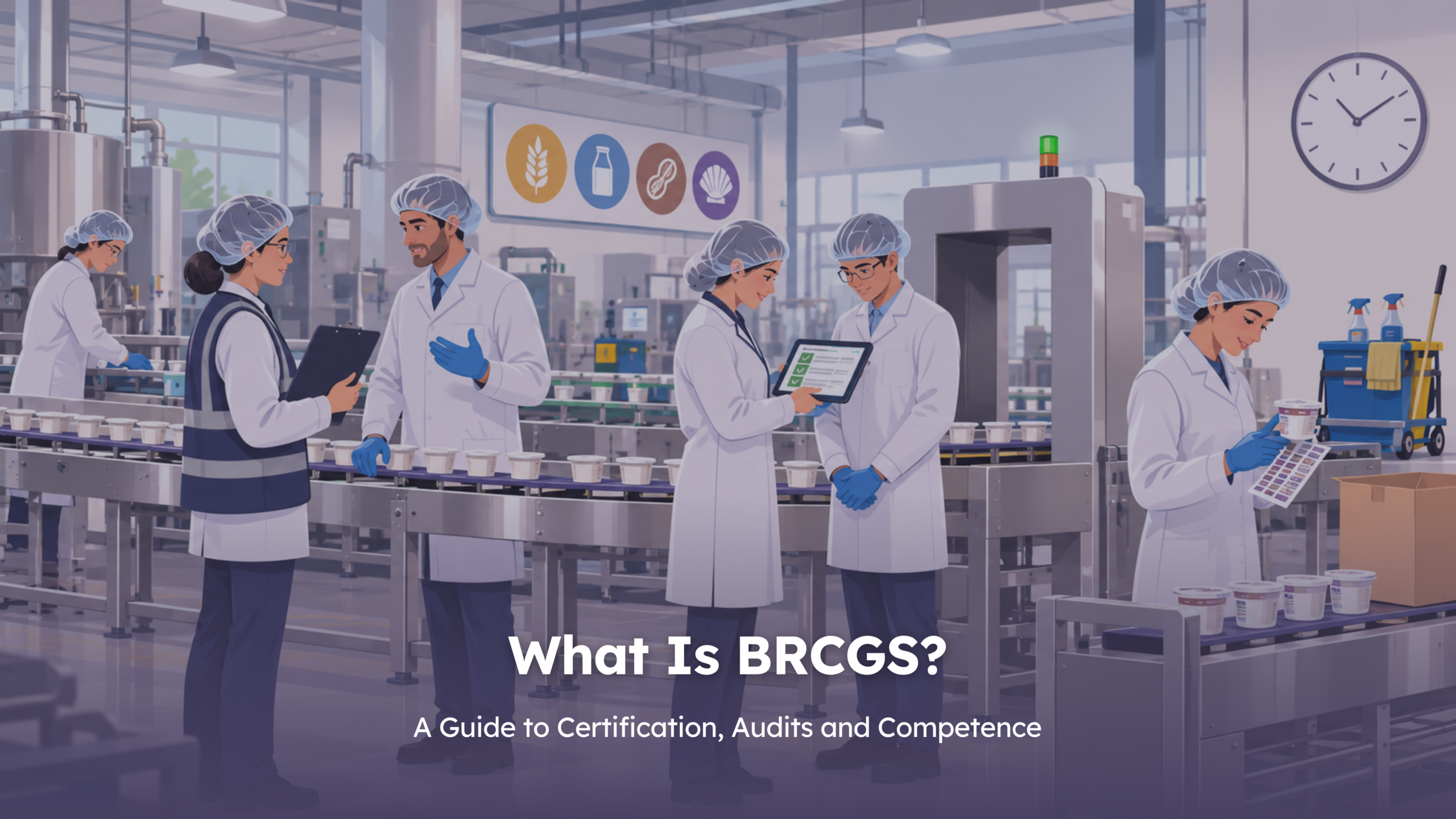
What Is BRCGS? A Guide to Certification, Audits and Competence
Skip to content

What Is BRCGS? A Guide to Certification, Audits and Competence

BRCGS Blog cover image

BRCGS certification opens doors to major retailers, food service buyers and brand owners, because it gives them independent assurance that a site produces safe, legal and authentic food. Indeed, many retailers, food service companies and manufacturers use it to assess the capabilities of their suppliers (BRCGS, 2022). However, the certificate itself only reflects how a site performed on the days the auditor was there.

This guide therefore goes further than most explanations of BRCGS. It covers what the standard is, how the audit and grading work, and what changed in Issue 9. More importantly, it explains why so many audit findings trace back to people rather than paperwork, and what that means for how you evidence competence.

What Is BRCGS?

BRCGS is a global certification programme for food safety and product safety, best known for the Global Standard Food Safety. Sites are audited by approved third-party certification bodies and graded from AA to D. The current edition is Issue 9, and BRCGS reports almost 40,000 certificated sites in over 130 countries (BRCGS, 2026a).

Quick factsDetail
OwnerBRCGS, the trading name of BRC Trading Ltd, part of LGC ASSURE (BRCGS, 2022)
Founded1996; Food Safety standard first published 1998 (BRCGS, 2022; BRCGS, 2026a)
Edition covered in this guideGlobal Standard Food Safety Issue 9, audited since 1 February 2023
Last reviewed2 November 2026
RecognitionBenchmarked by the Global Food Safety Initiative (GFSI)
GradesAA, A, B, C, D (with a + for unannounced audits)
Audit frequencyEvery 12 months, or every 6 months for C and D grades


What Does BRCGS Stand For?

BRCGS grew out of the British Retail Consortium (BRC), which is why many people in the industry still say “BRC” or “BRC certification”. The letters are commonly expanded as Brand Reputation through Compliance Global Standards. However, BRCGS itself trades simply under its initials, and the standard describes BRCGS as the trading name of BRC Trading Ltd, part of LGC ASSURE (BRCGS, 2022). In practice, therefore, BRC, BRCGS and “the BRC standard” all refer to the same scheme.

The organisation was founded in 1996, and the Global Standard Food Safety was first published in 1998 to give retailers one consistent way to assess their suppliers (BRCGS, 2022; BRCGS, 2026a). Since then, it has been revised regularly, with each new issue reflecting changes in food safety thinking and in the Global Food Safety Initiative (GFSI) benchmarking requirements.

Which BRCGS Standards Exist?

BRCGS now operates 10 certification standards (BRCGS, 2026a). Although this guide focuses on Food Safety, the same principles of hazard control, management commitment and competent people run through the whole family.

StandardWho it is for
Food SafetyFood manufacturers, processors and packers
Packaging MaterialsManufacturers of food and consumer product packaging
Storage and DistributionWarehousing and logistics operations handling food, packaging or consumer products
Agents and BrokersBusinesses that trade products without manufacturing or storing them
Consumer ProductsManufacturers of personal care, household and general merchandise products
RetailRetailers managing the safety and legality of the products they sell
Gluten-FreeManufacturers producing gluten-free products
Plant-BasedManufacturers of plant-based foods free from animal-derived materials
Ethical Trade and Responsible SourcingOrganisations assuring labour and sourcing practices in their supply chain

Source: BRCGS (2026a); scope descriptions summarised from Global Standards (2026), a certification body.

Why GFSI Benchmarking Matters

GFSI does not certify anyone itself. Instead, it benchmarks certification schemes against a common set of requirements, so that a buyer can accept any recognised scheme in place of its own supplier audit. The BRCGS Food Safety standard is GFSI-benchmarked, which is why one certificate can satisfy several customers at once and reduce the number of separate customer audits a site has to host (BRCGS, 2022).

👉🏻 Suggested Reading: What Is Competency Management? And Why Most Organisations Are Getting It Wrongexplains the difference between training completion and verified, evidenced competence.

What Does BRCGS Issue 9 Cover?

Issue 9 of the Global Standard Food Safety was published in August 2022, and certification against it began on 1 February 2023 (BRCGS, 2022). Its stated focus areas include developing product safety culture, aligning with the Codex General Principles of Food Hygiene, and expanding audit options to include remote technology. The requirements sit in nine sections.

SectionWhat it covers
1. Senior management commitmentPolicy, food safety and quality culture plan, objectives, management review, resources
2. The food safety plan (HACCP)A HACCP-based plan following the Codex principles, built by a multidisciplinary team
3. Food safety and quality management systemDocument control, internal audits, supplier approval, traceability, corrective action, recall
4. Site standardsBuilding fabric, equipment, maintenance, chemical and foreign-body control, hygiene, pests
5. Product controlProduct design, labelling, allergens, authenticity, packaging, testing, release
6. Process controlControl of operations, labelling and pack control, quantity control, calibration
7. PersonnelTraining, personal hygiene, medical screening, protective clothing
8. Production risk zonesExtra controls for high-risk, high-care and ambient high-care areas
9. Traded productsProducts stored on site but not manufactured there

The 12 Fundamental Clauses

Twelve requirements are designated as fundamental, because BRCGS considers them crucial to an effective food safety operation. Crucially, a major non-conformity against the statement of intent of any one of them leads to non-certification at an initial audit, or withdrawal of an existing certificate (BRCGS, 2022). In other words, a site cannot “score” its way past a failure here.

ClauseFundamental requirement
1.1Senior management commitment and continual improvement
2The food safety plan (HACCP)
3.4Internal audits
3.5.1Management of suppliers of raw materials and packaging
3.7Corrective and preventive actions
3.9Traceability
4.3Layout, product flow and segregation
4.11Housekeeping and hygiene
5.3Management of allergens
6.1Control of operations
6.2Labelling and pack control
7.1Training: raw material handling, preparation, processing, packing and storage areas

Notably, training (7.1) is the only fundamental clause in Section 7, Personnel. Even so, several of the others, such as control of operations, labelling and allergen management, depend on operatives doing the right thing at the right moment. That point becomes important when looking at where audits actually fail.

What About BRCGS Issue 10?

Issue 10 is in development, but it has not been published, so Issue 9 remains the standard sites are audited against. BRCGS opened applications for a Technical Working Group in January 2026, with the first meeting planned for 1 April 2026 and 12 to 14 meetings expected (BRCGS, 2026c). By August 2026, it had received more than 570 applications and said only that it would share updates as development progresses (BRCGS, 2026b). Consequently, any article listing confirmed Issue 10 requirements is speculating. The sensible course is to strengthen your Issue 9 evidence, because that is what any new issue will build on.

How Does BRCGS Certification Work?

Certification follows a defined route, and BRCGS sets it out in eight steps (BRCGS, n.d.):

  1. Get started: read the standard and its interpretation guideline, then contact a BRCGS-approved certification body.
  2. Learn: train the people who will implement and maintain the system.
  3. Review: carry out a self-assessment gap analysis and form an implementation team.
  4. Prepare: build an action plan, complete risk assessments, write procedures and run internal audits.
  5. Plan the audit: book the certification body and make sure the right staff will be available.
  6. On-site audit: the auditor observes procedures, reviews documents and interviews staff.
  7. Corrective action: close out non-conformities within 28 days of the audit.
  8. Certification: the certificate is issued within 42 calendar days of the audit.

In addition, the standard warns that a new site is unlikely to demonstrate full compliance less than three months after it starts operating (BRCGS, 2022). Realistically, then, the timeline depends far more on how long it takes to build up genuine records than on how quickly documents can be written.

What Happens During a BRC Audit?

A BRC audit typically lasts two to three days on site, and its length is set by a BRCGS calculator based on headcount, site size and the number of HACCP plans (BRCGS, 2022). The audit moves through an opening meeting, a production facility inspection, discussions with staff and managers, a document review, a vertical audit with a traceability challenge and mass balance, a label review, and a closing meeting.

The detail that most guides skip is where the time goes. According to the standard, approximately 50% of the audit is spent in production and site facilities, interviewing staff, observing processes and reviewing documentation with the relevant staff (BRCGS, 2022). Furthermore, the most senior operations manager must be available to discuss the site’s food safety and quality culture plan. A BRC audit is therefore as much a test of people as it is of paperwork.

Announced, Blended and Unannounced Audits

Audit optionHow it works
AnnouncedDate agreed in advance; at least one audit in every three years must be unannounced
Blended announcedUp to 50% of the audit done remotely, followed by an on-site audit; recertification only
UnannouncedVoluntary programme; the audit can fall any time in the four months before the due date

Because the mandatory unannounced audit can arrive on any normal operating day, the standard expects sites to be “audit ready” at all times (BRCGS, 2022). A site may nominate up to 10 days when an audit genuinely cannot happen, but it cannot refuse the auditor entry without having its certificate suspended.

How Are BRCGS Audits Graded?

Grades depend on the number and severity of non-conformities. A critical non-conformity is a critical failure on a food safety or legal issue. A major is a substantial failure against a statement of intent or clause, while a minor means a clause is not fully met but product conformity is not in doubt (BRCGS, 2022).

Grade (announced / unannounced)Non-conformities allowedNext audit
AA / AA+Up to 5 minors12 months
A / A+6 to 10 minors12 months
B / B+11 to 16 minors, or 1 major and up to 10 minors12 months
C / C+17 to 24 minors, or 1 major and 11 to 16 minors, or 2 majors and up to 10 minors (revisit required)6 months
D / D+25 to 30 minors, or 1 major and 17 to 24 minors, or 2 majors and 11 to 16 minors (revisit required)6 months
Not certificatedAny critical; any major against a fundamental clause; 3 or more majors; or more minors than grade D allowsFull re-audit, no sooner than 28 days

Corrective action, root cause analysis and a preventive action plan must reach the certification body within 28 calendar days. Moreover, at the next audit the auditor checks that the preventive action actually worked. Where it has not, a further non-conformity is raised against clause 1.1.12, which sits inside the fundamental requirement for senior management commitment (BRCGS, 2022).

How Much Does BRCGS Certification Cost?

There is no fixed price. The standard itself is free to download from the BRCGS Store, but sites pay the certification body’s audit fees plus a BRCGS service fee for every audit (BRCGS, 2022; BRCGS, n.d.). Audit fees scale with the calculated audit duration, so headcount, site size and the number of HACCP plans drive the bill. In addition, a C or D grade doubles the audit frequency to every six months and may require a paid revisit, which makes a weak grade an ongoing cost rather than a one-off disappointment. For an accurate figure, request quotes from two or three approved certification bodies.


Where Do Sites Lose Points in a BRC Audit?

The most common BRCGS non-conformities sit in Section 4, Site Standards. LRQA, a BRCGS certification body, analysed more than 72,000 audits and found that seven of the eight most frequent non-conformities fall in Section 4, with housekeeping and hygiene (clause 4.11.1) the most common worldwide and chemical control (clause 4.9.1.1) generating more than 10,000 findings (LRQA, 2026). Similarly, figures attributed to the BRCGS Annual Report 2024-25 put clause 4.11.1 at 4,715 non-conformities, with an average of 4.86 non-conformities per audit and 59% of all findings in Section 4 (FSNS, 2025).

At first glance, this looks like a buildings and cleaning problem. However, LRQA’s own reading of the data is more revealing. It describes these findings as “not a system failure, a consistency failure”, and notes that they rely on “controls carried out continuously, across shifts, by different people, under time pressure” (LRQA, 2026). In other words, the procedure usually exists. What varies is whether every person on every shift carries it out the same way.

That is the thread running through the five insights below.

1. The record clause and the competence clause ask different questions

Clause 7.1 is a fundamental requirement, and its statement of intent says that everyone whose work affects product safety, legality and quality must be demonstrably competent, through training, work experience or qualification (BRCGS, 2022). By contrast, clause 7.1.6 sets the minimum content of a training record: the trainee’s name and confirmation of attendance, the date and duration, the course title, the provider, and a reference to the material used.

Notice what that list does not contain. A record that satisfies 7.1.6 in full proves that someone sat through training on a given day. It does not prove that they can now do the task correctly. Consequently, a site can hold a complete, well-organised training file and still struggle to show the auditor demonstrable competence, which is the part that carries fundamental status. Clause 7.1.3 closes the gap by requiring sites to identify the competencies each role needs and to review the effectiveness of training, while 7.1.7 requires a routine review of staff competencies.

What the auditor wants to knowWhat a training record showsWhat competence evidence shows
Was this person trained?Yes, with a dateYes, with a date
Can they do this task correctly now?Not addressedObserved assessment against defined criteria, with assessor sign-off
Is that still true after a change?Not addressedReassessment triggered by the change
Did the training work?Not addressedEffectiveness review, as clause 7.1.3 requires

In practice: a ready-meals manufacturer’s mandatory unannounced audit arrives at 10pm, when a third of the high-care team are agency workers. The agency holds their food hygiene certificates, and the site holds a signed induction sheet for each one. Clause 7.1.1 requires agency and temporary staff to be trained before starting work and supervised throughout, and clause 7.1.4 extends allergen training to them (BRCGS, 2022). So when the auditor asks an agency operative to explain the high-care changing procedure, the induction sheet cannot answer for them.

What good looks like: a short practical sign-off for each agency worker on high-care entry and allergen procedures, completed before their first shift and visible to the night supervisor.

2. Issue 9 widened who needs a competency assessment

Under clause 7.1.2, training and competency assessment must be in place for anyone engaged in activities relating to control measures and critical control points (BRCGS, 2022). Commentary on the Issue 9 changes identifies “control measures” as a new addition to this clause (ASC Food Safety, 2026). As a result, a training matrix that flags assessments only for CCP monitors may miss the people running other validated controls, which clause 2.7.4 requires wherever a hazard is controlled by a prerequisite programme.

In practice: a bakery runs nut-containing and nut-free products on the same line, separated by a validated changeover clean. The hygiene leader who wrote the procedure has moved to days, and the late-shift changeover is now run by an operative who learned it by shadowing. There is a training record for the shadowing but no competency assessment, even though allergen management (5.3) and training (7.1) are both fundamental clauses.

What good looks like: for every control measure in the HACCP plan, the site can name who operates it and show when their competence was last assessed.

3. “Retrained the operator” is a risky root cause

For every non-conformity, the site must submit root cause analysis and a preventive action plan, and at the next audit the auditor checks whether that action actually prevented recurrence. If it did not, a non-conformity is raised against clause 1.1.12, which sits within the fundamental requirement for senior management commitment (BRCGS, 2022).

Consequently, “operator retrained” is only a credible preventive action if the site can show the retraining worked. Without a follow-up competence check, a repeat of the same issue turns one finding into two, and one of them is against management commitment.

4. Competence goes out of date when things change, not when the calendar says

Most training matrices track competence by date, with an annual refresher or a two-year renewal. However, BRCGS also ties competence to events. For example, commissioning new equipment must include updating training (clause 4.6.3), approved changes to printed packaging must be communicated to goods-in staff (clause 3.5.2.2), and label checkers must be trained on the site’s labelling processes (clause 7.1.5) (BRCGS, 2022).

In practice: a snack manufacturer replaces its metal detector, typically a CCP, with a model that has a different test routine. Its operators were assessed on the old unit last year, so the matrix still shows them as competent on equipment that no longer exists. Similarly, when a dairy’s allergen declaration moves on new label artwork, packers may still check against the old reference, and labelling and pack control (6.2) is a fundamental clause.

What good looks like: a change to equipment or packaging automatically flags the affected operators as “reassessment due” until they have been observed working with the new version.

👉🏻 Suggested Reading: Training and Compliance Management in the Manufacturing Industry covers the UK regulatory landscape, the limits of spreadsheet-based training records and a free audit checklist.

BRCGS vs SALSA vs FSSC 22000: Which Do You Need?

For UK food businesses, the choice usually comes down to what your customers ask for and how large your operation is. SALSA is built for small and micro producers, while BRCGS and FSSC 22000 are GFSI-recognised schemes that buyers can accept in place of their own supplier audits.

SALSABRCGS Food Safety
Designed forUK and Irish producers with typically 1 to 50 full-time employeesFood manufacturers of any size, worldwide
GFSI-recognisedNo, by design (SALSA, n.d.b)Yes (BRCGS, 2022)
Audit patternAnnual, pre-arranged6 or 12 months, with one unannounced audit in every three years
StructurePractical requirements for smaller sitesPrescriptive clauses, nine sections, 12 fundamentals
Where it leadsDescribed by SALSA as a route to schemes such as BRCGSOne certificate shared with many customers via the BRCGS Directory

Sources: SALSA (n.d.a; n.d.b); BRCGS (2022); Lehmann Ingredients (2026), an ingredients supplier.

SALSA is run as a not-for-profit joint venture of the Food and Drink Federation, the NFU and UKHospitality, and it describes itself as a route to further schemes such as BRCGS (SALSA, n.d.a; n.d.b). For a growing producer, therefore, SALSA is often a stepping stone. Importantly, the people habits a site builds under SALSA, such as clear procedures and checked understanding, carry straight across when it moves up to BRCGS.

BRC Audit Readiness: The Competence Evidence Checklist

The table below focuses on the people side of an Issue 9 audit, because that is where most generic checklists stop at “training records available”. Each row asks for evidence an auditor can verify on the floor, not just in a folder.

ClauseWhat the auditor will look forSelf-check question
7.1 (fundamental)Demonstrable competence for everyone whose work affects product safety, legality and qualityCan you show competence evidence, not only attendance, for every role on today’s rota?
7.1.1Agency, temporary staff and contractors trained before starting and supervisedCould a night supervisor confirm an agency worker’s sign-off before their first shift?
7.1.2Training and competency assessment for CCPs and control measuresIs every control measure in the HACCP plan linked to named, assessed operators?
7.1.3Role competencies defined, training effectiveness reviewed, training in the right languageDo you review whether training worked, and is it delivered in the trainee’s language?
7.1.4Allergen awareness and site allergen procedures for all, including engineers and contractorsWould a contract engineer pass a two-minute allergen question on the floor?
7.1.5Labelling and packing training for relevant staffDoes a packaging change trigger a briefing for everyone who checks labels?
7.1.6Complete training records, including agency-delivered trainingCan you retrieve any person’s records in under a minute, including agency staff?
7.1.7Routine review of staff competencies, with refresher, coaching or mentoringIs competence reviewed when things change, not only on an anniversary?
2.1.1HACCP team leader able to demonstrate competence, experience and trainingIs the team leader’s HACCP training current and evidenced?
3.4.2Trained, competent and independent internal auditorsDoes anyone audit their own area?
4.6.3Training updated when new equipment is commissionedDoes commissioning sign-off include operator reassessment?

How Workprove Helps Food Manufacturers Prove Competence for BRCGS

Every example above shares one root: the site knew who had been trained, but could not easily show who was competent for a specific task, on a specific line, today. Workprove is built to close exactly that gap.

  • Competence linked to the task, not just the person. Training and competency requirements can be mapped to specific roles, production lines, processes and CCPs, so the matrix answers “who can run this changeover?” rather than “who attended a course?”
  • Assessments with evidence attached. Observed assessments carry defined criteria, assessor sign-off, dates and supporting evidence, which is the demonstrable competence that clause 7.1 asks for.
  • Change-driven reassessment. Version control with automatic supersession means that when a procedure or work instruction is updated, the people who need to be re-briefed or reassessed are flagged, rather than staying green on the matrix.
  • Agency and contractor visibility. Temporary, agency and contract workers sit in the same live matrix as employees, so a supervisor can confirm sign-off before a first shift.
  • Audit-ready reporting. Records can be exported for BRCGS, SALSA, FSSC 22000 and customer audits, so evidence can be pulled together quickly when an auditor asks.

👉 Learn more: Training and skills management software for food and beverage production

See how live, task-level competence evidence could look across your own production lines. Take a self-guided tour of Workprove, or speak with a Workprove expert about building audit-ready competence for your next BRC audit.

Take a Tour         Speak with Experts     
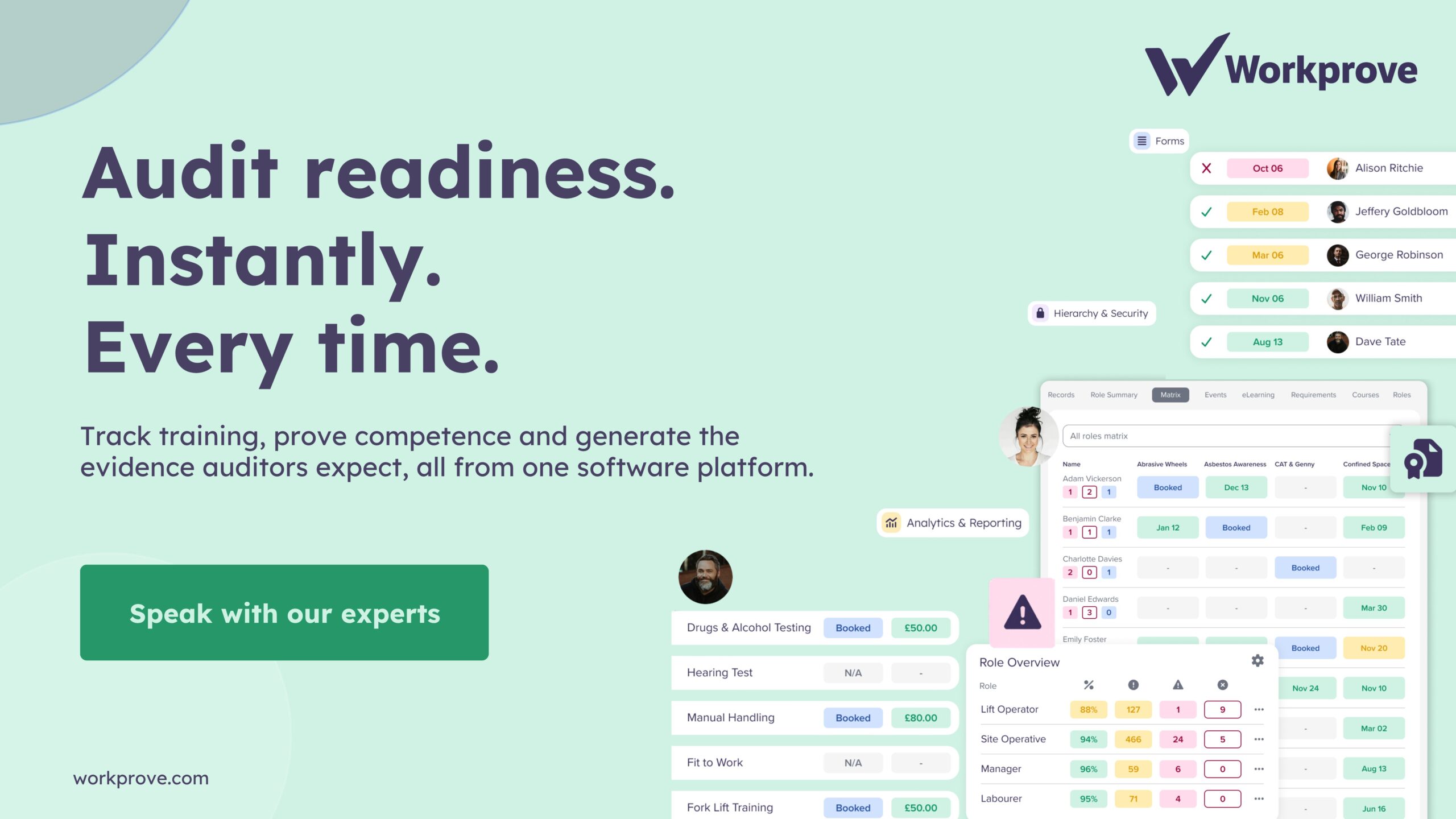
Workprove gives organisation audit-readiness and visibility instantly, every time with smart training tracker and skills tracker. blog image png

Conclusion: BRCGS Rewards Proof, Not Paperwork

BRCGS is often treated as a documentation exercise, and the grading table encourages that view, because it counts findings. Yet the standard itself points somewhere else. Around half the audit is spent on the floor, the only fundamental clause in the Personnel section demands demonstrable competence, and the most common findings describe controls that drift between people and shifts.

The sites most likely to hold an AA, therefore, are not the ones with the thickest training files. They are the ones that can show, for any task an auditor points at, who is competent to do it and how they know, including on the night shift, after the new detector arrived and the week the labels changed. Sites that treat clause 7.1 as a records clause can pass audits, but they leave their grade exposed to every routine change on the line. Treating competence as live, task-level evidence is the more reliable route to a strong grade, and it happens to make the food safer too.

Frequently Asked Questions

What does BRCGS stand for?

BRCGS is commonly expanded as Brand Reputation through Compliance Global Standards. It grew out of the British Retail Consortium, which is why the scheme is still widely called BRC. Today, BRCGS is the trading name of BRC Trading Ltd, part of LGC ASSURE.

Is BRC the same as BRCGS?

Yes, BRC and BRCGS refer to the same certification scheme. “BRC” is the older name, taken from the British Retail Consortium that created the original standard in 1998, while BRCGS is the current name. A “BRC audit” and a “BRCGS audit” are the same thing.

What is a BRC audit?

A BRC audit is an independent assessment of a site against a BRCGS standard, carried out by an approved certification body. It usually lasts two to three days, with around half the time spent on the production floor observing processes and interviewing staff. The result is a grade from AA to D.

Is BRCGS certification a legal requirement in the UK?

No, BRCGS certification is voluntary, and there is no law requiring it. However, many retailers, food service companies and brand owners use it to approve suppliers, so in practice it is often a commercial requirement for supplying them.

What are the BRCGS audit grades?

Announced audits are graded AA, A, B, C or D, and unannounced audits add a plus sign, such as AA+. AA allows up to five minor non-conformities. Any critical non-conformity, or a major against a fundamental clause, means the site is not certificated.

How long does BRCGS certification last?

Sites graded AA, A or B are re-audited every 12 months, while C and D sites are re-audited every six months. In addition, at least one audit in every three years must be unannounced, even for sites on the announced programme.

What is the current BRCGS standard?

The current standard is the Global Standard Food Safety Issue 9, published in August 2022 and audited since 1 February 2023. Issue 10 is in development, but BRCGS has not confirmed a publication date, so Issue 9 remains the standard sites are certified against.

What are the BRCGS training requirements?

Clause 7.1 of Issue 9 is a fundamental requirement. It requires everyone whose work affects product safety, legality and quality to be demonstrably competent. That includes agency staff, temporary workers and contractors, who must be trained before starting work and supervised throughout.

What is the BRCGS Directory?

The BRCGS Directory is the official online record of certification status. Audit reports are uploaded to it within 49 days of the audit, and sites can share their reports with customers through it. It is also the place to check that a supplier’s certificate is valid.

References

ASC Food Safety (2026) BRCGS for Food Safety Issue 9 changes, Part 7: Personnel (R7). Available at: https://ascfoodsafety.com/brcgs-for-food-safety-changes-personnel/. Commercial consultancy source.

BRCGS (2022) Global Standard Food Safety, Issue 9. London: BRCGS. Available free from the BRCGS Store at https://www.brcgs.com/store/.

BRCGS (2026a) About us. Available at: https://www.brcgs.com/about-us/.

BRCGS (2026b) Behind the scenes of Food Safety Issue 10, 11 August. Available at: https://www.brcgs.com/about-brcgs/news/2026/behind-the-scenes-of-food-safety-issue-10.

BRCGS (2026c) Join the Technical Working Group for Food Safety, Issue 10, 9 January. Available at: https://www.brcgs.com/about-brcgs/news/2026/food-10-twg.

BRCGS (n.d.) Guide to Certification: Food Safety Standard. Available at: https://www.brcgs.com/media/k5airhrq/guide_food_safety.pdf.

FSNS (2025) Top 10 reasons for a BRC audit non-conformity [2025]. Available at: https://fsns.com/top-10-reasons-for-a-brc-audit-non-conformity-data/. Commercial certification body; reports BRCGS Annual Report 2024-25 figures second-hand.

Global Standards (2026) BRCGS Standards and Scopes. Available at: https://www.globalstd.com/wp-content/uploads/2026/05/BRCGS-Standards-and-Scopes_WEB.pdf. Commercial certification body.

Lehmann Ingredients (2026) What is BRCGS? A plain English guide to the certification. Available at: https://lehmanningredients.co.uk/what-is-brcgs-a-plain-english-guide-to-the-certification/. Commercial supplier source.

LRQA (2026) Top BRCGS Food Safety non-conformities 2025-2026. Available at: https://assets.lrqa.com/m/16a77aca45cb1eb7/original/BRCGS-Food-Safety-non-conformities-Datasheet-Global-26.pdf. Commercial certification body.

SALSA (n.d.a) About SALSA. Available at: https://www.salsafood.co.uk/about.

SALSA (n.d.b) Frequently asked questions. Available at: https://salsafood.co.uk/faq.

You might also like

View All Resources
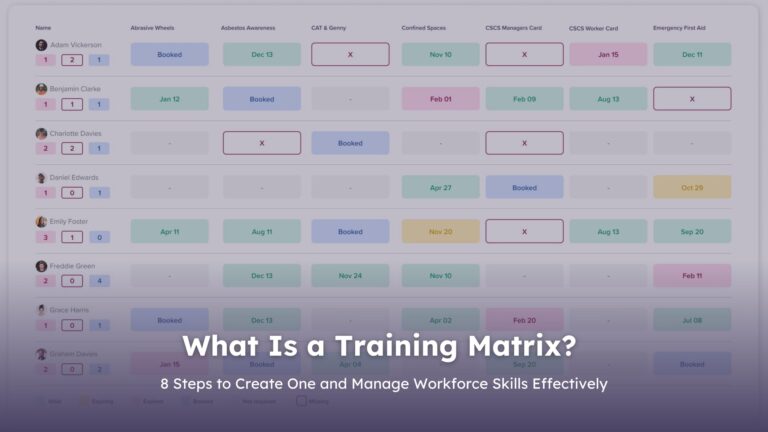
What is a training matrix blog
Blog

What is a Training Matrix? 8 Steps to Create One Effectively

Find Out More
Standard Operating Procedures (SOP) full blog by Workprove
Blog

What Is a Standard Operating Procedure? The UK Guide to SOPs, Competence and Version Control

Find Out More