What Is Competency Management?
Skip to content

What Is Competency Management? And Why Most Organisations Are Getting It Wrong and How to Fix it?

Competency management full blog cover image

Training records are not evidence of competence. They are evidence that someone attended something. That distinction, obvious when stated plainly, is one that most UK organisations quietly ignore and it is precisely why compliance failures, near-misses, and unsuccessful audits continue to occur in businesses that have extensive training records and genuinely believe their workforce is well-prepared.

Competency management exists to close that gap. However, in practice, the term gets used so loosely, and implemented so inconsistently, that the gap remains open. This guide explains what competency management actually is, where most organisations go wrong, and how a structured approach changes the picture entirely.

What Competency Management Actually Means

The Health and Safety Executive defines competence as the combination of training, skills, experience, and knowledge that a person has, and their ability to apply them to perform a task safely. That final clause is the part most organisations skip. Ability to apply. Not ability to recall from a classroom or willingness to sit through an e-learning module. But actually demonstrated, observable capability in the context of the actual job.

Competency management, therefore, is the process of defining what that looks like for every role in your organisation, assessing people against those definitions, and maintaining a clear, current picture of where capability exists and where it does not.

In a well-functioning system, three things are always visible: what the standard is for a given role, whether each person meets that standard today, and what is in place to close any gap. When those three things are visible in real time, an organisation is genuinely managing competence. When they are not, it is managing paperwork.
The Three Layers of Workforce Capability Most Organisations Only Half-Manage

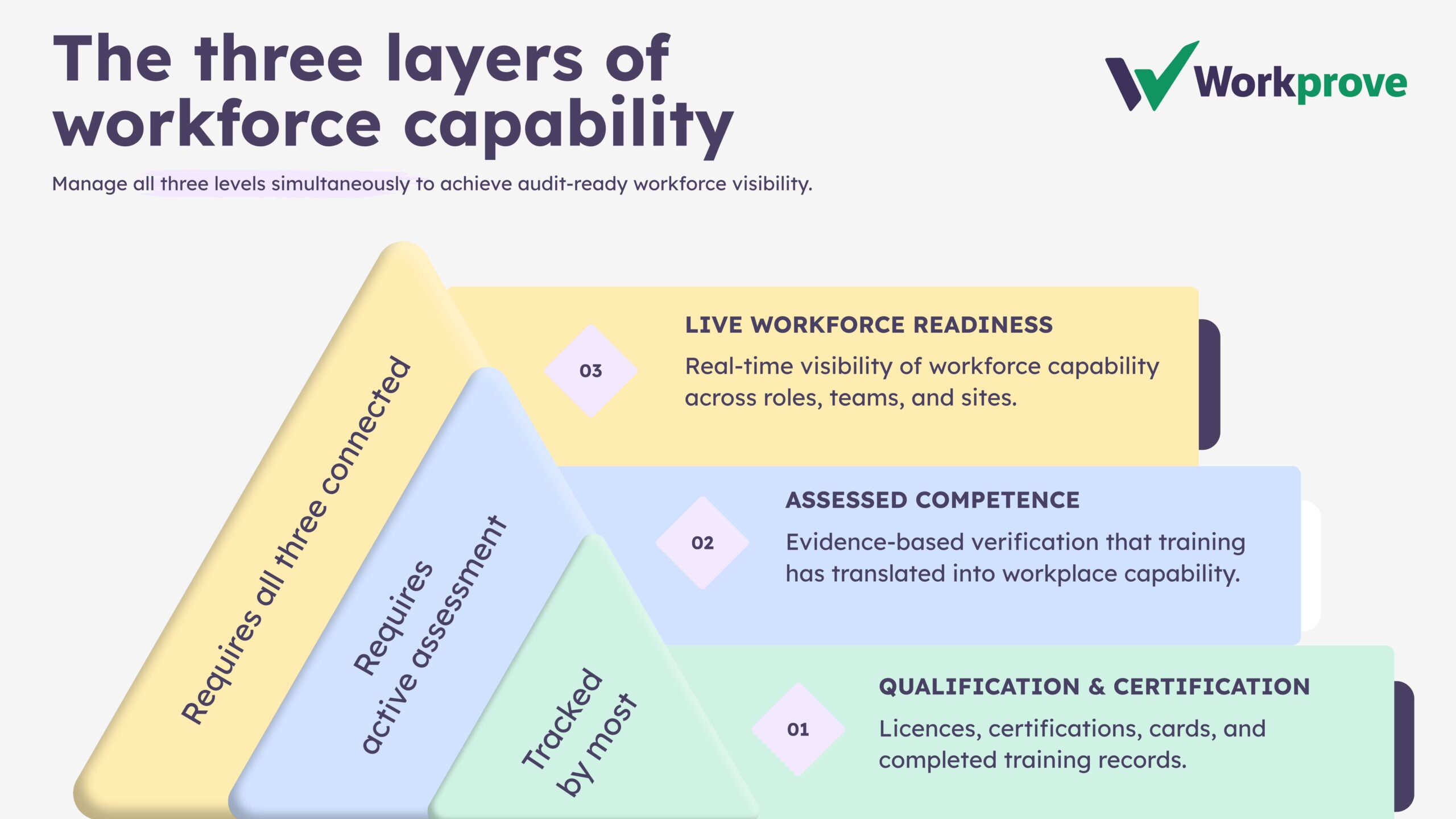
Think about workforce capability in three distinct layers. Most organisations only manage the first.

Firstly, it’s the qualification and certification – the licences, cards, and course completions that prove someone has been trained. This is the layer that ends up in spreadsheets and filing cabinets, and it is the layer auditors can most easily see. Consequently, it is the layer organisations prioritise.

Secondly, assessed competence, which means the structured evaluation of whether a person can actually perform the task they are trained for, in the environment they work in, to the required standard. This layer requires defined criteria, consistent assessors, and a process for capturing evidence. It cannot be inferred from a certificate.

Lastly, live workforce readiness shows the real-time picture of who is currently capable of doing what, across roles, teams, and locations. This layer only exists if the first two are maintained actively and connected to each other. In most organisations, it does not exist at all.

Thus, Competency management is done properly if all three layers are maintained simultaneously. The difficulty is that the second and third layers decay without active maintenance and that decay is typically invisible until an incident or an audit forces it into view.

three layers of workforce capability infographic

How Competency Drift Happens Without Anyone Noticing

There is a phenomenon in competency-managed environments worth naming directly: competency drift. It refers to the gradual, undetected decline in actual workforce capability that occurs when assessments are infrequent, when role changes go unrecorded in the competency system, and when line managers assume a previous assessment still reflects current performance.

A construction site provides a clear illustration. A site operative is assessed as competent on a specific scaffolding system two years ago. Since then, the company has adopted a different configuration on the current project. The operative has been working with the new system for six months under informal supervision, but no formal reassessment has been triggered. The training record shows a competent person. The actual situation is a worker who has adapted to new conditions without verified assessment against those conditions.

Competency drift is especially common after three events: equipment or technology upgrades, role changes or expanded responsibilities, and return from extended absence. All three introduce new variables that existing assessments may not cover. Without a system that flags these trigger points and prompts reassessment, the drift remains invisible, until it matters.

Why Compliance Failures Are Often Verification Problems, Not Training Problems

Here is a distinction that does not appear often enough in compliance conversations: the difference between a training failure and a verification failure. They produce the same outcome — a worker who cannot safely perform a task but they have completely different root causes.

A training failure means the organisation did not provide the right training. The solution is straightforward: identify the gap and fill it.

A verification failure means the organisation provided training but did not confirm it translated into competence, that the competence was maintained over time, or that it applied to the specific context in which the worker operated. The training record exists. The competence does not.

In the majority of UK audit failures and workplace incidents involving workforce capability, the root cause is a verification failure. The HSE does not ask whether the organisation ran the course. It asks whether the worker was competent to carry out the task. Those are not the same question, and the difference in the answer can determine whether an organisation receives an improvement notice or faces prosecution.

This is precisely why organisations that invest heavily in training provision can still fail audits. They have solved the wrong problem. They have improved the volume of training without improving the rigour of verification.

👉🏻 Suggested Reading: Audit-Ready in 30 Days: The Complete Compliance Roadmap for UK Businesses A practical roadmap covering what auditors actually look for and how to demonstrate genuine compliance, not just training completion.

Sector Realities: How Competency Management Works in Practice

In safety-critical sectors, it is a legal and operational necessity. Under the Health and Safety at Work Act 1974 and the Management of Health and Safety at Work Regulations 1999, employers must be able to demonstrate that workers are competent to carry out the tasks assigned to them. In regulated industries, that obligation does not stop at producing a training certificate. It extends to providing structured, evidenced proof that workers can apply what they have been trained on, in the conditions they actually work in. For sectors where a competency failure can result in injury, prosecution, or loss of contract, the distinction between trained and verified is not administrative. It is existential.

The gap between trained and competent shows up differently depending on the sector, but the structural problem is the same. In food production under BRC Global Standards, for example, training completion is a hygiene factor. Auditors want documented, assessed competence with defined criteria and assessor sign-off. A site that cannot produce that is not failing on training volume. It is failing on verification. The same pattern plays out across construction, logistics, health and social care, and facilities management, with different regulatory frameworks and different consequences.

👉🏻 Suggested Reading: Workprove Across Industries: Training and Compliance Management Built for Your Sector shows how the competency management challenge applies across the sectors Workprove supports.

Why Spreadsheets, LMS Platforms, and Scattered Systems Are Not Enough

This is where the practical reality bites. Most organisations attempting competency management are doing it across a patchwork of tools: a spreadsheet for the skills matrix, an LMS for training delivery, paper-based or emailed assessment forms, and a folder structure that only one person truly understands. Each tool does something. None of them do everything. And critically, none of them do it together.

The result is that a training completion lives in the LMS, an assessment result lives in a spreadsheet, a certificate scan lives in a shared drive, and the question of whether a specific worker is actually competent today requires someone to manually cross-reference all three. That is not competency management. That is competency archaeology.

The table below shows where the real differences lie.

What you need to manage competenceSpreadsheetLMSWorkprove
Role-based competency frameworkManual and hard to maintainNot designed for competenceBuilt-in role and skill standards
Structured competency assessmentsNo assessment toolsQuiz-based onlyStructured assessments with scoring
Evidence capture (photos, video, sign-off)Not supportedNot supportedEvidence linked to assessments
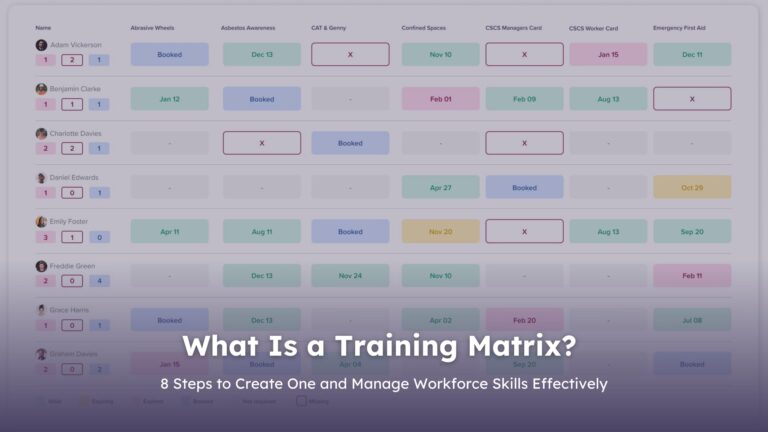
Live skills matrixManual updatesTracks training onlyAuto-updated from assessments
Competency gaps visibilityManual filteringLimited visibilityInstant gap analysis
Reassessment and expiry managementCalendar remindersCourse expiry onlyAutomated competency alerts
Audit-ready evidenceManual compilationTraining records onlyInstant evidence export
Training linked to gapsNot connectedLimited linkageDirectly linked to development actions
Real-time manager visibilityFile dependentUsually availableRole-based real-time access

The Four Most Expensive Competency Management Mistakes

Most competency management failures come from a few predictable mistakes. Spotting them early is the first step to avoiding them.

  • Using fixed reassessment intervals only. A worker returning from long-term absence or taking on new responsibilities should not wait for the next scheduled review. Competency management needs trigger-based reassessment, not just calendar-based checks.
  • Allowing assessor inconsistency. If two assessors judge the same worker differently, the framework is not clear enough or assessors are not properly calibrated. The result is unreliable data and a skills matrix that cannot be trusted.
  • Treating competency frameworks like job descriptions. A job description explains responsibilities. A competency framework defines what someone must be able to do, how well, and how that competence is assessed.
  • Leaving it entirely with HR. When HR owns competency management alone, it becomes admin. The strongest systems involve line managers, because they use competence data to manage real operational risk.

How Workprove Supports Competency Management

Workprove is built for organisations where workforce competence needs to be maintained continuously, not assessed periodically and filed away.

Most teams managing competency today are doing it across disconnected systems: tracking training in one place, storing assessments somewhere else, and chasing evidence manually before every inspection. Workprove replaces that with a single connected cycle:

  • Role-based frameworks define the standard for every skill and role across your organisation
  • Structured assessments apply those criteria consistently across every site and team, reducing assessor subjectivity
  • Gaps surface automatically in a live skills matrix, visible by person, role, team, or site
  • Each gap links directly to the training needed to close it, so visibility and action sit in the same place
  • Every assessment carries dated, evidenced, exportable records so audit preparation takes seconds, not hours

For organisations managing training compliance risk across multiple sites, preparing for regulatory inspection, or operating in environments where a competency gap carries real consequences, that connection between visibility and action is what makes the difference.

Take a Product Tour — explore the platform without any commitment.
Speak with Experts — talk through your specific compliance and competency challenges.

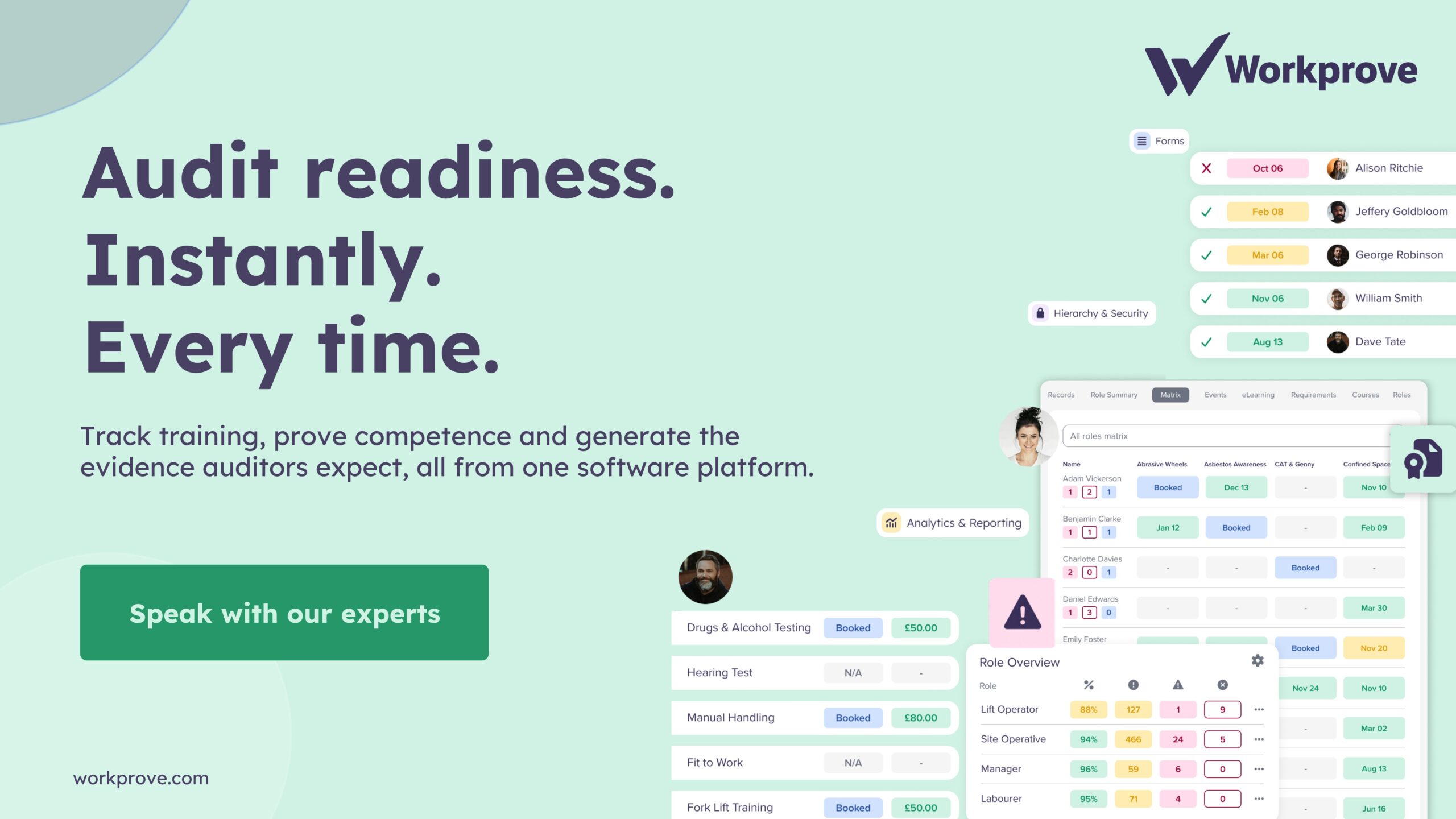
with workprove, get audit-readiness and competency management instantly, every time. blog image png

Conclusion

The question competency management exists to answer is straightforward: right now, is every person in your organisation capable of doing what you are asking them to do? Not at their last training date. Today.

Most organisations cannot answer that with confidence. Not because they have not invested in training, but because they have built systems designed to record activity rather than verify capability. The gap between those two things is where compliance risk lives.

Closing it does not require more training. It requires a clearer standard, a more consistent process for assessing against it, and a system that keeps the picture current without depending on someone to manually hold it together. That is what competency management, done properly, looks like.

Frequently Asked Questions

What is competency management?
It is the process of defining what good performance looks like for each role, assessing people against those standards, and maintaining a live picture of where capability exists and where it does not. It goes beyond recording training completion.

What is the difference between competency management and training management?
Training management tracks what has been delivered. Competency management tracks whether it has made someone capable. You can have full training records and still have an unverified workforce.

How often should competency assessments be repeated?
It depends on the role and risk level. Best practice combines a standard review cycle with trigger-based reassessment: after a role change, equipment upgrade, extended absence, or procedure update. Intervals alone are not enough.

Is a spreadsheet sufficient for competency management?
It can record data but it cannot manage competence. It will not flag expiries, connect gaps to training, capture evidence, or give managers a live view. For regulated environments, a spreadsheet creates a false sense of control.

How does Workprove support competency management?
Workprove connects the full cycle in one place: defining role-based competency frameworks, conducting structured assessments with evidence capture, surfacing gaps in a live skills matrix, and linking those gaps directly to training activity. Everything is stored, dated, and audit-ready without manual compilation.

What competency management features does Workprove include?
Role-based competency frameworks, structured assessments with defined criteria and proficiency levels, objective evidence attachment (photos, documents, sign-offs), a live skills matrix updated in real time, automatic expiry and reassessment alerts, gap-to-training linking, and instant audit-ready reporting across teams, sites, and roles.

Can it work for multi-site or high-turnover organisations?
Yes, and it matters more in those environments. Consistent frameworks and assessment criteria across every site and employment type are what prevent the same role being verified to different standards in different locations.

If this has raised questions about how your organisation currently manages competency, or whether your existing systems would hold up under scrutiny, that is a reasonable place to start.

Take a Product Tour — see how Workprove handles the full competency cycle in practice.
Speak with an Expert — for a conversation about your workforce and what structured competency management would look like for your organisation.

You might also like

View All Resources
What is a training matrix blog
Blog

What is a Training Matrix? 8 Steps to Create One Effectively

Find Out More
training management across industries and sectors by workprove blog cover image
Blog

Workprove Across Industries: Training and Compliance Management Built for Your Sector

Find Out More
free skills audit template blog cover image png
Blog

Free Skills Audit Template: How to Assess Workforce Competence Effectively

Find Out More
become audit ready in 30 days
Blog

Audit-Ready in 30 Days: The Complete Compliance Roadmap for UK Businesses

Find Out More