Every organisation with mandatory training eventually asks the same question: how do we actually know who is qualified, right now, today? The honest answer, for most businesses, is that they don’t. Not with confidence. They have a spreadsheet, a folder of certificates, and a general sense that things are “mostly up to date.” A training tracker exists to close that gap between believing you’re compliant and being able to prove it.
This guide explains what a training tracker is, what it should track, how it differs from related tools such as a skills tracker or training matrix, and why the systems most organisations rely on quietly fail long before anyone notices.
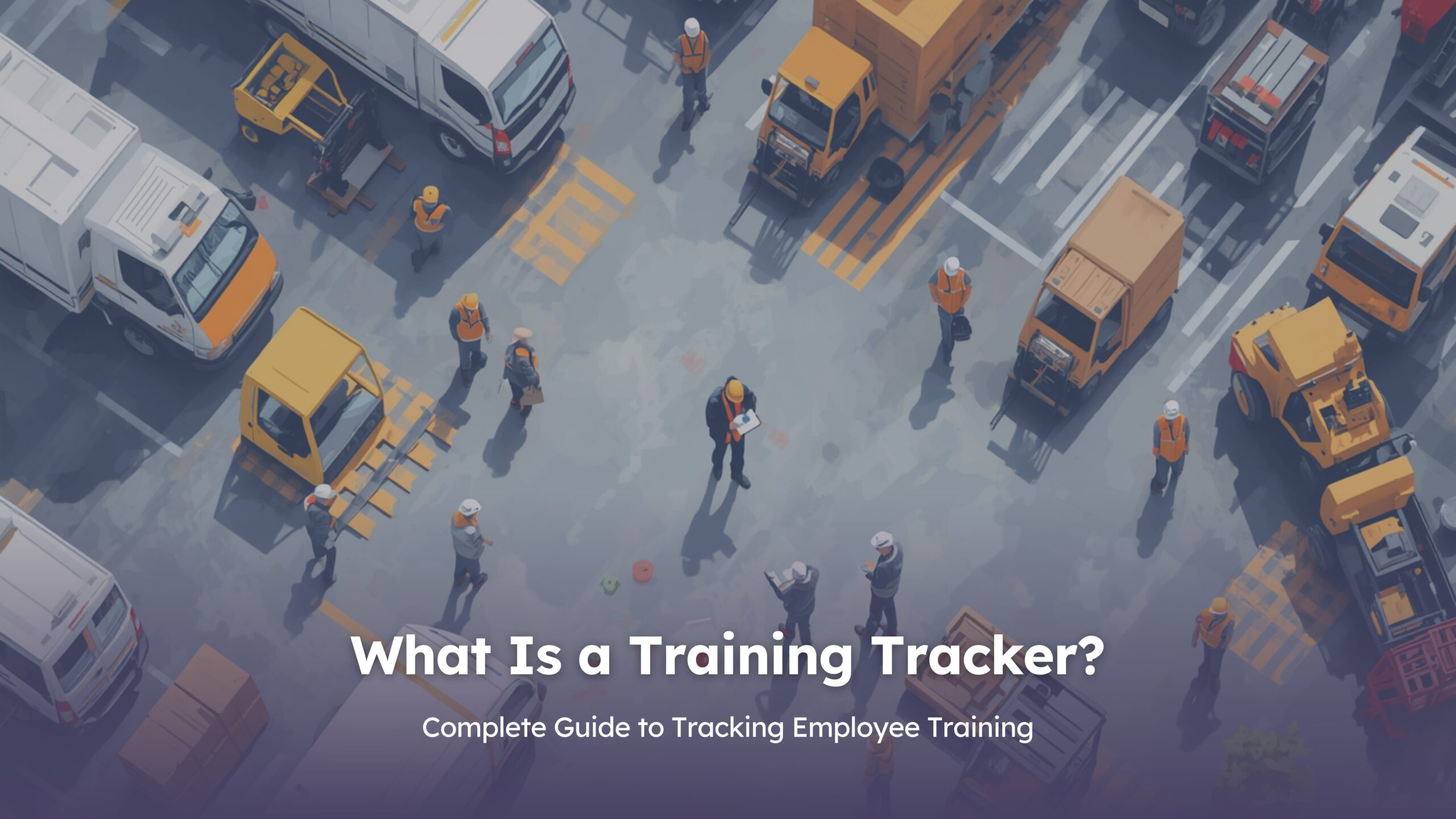
What Is a Training Tracker?
A training tracker is a system, whether a spreadsheet or dedicated software, that maintains a live, structured record of who has completed which training, when it was completed, when it expires, and whether the person is currently compliant for their role. At minimum, a functioning training tracker needs to answer four questions for every member of staff:
- Who holds which qualifications and certifications
- What training each role actually requires
- When each qualification was completed and when it expires
- Status, meaning whether someone is currently valid, expiring soon, or already non-compliant
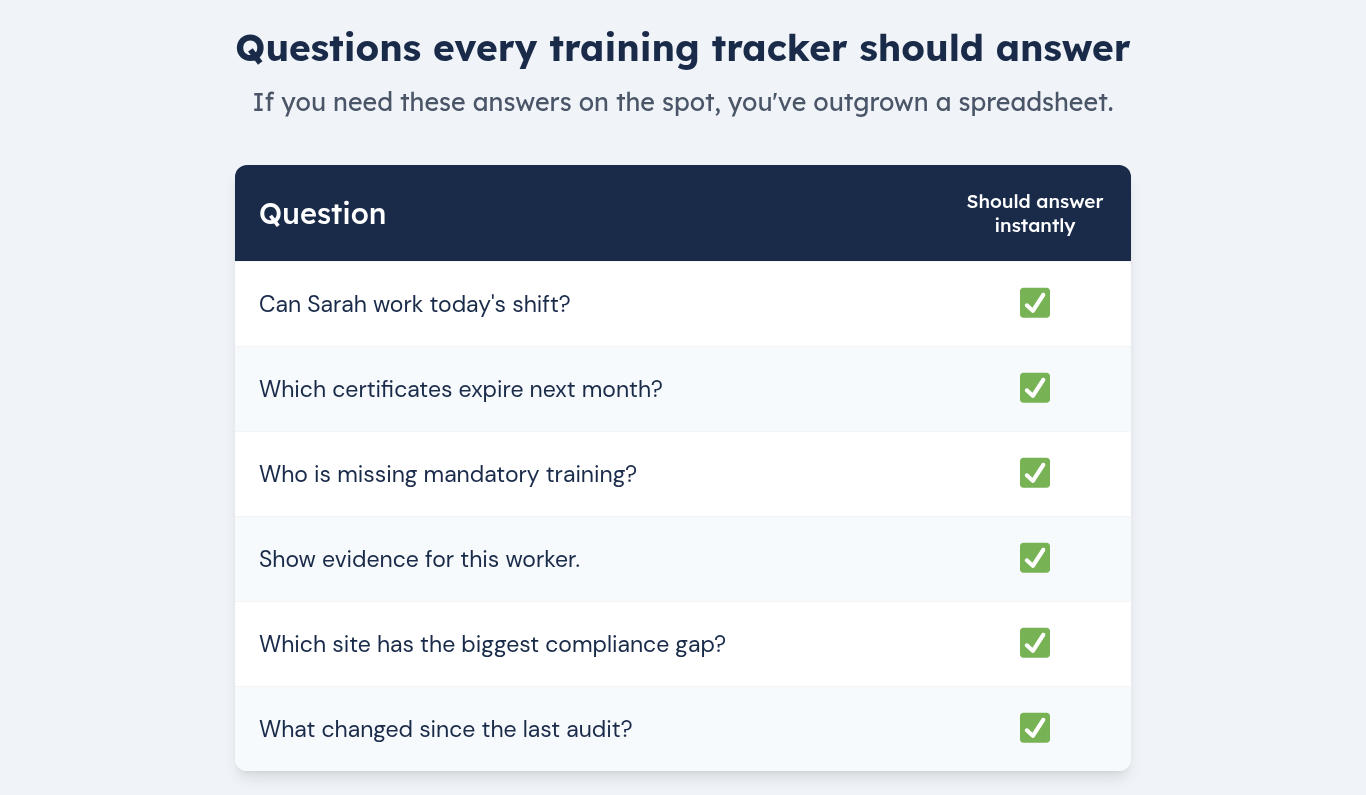
That register needs to be the single source of truth. If a manager, an auditor, or a new team lead cannot answer “is this person currently qualified to do this task?” within seconds, the tracker isn’t doing its job, regardless of how much data it contains.
👉🏻 Suggested Reading: Is Your Training Tracker Audit Ready? Take a quick audit health check to see whether your current training tracker would hold up under real scrutiny, or simply give the appearance of control.