Free Skills Audit Template
Skip to content

Free Skills Audit Template: How to Assess Workforce Competence Effectively

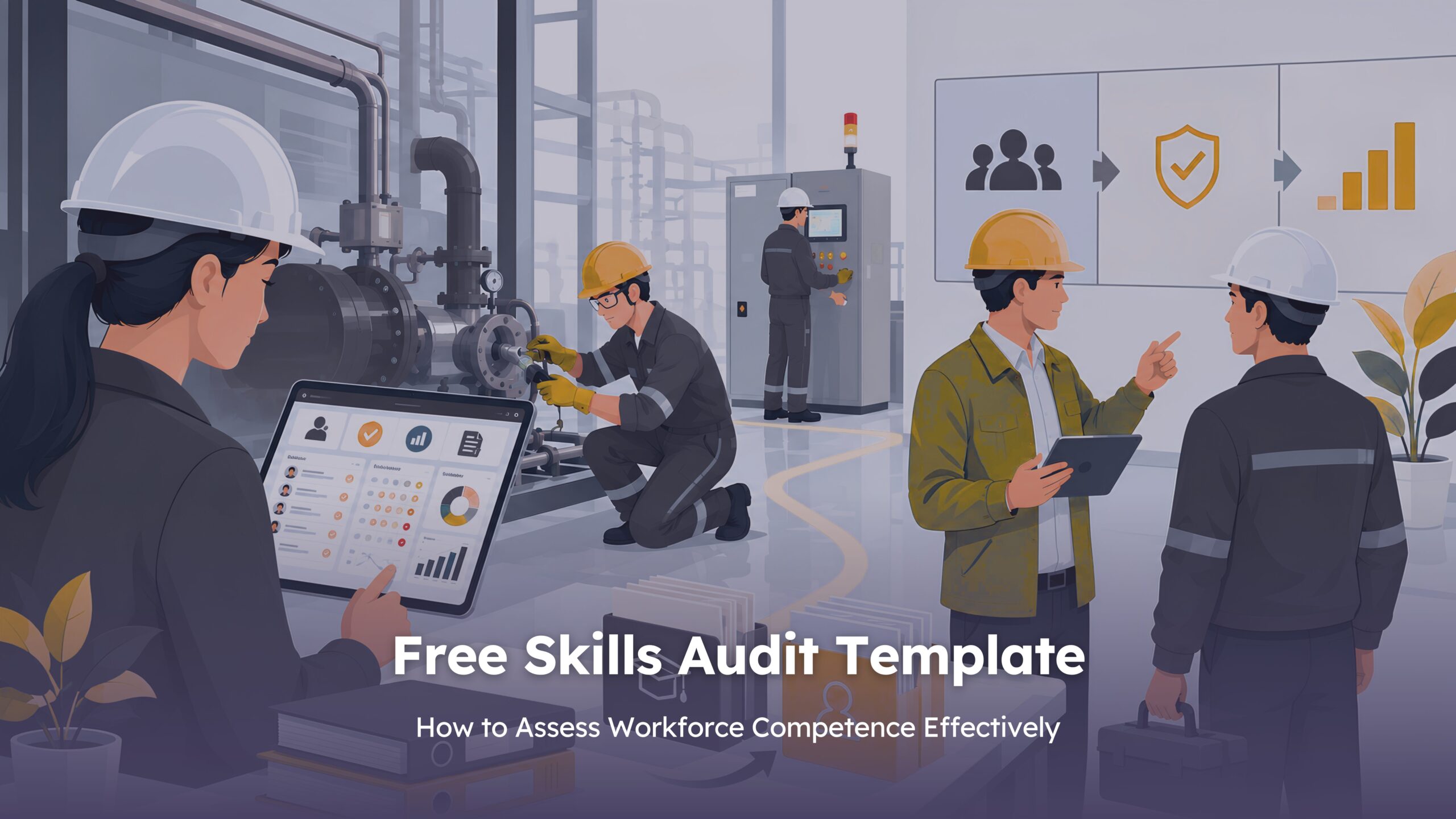
free skills audit template blog cover image png

Most organisations believe they have a reasonable picture of workforce competence. They have training records. They have certificates on file. They have a spreadsheet someone built three years ago and updates when they remember.

A skills audit reveals what is actually true.

This guide explains what a skills audit is, why it differs from a training record review, how to conduct one effectively, and what a properly structured template should capture. It also includes the questions most auditors ask that organisations are not prepared to answer and why the gap between those two things is where most compliance risk actually lives. Most importantly, you’ll get a skills audit template for free in this guide.

What Is a Skills Audit?

A skills audit is a systematic process of identifying, recording and evaluating the competencies held by individuals within an organisation against the competencies required for their roles.

The key distinction is this: a training record tells you what training a person has received. A skills audit tells you whether that training has translated into verified, current and role-appropriate competence.

Those are not the same thing. In regulated environments, the difference matters enormously.

A robust skills audit will capture:

  • The skills and competencies required for each role, not just job titles
  • The current assessed level of each individual against those requirements
  • The method and date of that assessment
  • The person responsible for verifying it
  • The point at which reassessment is due
  • Any gaps between requirement and demonstrated capability

What it will not do, unless the process is poorly designed, is simply reproduce your training completion records and call them competence evidence.

Why Training Records Are Not a Substitute for a Skills Audit

This is the most commonly misunderstood point in competence management, and it is worth examining directly.

A training record confirms attendance or completion. It does not confirm that the individual understood the training, retained its content, can apply it accurately under operational conditions, or is still applying it correctly twelve months later.

Consider a healthcare setting managing medication administration competency. A trust may have 100% completion rates on its annual medication training module across nursing staff. What the training records will not show is that a significant proportion of those staff completed the module on a mobile device during a night shift, clicked through without engaging meaningfully, and have not had their practical technique observed or assessed in over a year. The record shows compliance. The reality shows risk.

This is not a hypothetical edge case. It is the standard failure mode that HSE inspections and CQC reviews surface repeatedly. Organisations fail audits not because they lack training records, but because their evidence of competence does not extend beyond those records.

A skills audit creates a different kind of evidence: assessed, attributed, dated, and specific to the role and the risk.

👉🏻 Suggested Reading: Is your training tracker audit ready? Take the 2 mins quiz and receive a clear overview of your current compliance position, including any risks, missing training, or inefficiencies. Unlock free detailed report to know the practical steps to help you improve and stay audit-ready. 

The Five Reasons Skills Audits Become Outdated Almost Immediately

This is an insight most guidance articles skip entirely, yet it is the reason so many skills audit exercises are conducted once and then quietly shelved.

ReasonWhat It Looks Like in PracticeHidden Risk
Role requirements change, but job titles do notNew equipment, processes or responsibilities are introduced, but role requirements are not updated.Documented requirements no longer reflect operational reality.
Competence is assessed once, not reviewed regularlyEmployees are assessed on appointment or promotion, with no structured reassessment.Skills fade, practices drift and emerging gaps go unnoticed.
Managers assess competence without clear criteriaAssessments rely on observation and judgement rather than defined standards.Results become subjective and difficult to defend.
Audits track tasks, not standardsTasks are recorded without linking them to procedures, versions or assessment methods.Completion is measured, but competence is not.
Audit data sits in isolationSkills audits are managed separately from training, workforce planning and role profiles.Information quickly becomes outdated and action is delayed.

What a Skills Audit Template Should Actually Capture

Many organisations stop at recording who has completed training or who managers believe is competent. The problem is that neither provides robust evidence of current capability.

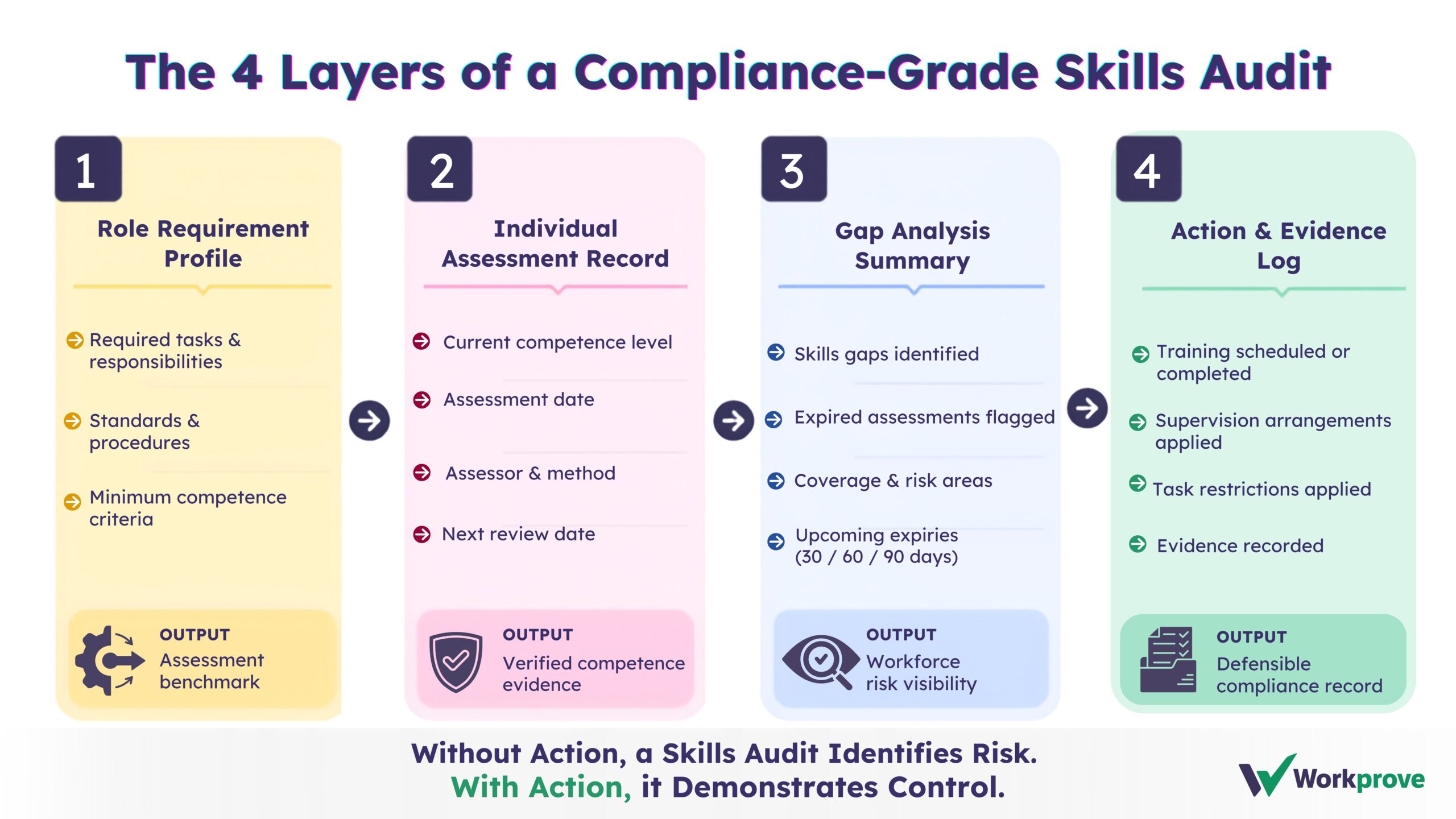
A well-designed skills audit template creates a chain of evidence:

  • Role requirements define the expected standard.
  • Individual assessments verify competence against that standard.
  • Gap analysis highlights risks and vulnerabilities.
  • Action tracking demonstrates how those risks are being managed. 

If any layer is missing, the audit becomes less reliable. For example, identifying a competence gap without recording corrective action can leave organisations exposed during an inspection or incident investigation.

The strongest skills audits do more than record information. They provide ongoing visibility into workforce capability, compliance status and emerging risks.

different layers explaining What a Skills Audit Template Should Actually Capture

What Auditors Are Actually Looking For

The most common reason organisations fail compliance audits despite having training records is that they cannot answer the following questions with documentary evidence:

“How do you know this person is currently competent, not just previously trained?”
Training records answer the second half of this question. A skills audit answers the first.

“Who assessed this person’s competence and on what basis?”
A manager’s informal sign-off, undocumented, does not constitute competence evidence in a regulated environment. The assessor must be identifiable, their authority to assess must be established, and the assessment method must be defensible.

“What happens when someone’s competence expires?”
The answer “we retrain them” is not sufficient. The expected answer is a documented process: how expiries are flagged, who is notified, what operational restrictions apply in the interim, and how reassessment is recorded.

“How would you know if someone’s competence had changed?”
This is the question most organisations cannot answer. The honest answer, in most cases, is “we would not know unless an incident occurred or they told us.” A skills audit with a structured reassessment cycle is the mechanism that changes that answer.

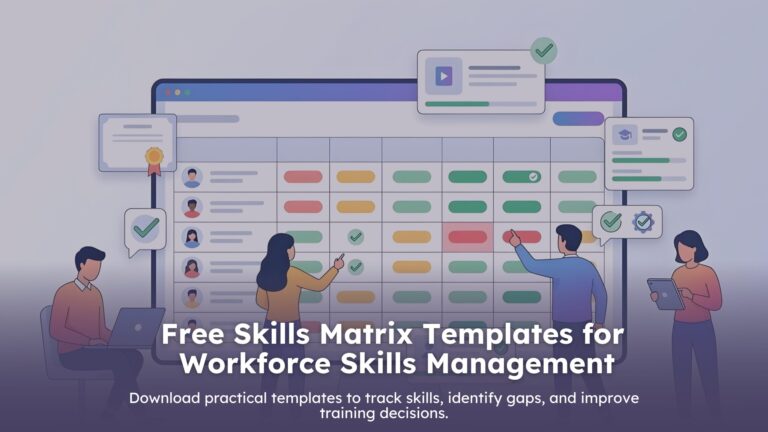
👉🏻 Suggested Reading: Free Skills Matrix Templates. This guide explores the importance of a skills matrix, how to create one, and where to find free skills matrix templates to get you started.

The Difference Between a Skills Audit and a Skills Matrix

These terms are frequently used interchangeably. They describe different things.

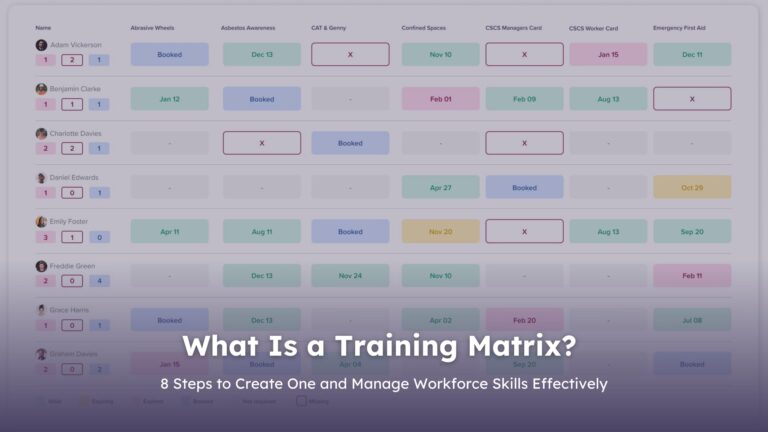
A skills matrix is a visual tool, typically a grid that displays the competencies held by individuals within a team or department. It is useful for workforce planning, identifying coverage risk and communicating team capability at a glance.

A skills audit is the process by which the information in that matrix is gathered, verified and validated. The matrix is the output. The audit is the methodology.

An organisation that maintains a skills matrix without conducting structured audits is producing a record of what managers believe to be true. An organisation that conducts skills audits and records the results in a structured matrix is producing a record of what has been verified.

In regulated environments, the second version is what auditors expect to find.

Common Skills Audit Mistakes to Avoid

Auditing qualifications rather than competence.
Certificates confirm that a person passed an assessment at a specific point in time. They do not confirm current capability. A skills audit that records qualification expiry dates without assessing applied competence is measuring the wrong thing.

Using the same assessment standard for all risk levels.
A task that creates minor inconvenience if done incorrectly does not require the same assessment rigour as a task where error creates serious harm. Skills audit design should be proportionate to risk.

Assigning assessment responsibility without providing assessment guidance.
Asking line managers to assess competence without giving them defined criteria, a structured method and clear recording requirements produces highly subjective, inconsistent data.

Treating the audit as a one-off project.
A skills audit is most valuable when it generates live, actionable data rather than a static document. That also could be the major limitation for using the skills audit template to fill, update and check records manually. Organisations that conduct audits every two or three years are measuring historical competence, not current workforce readiness.

Failing to act on what the audit finds.
This is the most consequential mistake. An audit that identifies known gaps and generates no documented response creates a liability. If an incident occurs after a competence gap has been formally identified, the absence of a mitigation record is difficult to defend.

Building a Skills Audit Process That Sustains Itself

The difference between organisations that extract lasting value from skills audits and those that conduct them as periodic compliance exercises comes down to three structural decisions.

First, connect the audit to role requirement profiles rather than generic competency lists. When role requirements change, the audit criteria should change with them. This means the audit stays calibrated to operational reality rather than drifting into a historical record.

Second, build in structured reassessment triggers rather than calendar-based cycles. Calendar cycles (annual, biennial) miss the events that actually change competence requirements: equipment changes, procedure updates, regulatory changes, incidents, extended absences. Trigger-based reassessment is more responsive.

Third, use the audit to generate ongoing visibility, not periodic snapshots. The question an operations director or compliance manager should be able to answer at any point is: “What is the current competence status of my workforce against the requirements of their roles?” If that question requires a new audit to answer, the audit process is not providing adequate ongoing value.

Need a Ready-Made Skills Audit Template?

Rather than building your own framework from scratch, download our free skills audit template, including:

✓ Skills audit planning sheet
✓ Competency assessment framework
✓ Skills gap analysis tracker
✓ Action planning log
✓ Audit sign-off record

Download Free Skills Audit Template

Using Workprove to Support Your Skills Audit Process

Workprove is designed for organisations where workforce competence and compliance evidence need to be maintained continuously, not captured periodically.

The platform supports the full skills audit cycle: defining role-specific competency requirements, recording and evidencing assessments, surfacing gaps and expiries before they create risk, and maintaining a defensible audit trail that does not depend on spreadsheets or manual chasing.

For organisations preparing for regulatory inspection, managing a large or distributed workforce, or operating in high-risk environments where competence evidence needs to be immediately retrievable, Workprove provides the structure that most standalone skills audit templates cannot.

Speak with Experts Take a Product Tour 
with workprove, get audit-readiness instantly, every time. blog image png

Conclusion: The audit is not the destination

Some skills audits exist only to satisfy periodic requirements that are completed before inspections, filed away, and left untouched until next time. Many organisations operate this way, and for a while, it works: training records build up, matrices update, the audit happens, the box is ticked.

But workforce competence does not hold steady between audits. Procedures change, people move roles, equipment upgrades, and skills drift. Quietly, the organisation’s perception of its capability drifts from operational reality until something forces a reconciliation.

What distinguishes organisations that manage competence effectively is not a better template. It is a different relationship with the question the audit is designed to answer: not “did we train people?” but “are our people currently capable of doing what their roles require, safely and to the required standard?”

That question has no static answer. It requires ongoing visibility, not periodic snapshots. The skills audit is the mechanism that makes that visibility possible but only if it is designed to generate live, actionable information rather than a compliance record that ages from the moment it is signed off.

The organisations that fare best in regulatory scrutiny are rarely the ones with the most training records. They are the ones that can demonstrate, at any point, that they know the current competence status of their workforce and that when gaps exist, they already know about them and are already doing something about them.

Lately, don’t forget to download free skills audit template. 

You might also like

View All Resources
What is a training matrix blog
Blog

What is a Training Matrix? 8 Steps to Create One Effectively

Find Out More
become audit ready in 30 days
Blog

Audit-Ready in 30 Days: The Complete Compliance Roadmap for UK Businesses

Find Out More
Manufacturing training compliance management
Blog

Manufacturing Industry Guide: Workforce Competence, Compliance and Operational Resilience

Find Out More