Looking for the Best Skills Management Software?
Most organisations do not start looking for skills management software because they want a better database. They start looking after a moment of doubt. A supervisor cannot confirm who is signed off on a machine. An auditor asks how a proficiency rating was reached and nobody can answer.
The difficulty is that platforms in this category solve very different problems under almost identical language. Buying the wrong type is expensive, and not only in licence fees. A talent mobility platform bought for a compliance problem leaves you with excellent dashboards but no defensible answer when an inspector arrives.
, to help you choose, here is the comparison of ten leading skills management software platforms available in 2026.
Four Types of Skills Management Platform
Recognising which category you actually need prevents more failed implementations than any feature comparison.
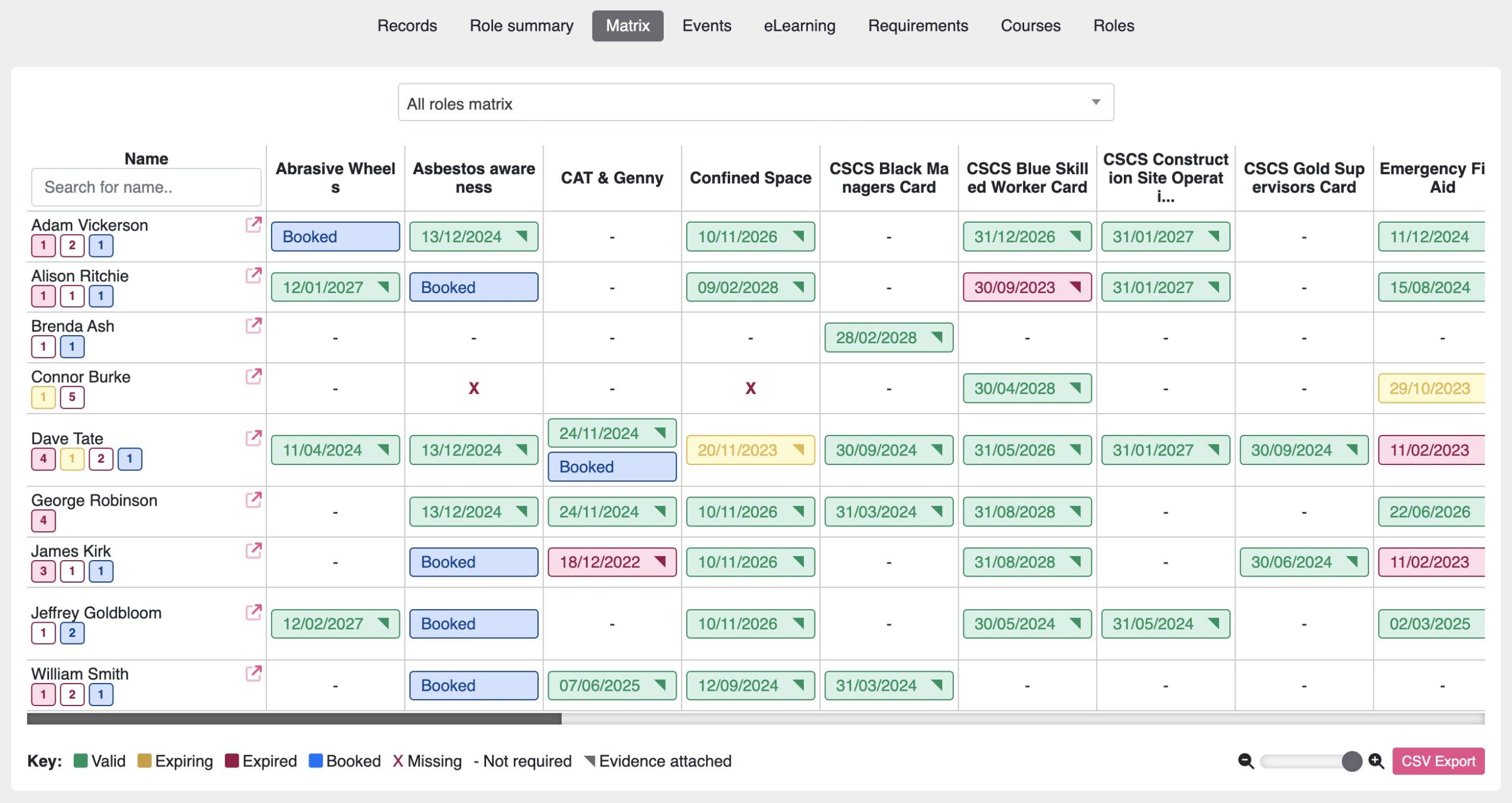
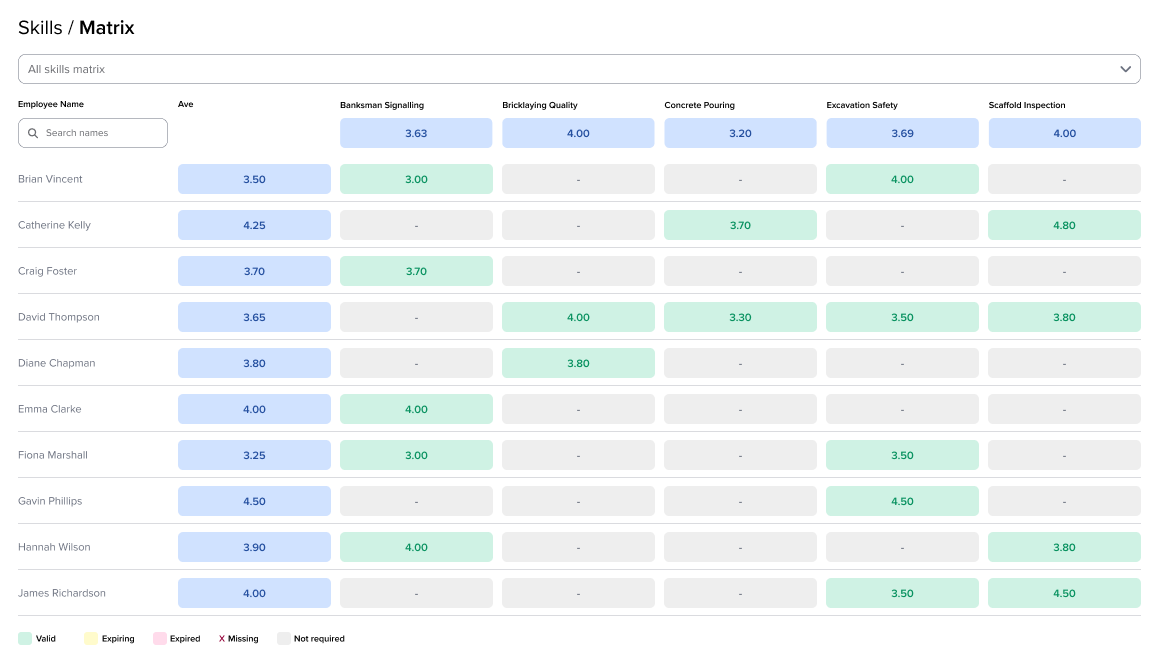
- Skills inventory platforms record what people can do and display it through matrices. Fast to deploy, light on assessment rigour.
- Talent intelligence platforms infer skills from HR data to drive internal mobility and workforce planning. Data is derived rather than demonstrated.
- Skills assessment platforms measure capability through structured tests. Strong for hiring, less suited to ongoing authorisation.
- Operational competency platforms define role requirements, assess against them, capture evidence and manage qualifications. Usually what regulated operators need, even when they began searching for a skills matrix.
Why Skills Data Fails at the Moment It Matters
Nearly every platform can record a skill. Far fewer can establish that the record is true, current and defensible.
HSE guidance is clear that people should be competent for the work they undertake, and that training, alongside knowledge, experience and skill, helps develop such competence (HSE, 2025). Training is an input to competence. It is not competence itself.
The consequences show in national data. Health and social work was one of only two UK sectors where the proportion of staff judged not fully proficient increased, rising to 4.3% from 3.7% in 2022. Yet 83% of employers in that sector trained staff in the same period, among the highest rates in the country (DfE and Skills England, 2025).
Although, the sector doing the most training saw its proficiency gap widen. Volume did not close it.
👉🏻 Suggested Reading: What Is a Skills Matrix? explains how skills matrices are structured and where they commonly break down in practice.
One cell, three questions
Consider how a matrix records forklift capability: one cell, one tick, one date. Now consider the law. The Approved Code of Practice for rider-operated lift trucks describes three separate training stages, namely basic, specific job, and familiarisation (HSE, 2025).
An operator can therefore hold a valid certificate, be trained on a counterbalance truck, and never have been familiarised with a reach truck in your narrow-aisle racking. That tick collapses three questions into one answer. The risk is not the missing certificate. It is the confidence the green cell creates.
Currency is an event, not a date
Most platforms treat expiry as a calendar function. HSE frames it differently, noting that changes in work equipment, the system of work, or new equipment may all require additional training (HSE, 2025). That is an event-based trigger, and few skills management software platforms model it. Ask every vendor how their system responds when a procedure changes, not when a certificate ages.
How We Evaluated These Platforms
Rather than counting features, we assessed each platform against the capabilities that determine whether workforce data survives contact with an auditor or an incident investigation.
We considered:
- Skills matrix and inventory capability
- Competency framework configuration
- Assessment method and rigour
- Evidence capture
- Qualification and certification tracking
- Expiry and renewal automation
- Audit and compliance reporting
- Contractor coverage
- Multi-site scalability
- Mobile access
1. Workprove
Best for Competence, Evidence and Audit Readiness
Workprove is built for organisations that need to prove workforce capability rather than catalogue it.
Instead of treating skills, training, certifications and licences as separate systems, it connects them. A competency assessment, the training booked to close the resulting gap, and the evidence supporting sign-off all sit against the same employee record.
Crucially, assessments are evidence-based by design. Photos, videos and documents attach directly to an assessment, so a proficiency rating carries its justification with it. Scoring criteria are defined once and applied consistently across sites, which reduces the assessor subjectivity that makes many matrices unreliable at scale.
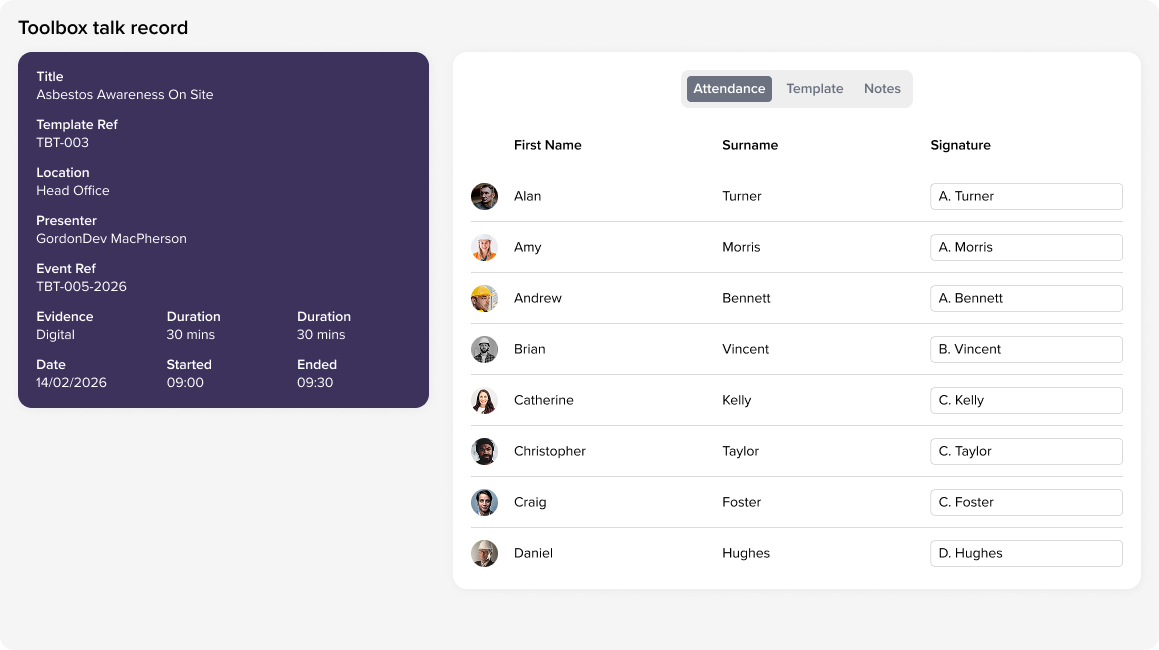
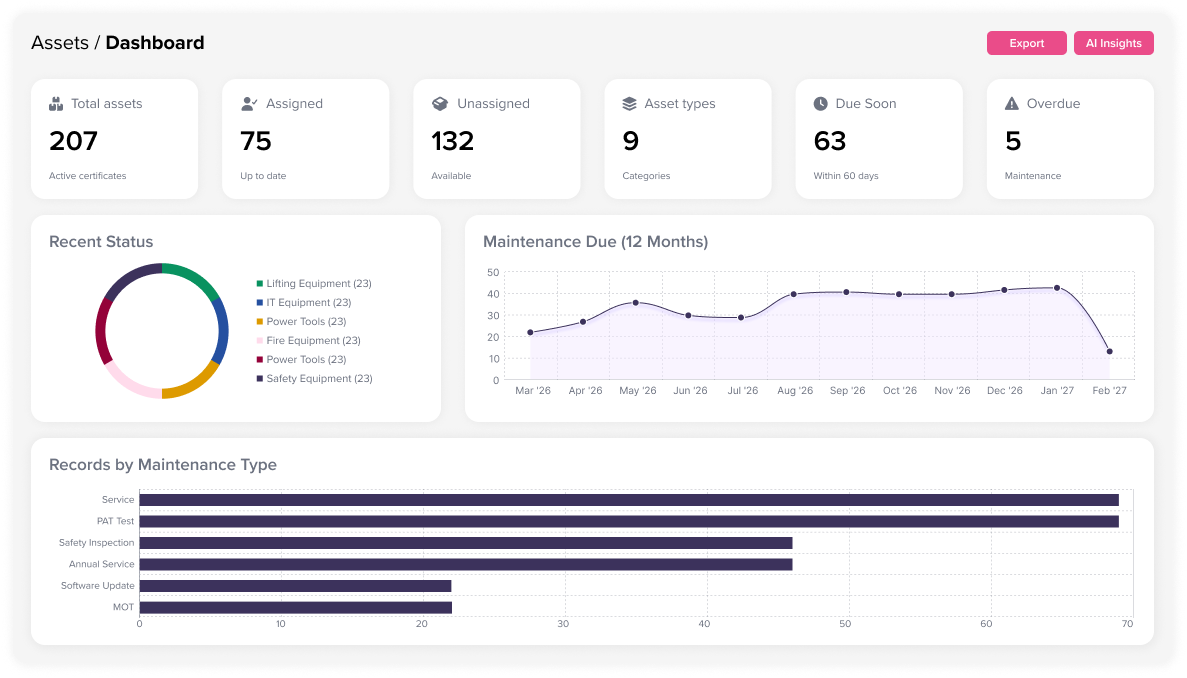
Beyond competency, the platform covers training matrices, role-based requirements, training needs analysis, eLearning, toolbox talks, CPD, driving licence monitoring, medical monitoring, contractor compliance and budget forecasting for closing gaps.
| Category | Details |
|---|---|
| Best for | Manufacturing Construction Health & Social Care Transport & Logistics Food & Beverage Facilities Management Schools & Nurseries Multi-site organisations |
| Standout features | Evidence-based competency assessment Live skills matrix Role-based requirements Qualification & expiry monitoring Workpass verified credentials Training Needs Analysis Built-in e-learning Driving licence monitoring Contractor management Budget forecasting Mobile app |
| Strengths | Connects competence, training and compliance in one record Strong evidence capture against assessments Consistent scoring across sites Audit-ready reporting Reduces spreadsheet dependency UK-based support |
| Limitations | Broader in scope than organisations needing only a visual skills matrix. Best suited to organisations managing ongoing workforce compliance rather than one-off skills mapping. |