A logistics operator runs a five-minute toolbox talk on manual handling every Monday morning. Attendance is logged, the register is signed, and the file looks complete. However, when an HSE inspector later asks why that particular topic was chosen that particular week, rather than, say, reversing vehicle awareness after a near-miss the previous Thursday, nobody can answer. The talk happened. The record exists. Yet the one question that actually matters during an investigation, namely why this topic and why now, has no answer at all. That gap, between having a record and having a defensible one, is where most of the real risk in toolbox talks quietly lives.
This guide explains what a toolbox talk is, whether it’s a legal requirement in the UK, how it differs from formal training, and why so many organisations discover during an audit or an incident investigation that their toolbox talk records don’t hold up the way they assumed. It also covers a working record template, and why Workprove generates toolbox talks directly from a team’s live competency and audit data, so every talk is fast to produce and traceable to a real, current reason.
What Is a Toolbox Talk?
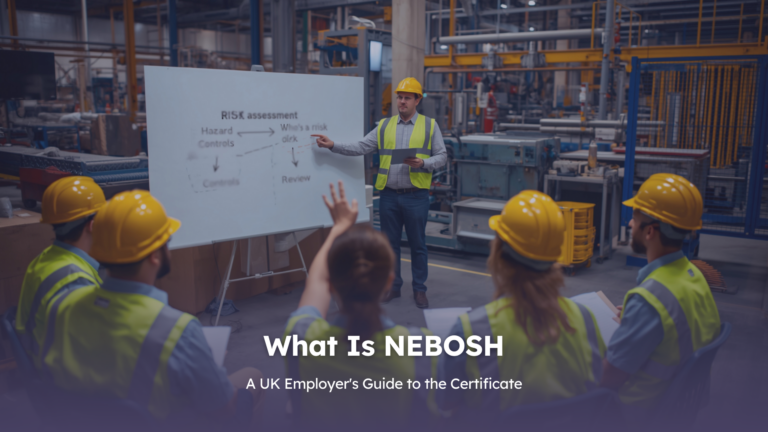
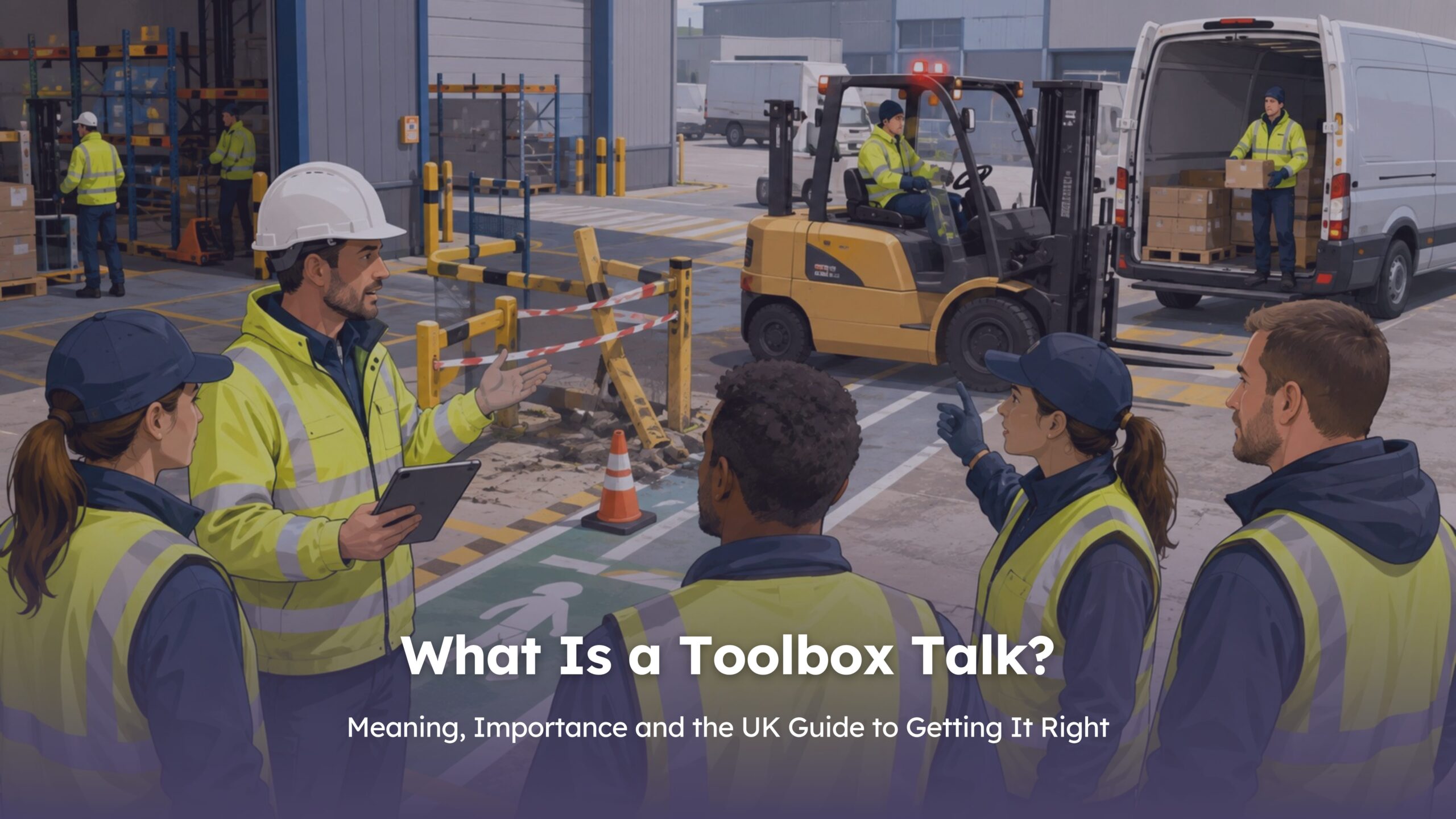
A toolbox talk is a short, focused safety briefing, typically five to fifteen minutes, delivered to a team before or during a shift. It usually covers a single topic: a specific hazard, a piece of equipment, a procedure, or a lesson learned from a recent incident. Unlike formal training, a toolbox talk isn’t designed to build a new skill from scratch. It’s designed to refresh, reinforce, or draw attention to something that already needs to be front of mind.
The term is most associated with construction, where it originated from the practice of gathering around a literal toolbox before starting work. However, the same format appears under different names across sectors and regions. In the UK, you’ll also see it called a safety briefing, a pre-shift briefing, or a safety huddle. In the US and parts of Australia, “tailgate talk” or “tailgate meeting” is common, drawing on the same image of workers gathering informally before starting a task. Regardless of the label, the underlying mechanism is identical: a short, recurring, topic-specific conversation about risk, delivered close to the point of work.
Why Toolbox Talks Matter
The case for toolbox talks isn’t abstract. HSE’s most recent figures show 126 workers were killed in work-related accidents in Great Britain in 2025/26, with falls from height accounting for roughly a quarter of those deaths, and construction and agriculture the worst-affected sectors (Health and Safety Executive, 2026). Separately, an estimated 680,000 workers reported a non-fatal workplace injury in 2024/25, with slips, trips and falls, and manual handling among the leading causes (Health and Safety Executive, 2025).
Toolbox talks exist to interrupt exactly this pattern: a short, well-timed conversation about a specific hazard, delivered close to the point of work, is one of the few interventions cheap and fast enough to happen every single week. Their importance isn’t that they replace training or inspection. It’s that they catch the day-to-day drift in awareness that formal training, delivered once a year, simply can’t.