Why Spreadsheets Feel Safe Until They Don’t
At first glance, spreadsheets feel like the perfect solution. They are low-cost, easy to use, and readily available on every desktop. For small teams or early-stage businesses, it feels natural to start tracking training and certifications in spreadsheets. However, this comfort quickly fades as operations grow.
Recent research reveals why. Patil and Priya (2024) found that HR analytics initiatives that rely on unstructured manual data, such as spreadsheets, struggle to provide meaningful insights or strategic value. The data often lacks accuracy, visibility, and consistency. Similarly, Ratnam and Devi (2024) explain that when organisations move away from manual tracking and adopt digital systems, they make faster, more confident decisions based on reliable analytics rather than reactive guesswork.
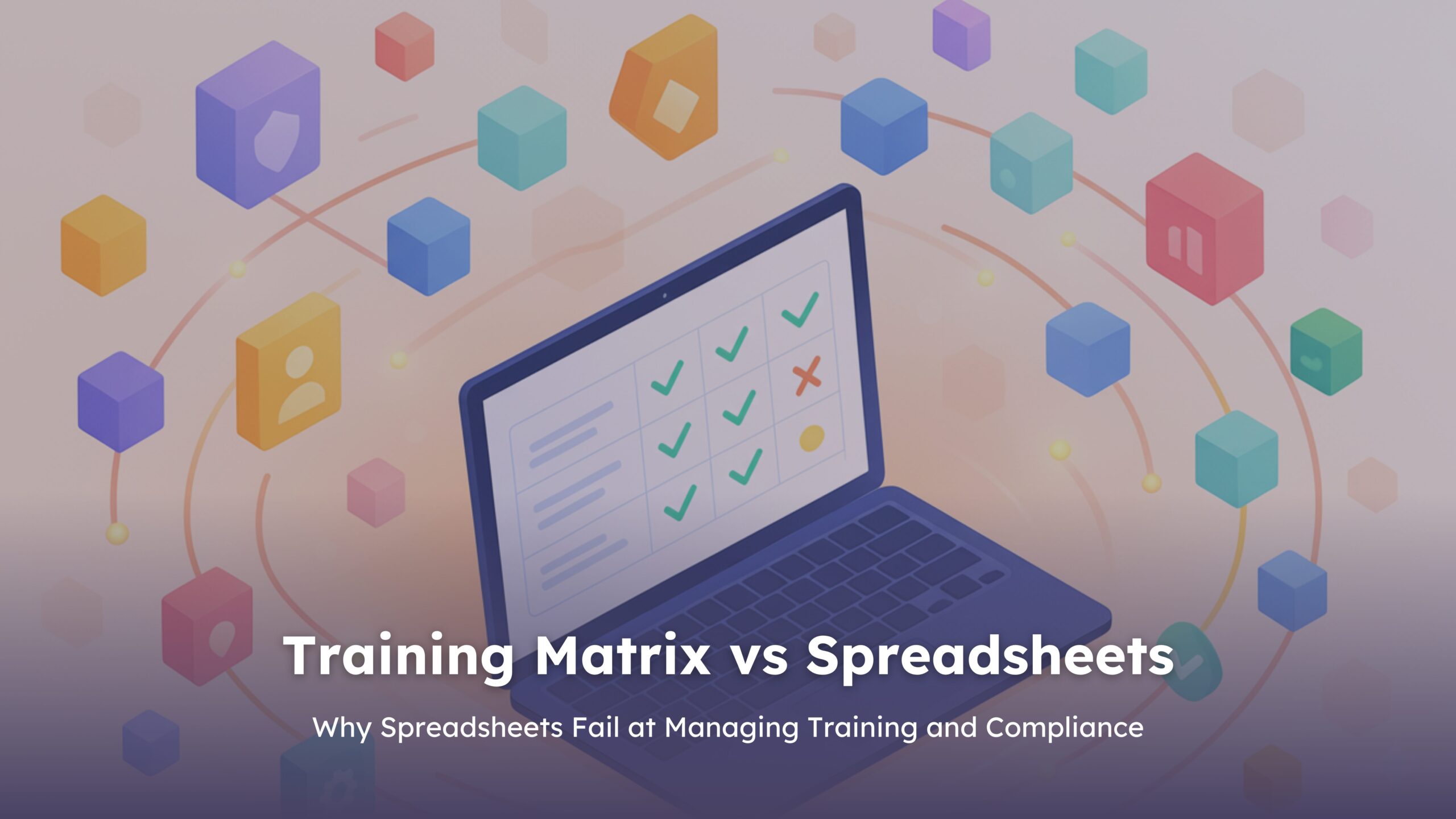
In the context of compliance, these risks become amplified. A single date entered incorrectly or a file saved in the wrong folder can have serious consequences. When an auditor requests proof of renewal or completion, teams relying on spreadsheets often scramble to reconcile multiple versions of the same file. This is where it becomes crucial to understand the difference between Training Matrix vs Spreadsheet; one enables proactive compliance, while the other leaves teams reacting to problems after they occur.
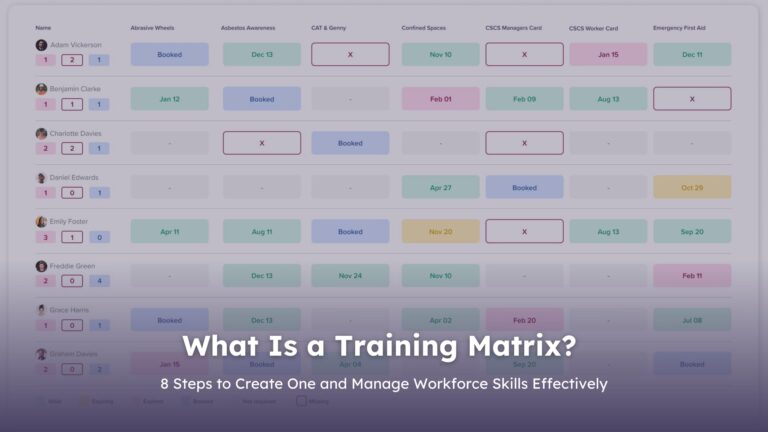
👉 Related Reading: To understand how a structured training matrix solves these tracking challenges, explore more about the Training Matrix guide.
Compliance Isn’t Static and That’s the Problem for Spreadsheets
Compliance, by its nature, is constantly evolving. New hires join the team, roles change, regulations are updated, and certifications expire every month. Managing all this with static spreadsheets is like navigating with an old paper map while the roads around you are being rebuilt in real time.
Digital research supports this challenge. Patil and Priya (2024) note that organisations using digital HR systems are better equipped to respond to these changes because they have access to real-time workforce analytics. Furthermore, Mordor Intelligence (2024) reported that the global corporate compliance training market was valued at USD 6.15 billion in 2025 and is forecast to reach USD 9.02 billion by 2030, expanding at a 7.96% CAGR. The reason is clear: companies are investing in scalable digital systems that can handle the growing complexity of compliance requirements.
Ultimately, when comparing Training Matrix vs Spreadsheet, it’s evident that spreadsheets simply can’t adapt to the pace of evolving compliance needs.
👉 Related Reading: You can also learn how expired certifications impact operations in our post on The Hidden Costs of Expired Certifications.
Training Matrix vs Spreadsheet: What Actually Works Differently
A training matrix may resemble a spreadsheet at first, but it’s built for much more. Instead of manual entry, it links employees to roles, tracks required training, and automatically updates completion and expiry dates. This creates a live, evolving system that highlights compliance risks, ensures accountability, and provides instant audit-ready visibility.
A well-designed training matrix offers four key advantages:
- Visibility: Managers can instantly see which employees are overdue, which roles are at risk, and which certifications are approaching expiry.
- Automation: Instead of relying on reminders or emails, renewal alerts and dashboards update automatically.
- Audit readiness: Each action and completion is logged, giving a verified trail of compliance evidence.
- Scalability: Whether managing 20 employees or 2,000, the system adjusts seamlessly as the organisation grows.
This Training Matrix vs Spreadsheet distinction becomes even clearer at scale, where automation, visibility, and audit-readiness define operational success.
According to Technavio (2024), organisations that implement structured compliance systems report measurable improvements in administrative efficiency and renewal speed compared to those relying on spreadsheets.
Many organisations reach a crossroads once they recognise the limits of spreadsheets. Should they continue refining spreadsheets or invest in a scalable training platform? The comparison below outlines what each option truly offers in terms of compliance control and growth potential.
| Criteria | Build in Spreadsheets | Use Dedicated Platform |
| Scalability | ❌ Limited | ✅ Seamless |
| Audit Trail | ❌ Manual | ✅ Automated |
| Cost Over Time | 💰 Rising maintenance | 💰 Predictable ROI |
| Collaboration | ❌ Version issues | ✅ Multi-user cloud |
| Renewal Tracking | ❌ Manual | ✅ Alerts & dashboards |
This simple comparison highlights that while spreadsheets may work in the short term, dedicated training platforms are purpose-built to scale, automate, and provide visibility across compliance processes.
Evidence from Research: The Real-World Impact of Training Matrix vs Spreadsheet Systems
This shift toward digital compliance tracking is not theoretical; it is measurable.
Patil and Priya (2024) demonstrated that HR data analytics enable HR teams to transition from purely administrative duties to strategic workforce management. Similarly, Ratnam and Devi (2024) found that predictive analytics help organisations make proactive decisions and identify risks early.
Meanwhile, Mordor Intelligence (2024) revealed that digital platforms accounted for nearly 67% of the corporate compliance training market in 2024, showing that most companies are already moving away from spreadsheets. The data reinforces the core message behind the Training Matrix vs Spreadsheet comparison that efficiency and foresight come from structure, not static tools.
Complementing this, Training Magazine’s 2024 Industry Report noted that 57% of organisations increased investment in learning technology, ranking compliance automation among the top three technology priorities.
The trend is clear: digital transformation is no longer optional. It is becoming the standard for maintaining compliance efficiency and audit readiness.
How to Make the Shift From Manual to Managed Training Tracking
Transitioning from manual management to a digital training matrix turns compliance tracking from a reactive process into an ongoing, strategic activity that directly supports organisational performance.
For many teams, the biggest challenge is not realising that spreadsheets are outdated; it is knowing how to move beyond them. The process can be methodical and controlled rather than disruptive.
Start by recognising when spreadsheets are failing you. If you are managing multiple sites, roles, or certifications manually, that is a sign your system has reached its limit. Next, audit your current state and list every file, version, and training record. Identify who owns each part of the process and how renewals are currently tracked.
Then design your training matrix by mapping each job role to its required training, documenting expiry dates, and assigning renewal responsibility. Once that structure is clear, choose a centralised system that automates notifications and integrates with reporting.
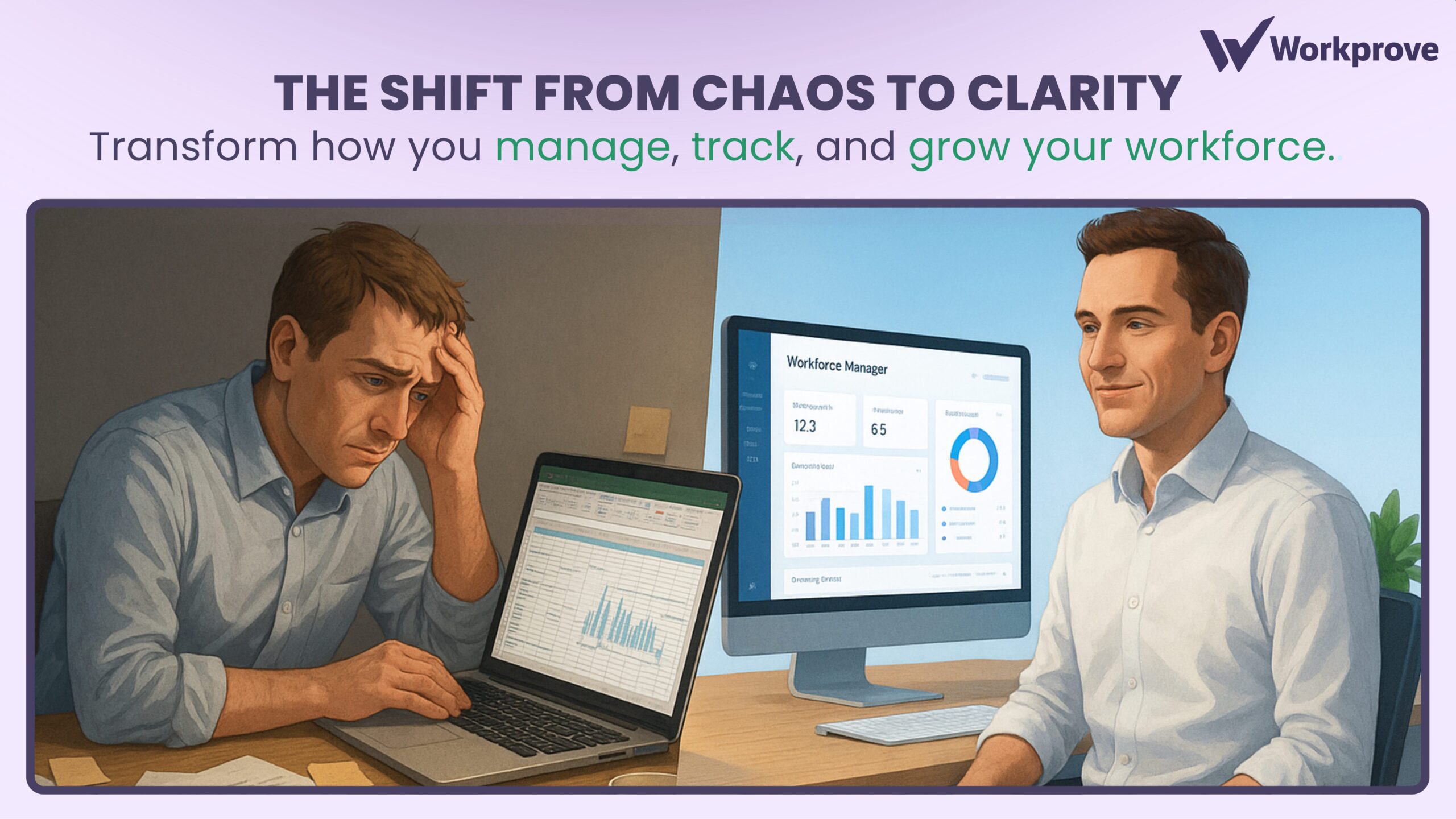
Finally, embed continuous improvement by regularly reviewing dashboard insights to identify gaps or upcoming renewals before they become issues. When organisations make the shift from spreadsheet chaos to structured systems, the Training Matrix vs Spreadsheet gap becomes impossible to ignore.
Spreadsheet Alternative for Training Management
Moving from spreadsheets to a dedicated training or competency platform is not simply a technology upgrade; it is a strategic decision. As organisations expand, data from different departments and locations often becomes fragmented, creating inconsistency and duplication. Spreadsheets cannot provide the scalability, security, or collaboration needed to manage training effectively at this level.
If you’re ready to automate renewals and alerts, read how it works in our guide: How to Automate Certification Renewals.
By migrating to a centralised system, all data becomes unified. Teams can automate renewal reminders, generate real-time compliance reports, and access the same up-to-date information across the business. According to NAVEX Global’s (2024) State of Risk & Compliance Report, 76% of compliance professionals now use purpose-built technology for ethics and compliance training, and 61% include training data in their audits. The report highlights that technology is now central to strengthening accountability, transparency, and overall compliance effectiveness.
Creating a Migration Roadmap
Many organisations remain stuck in the middle, knowing that spreadsheets are failing them but unsure how to move forward. A structured roadmap makes the process easier. Begin by assessing current data health, planning the migration structure, testing automated workflows, and training internal users.
Taking a planned approach ensures a smooth transition and prevents the process from becoming overwhelming. With a clear roadmap, migration stops being a technical challenge and becomes a strategic step toward efficiency.
Furthermore, a scalable platform enables compliance and HR leaders to look beyond tracking and forecasting skills gaps, planning training budgets, and building a culture of accountability. In essence, migrating away from spreadsheets means future-proofing your organisation’s compliance process.
This is exactly where solutions such as Workprove become invaluable. Workprove provides a single, intelligent space to track training, automate renewals, and visualise compliance performance. It replaces the confusion of multiple spreadsheets with clarity and control, ensuring every team remains audit-ready.