Audit-Readiness in 30 Days: A Complete Roadmap
Skip to content

Audit-Ready in 30 Days: The Complete Compliance Roadmap for UK Businesses

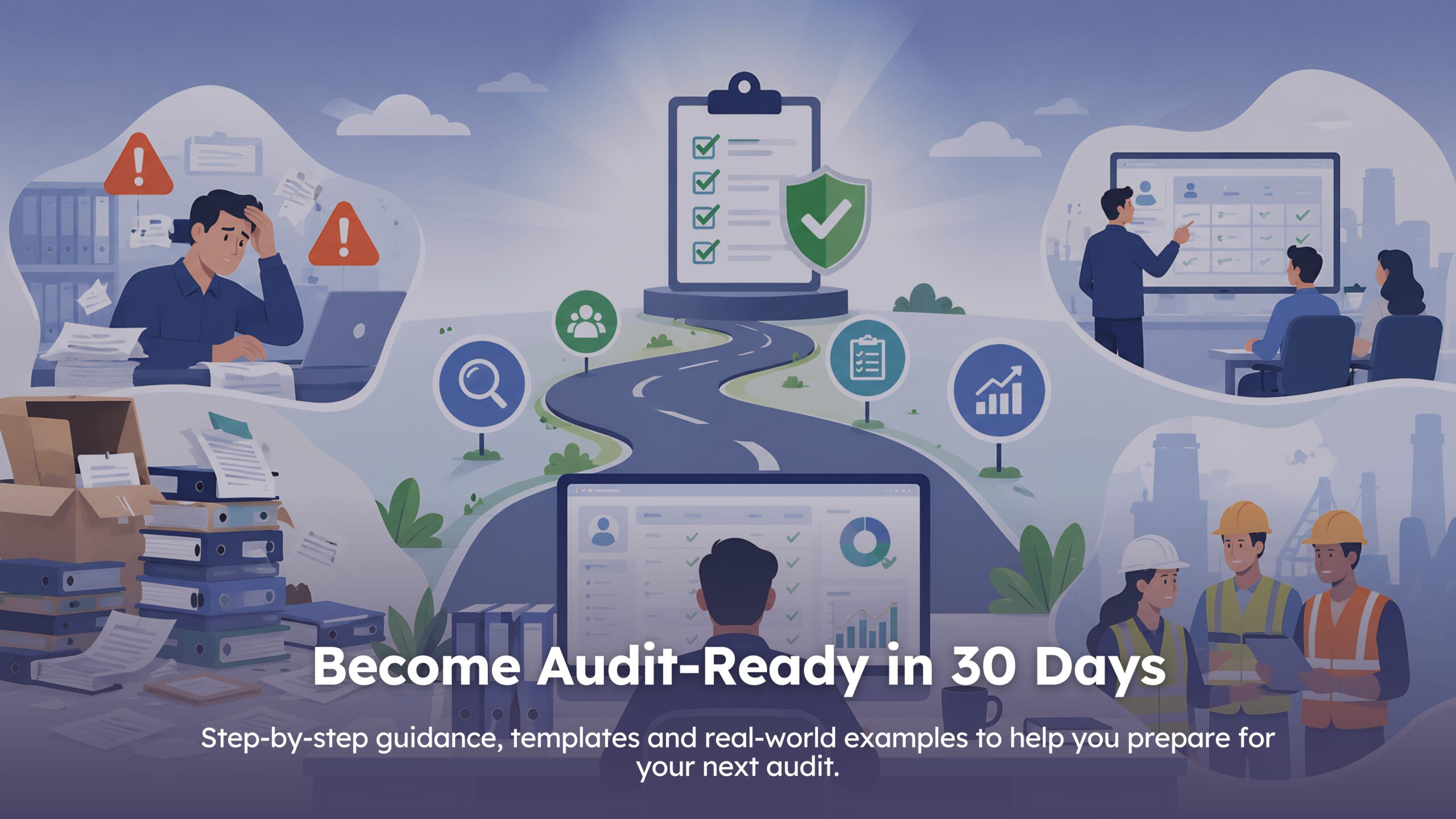
become audit ready in 30 days

Why Businesses Struggle with Audit Readiness

Most businesses find out they are not audit-ready at the worst possible moment: when an auditor is already in the room.

A training certificate from three years ago. A spreadsheet last updated by someone who left. No record of who completed what, when, or whether it was relevant to their role. These are not edge cases. They are the norm.

Research from the HSE and ICO consistently shows that incomplete or unstructured training records are the single biggest reason organisations fail compliance audits. Not a lack of training itself β€” a lack of evidence that the training happened, that it was role-specific, and that it actually made a difference.

The good news is that 30 days is enough time to change that picture completely, provided you work through the right steps in the right order.

To help you put this plan into action, we’ve included a free Audit Readiness Roadmap template and checklist that you can download and use alongside this guide.

Who This Is For

This guide is written for HR managers, compliance leads, operations managers, and training coordinators in safety-critical and compliance-heavy industries β€” manufacturing, food production, construction, logistics, healthcare, and anywhere the HSE, ISO, or sector-specific regulators have a stake.

Whether you have a formal audit scheduled, an internal review coming up, or you simply want to stop relying on a spreadsheet that nobody fully trusts, this audit readiness roadmap will get you to a defensible, structured position in 30 days.
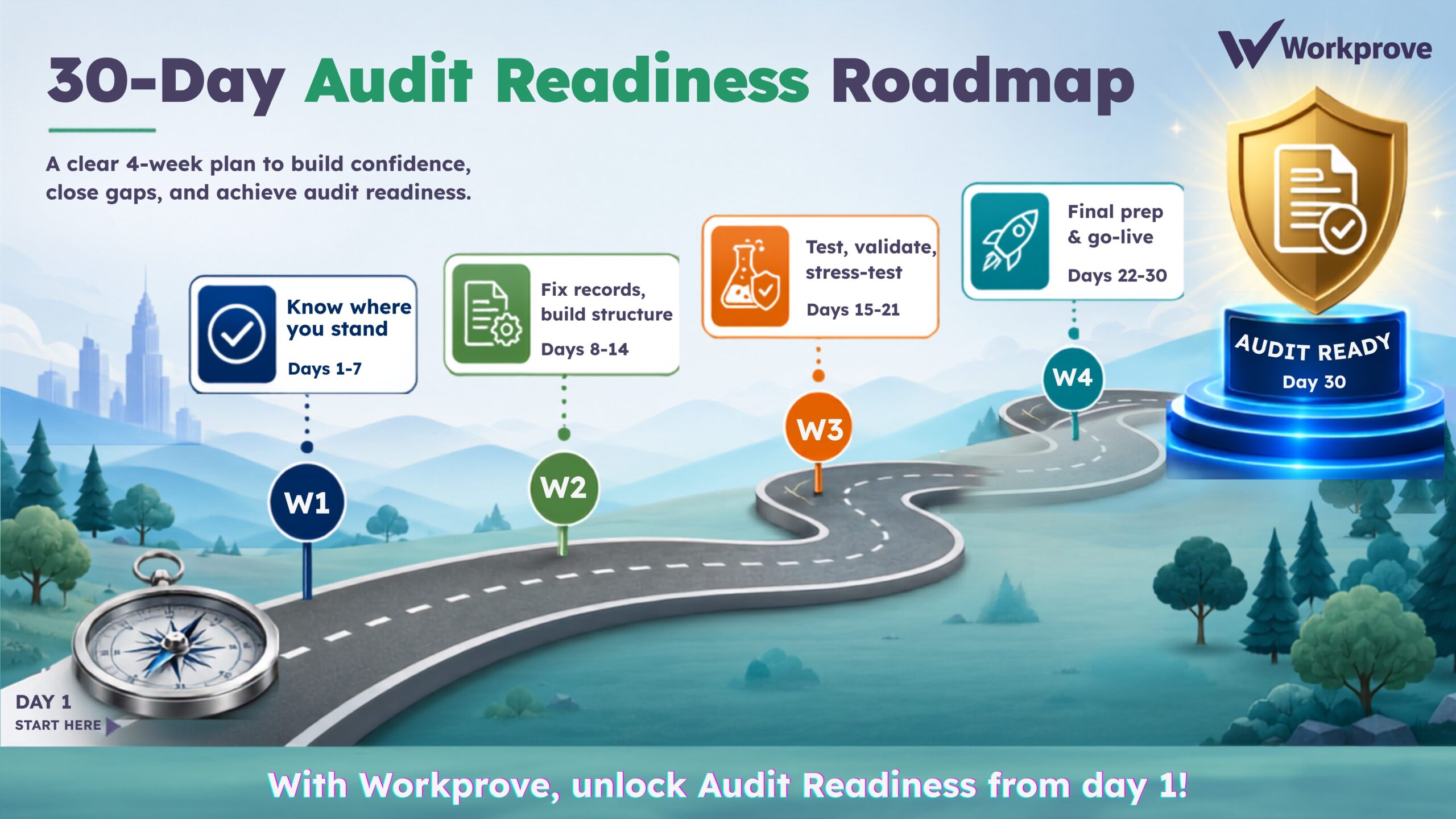
30 Days Audit Readiness Roadmap blog png

What Auditors Are Actually Looking For

There is a common misconception that passing an audit means having a lot of certificates. Auditors are not impressed by volume alone. They are looking for four specific things:

1. Evidence of competence, not just completion

Firstly, a tick in a box that says someone watched a video is not evidence of competence. Auditors want to see that training was assessed, that understanding was tested, and that people can apply what they learned in their specific role.

2.Β  Role-specific training records

Next, generic training records that do not map to job roles are a significant red flag. A forklift operator and a compliance manager have different training requirements. Auditors expect your records to reflect that.

3. An unbroken audit trail

Then, records that are partial, inconsistent, or manually cobbled together raise questions. Auditors look for systems that capture who completed what, on what date, with what result β€” and they want that information to be easily retrievable, not hunted down across three different folders.

4. Evidence of ongoing management and renewal

Lastly, compliance is not a one-time event. Auditors want to see that qualifications are tracked against expiry dates, that refresher training is managed proactively, and that someone in the organisation has clear ownership of the process.

With those four criteria in mind, here is how to get there in 30 days.

πŸ‘‰πŸ» Suggested Reading: Automated Training Matrix: The Key to Smarter Workforce Planning. Discover how an automated training matrix helps track competency, manage compliance requirements and maintain audit-ready records across your workforce.

Need a practical starting point? Download the free Audit Readiness Roadmap template to identify gaps, track progress and keep your audit preparation on track.

Download the Audit Readiness in 30 Days Roadmap

The Must-Have vs. Nice-to-Have Audit Ready Framework

When preparing for an audit, some controls are non-negotiable while others are best-practice enhancements. Use the table below to prioritise the actions that will have the greatest impact on your audit readiness.

Required for Audit ReadinessEnhances Audit Readiness
Complete training records mapped to job rolesPre- and post-training assessments
Evidence of competency, not just completionManager sign-off workflows
Clear audit trail showing who completed what, when and with what resultAutomated renewal reminders
Up-to-date training skills matrixCompliance dashboards by team, site or department
Qualification expiry and renewal trackingContractor and supplier records in the same system
Documented onboarding process for new startersFormal internal audit schedule
Assigned ownership of training complianceOne-click audit evidence packs and advanced reporting

The must-haves are what stand between you and a failed audit. The nice-to-haves are what turn you from reactive to proactive, and what make audits a non-event rather than a scramble.

Adapting Your Audit Readiness Roadmap to Your Industry

This audit readiness roadmap is designed to apply across sectors, but the specific training requirements will vary significantly depending on your industry and regulatory framework.

Manufacturing and food production will typically need to evidence HACCP compliance, allergen awareness, food hygiene certifications, and health and safety training aligned to their specific processes and risk profile.

Construction and utilities will need evidence of CSCS cards, PASMA, IPAF, asbestos awareness, manual handling, working at height, and role-specific competency frameworks.

Healthcare and social care will need to demonstrate mandatory training aligned to CQC standards, safeguarding, medication administration (where applicable), and regular supervision records.

Logistics and warehousing will need forklift operator licences, dangerous goods training where relevant, manual handling records, and driver compliance documentation.

Whatever your sector, the structure of the roadmap remains the same. The specific training mapped to each role in your skills matrix will reflect your regulatory context.

πŸ‘‰πŸ» Suggested Reading: Is Your Training Tracker Audit Ready? Discover the common weaknesses auditors uncover in training records and the practical steps needed to improve compliance visibility and audit readiness.Β 

What Good Looks Like: An Audit-Ready Organisation

By the end of this 30-day process, an audit-ready organisation should be able to say:

– Every employee has a complete training record that maps to their current role
– All mandatory qualifications are current, with expiry tracking in place
– Training has been assessed, not just delivered and we have competency evidence
– We can produce a full compliance report in minutes, not days
– New starters enter the system on day one and are tracked from the outset
– A named person owns this process and reviews it on a regular cycle
– We are not surprised by audits, we welcome them

That is not an aspirational standard. It is a practical, achievable one. And it takes 30 days to get there if you follow the steps in the right order.

How Workprove Supports Audit Readiness

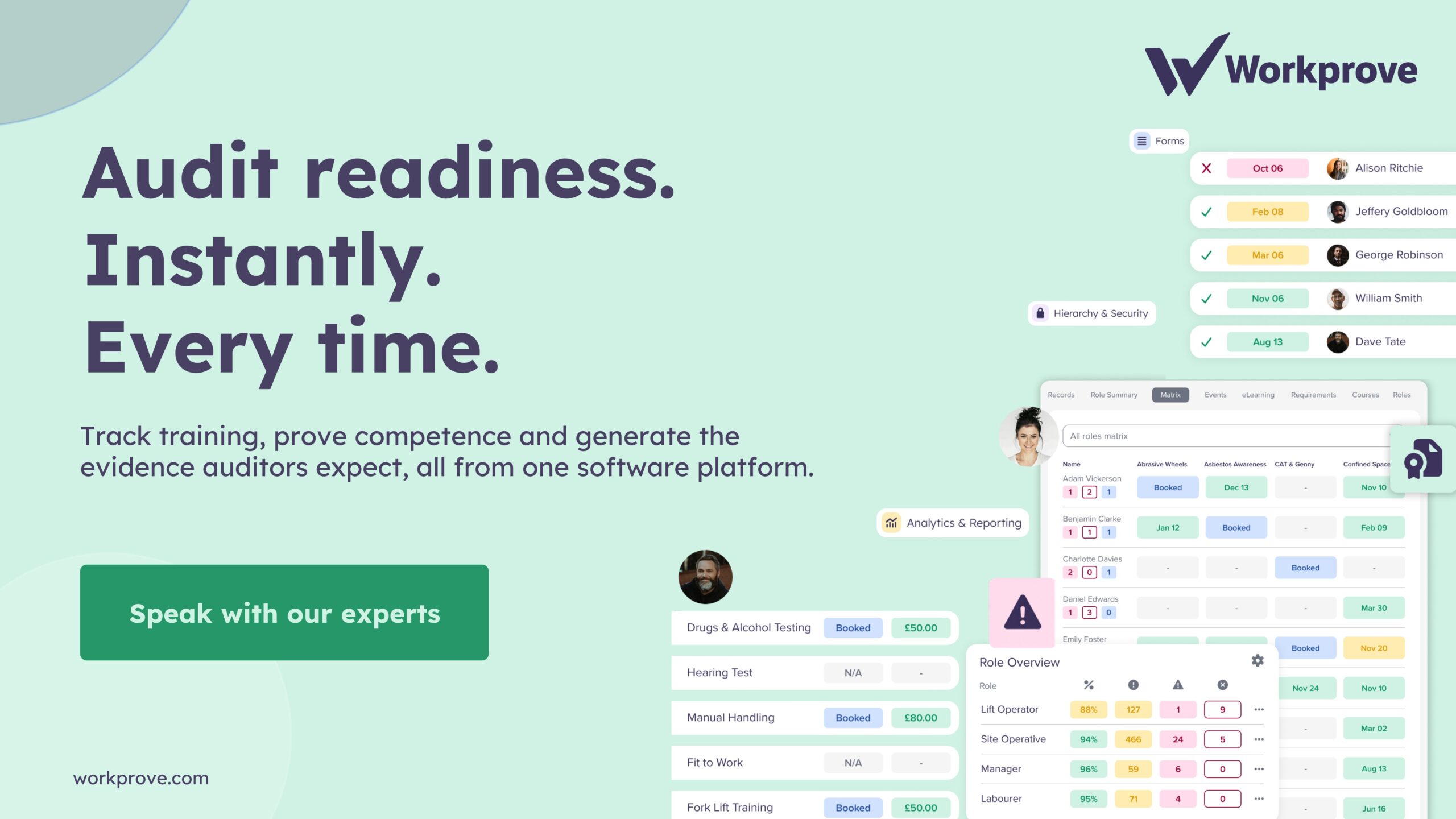
Workprove is a training and compliance management platform built specifically for safety-critical and compliance-heavy industries. The Automated Training Skills Matrix at the core of the platform maps every role in your business to its required training, tracks completion and expiry in real time, and generates audit-ready reports at the click of a button.

Where a spreadsheet requires manual updates and a general LMS requires significant configuration to surface compliance data, Workprove is built from the ground up for the kind of evidence-based compliance tracking this roadmap describes.

If you are starting this 30-day process and want to do it with the right tools in place from day one, book a demo with the team at Workprove. There is no pressure and no obligation, Β just a clear look at what your training compliance picture could look like by day 30.

Speak with Experts

with workprove, get audit-readiness instantly, every time. blog image png

FAQs

What if we already have an LMS? Does this audit readiness roadmap still apply?

Yes. Having a Learning Management System does not automatically make your records audit ready. Common issues such as incomplete records, training not linked to roles, missing competency evidence, and weak reporting can still exist within an LMS. This roadmap applies regardless of the tools you use, though the right training management platform can make the process much faster.

What is the difference between an LMS and a training management system?

A Learning Management System (LMS) mainly delivers and hosts training content. A Training Management System (TMS) focuses on compliance tracking, records management, and workforce competency visibility. For audit readiness, the reporting and record management capabilities of a TMS are usually more valuable. Many organisations use both systems together.

How often should we repeat this process?

The 30 day roadmap is designed for organisations preparing for an audit or carrying out their first compliance overhaul. Once a strong foundation is in place, the focus should shift to continuous readiness rather than last minute catch ups. Also, A quarterly review of your training matrix and a monthly check of expiring qualifications is usually enough to stay on track.

What if some employees have not completed their training by audit day?

Be transparent with auditors about any outstanding gaps and present a clear action plan. Auditors respond far better to organisations that understand their gaps and are actively addressing them than to those that overlook or hide issues. A recognised gap with a plan is always better than a gap with no awareness.Β 

Is it worth moving to a training compliance management system?

For many organisations, yes.
While spreadsheets can work initially, they often become difficult to maintain as teams grow and compliance requirements increase. A training compliance management system helps centralise records, automate renewal tracking, maintain an audit trail and provide instant access to audit-ready evidence. Hence, the right system reduces administrative effort and makes compliance easier to manage at scale.

You might also like

View All Resources
What is a training matrix blog
Blog

What is a Training Matrix? 8 Steps to Create One Effectively

Find Out More
Manufacturing training compliance management
Blog

Manufacturing Industry Guide: Workforce Competence, Compliance and Operational Resilience

Find Out More