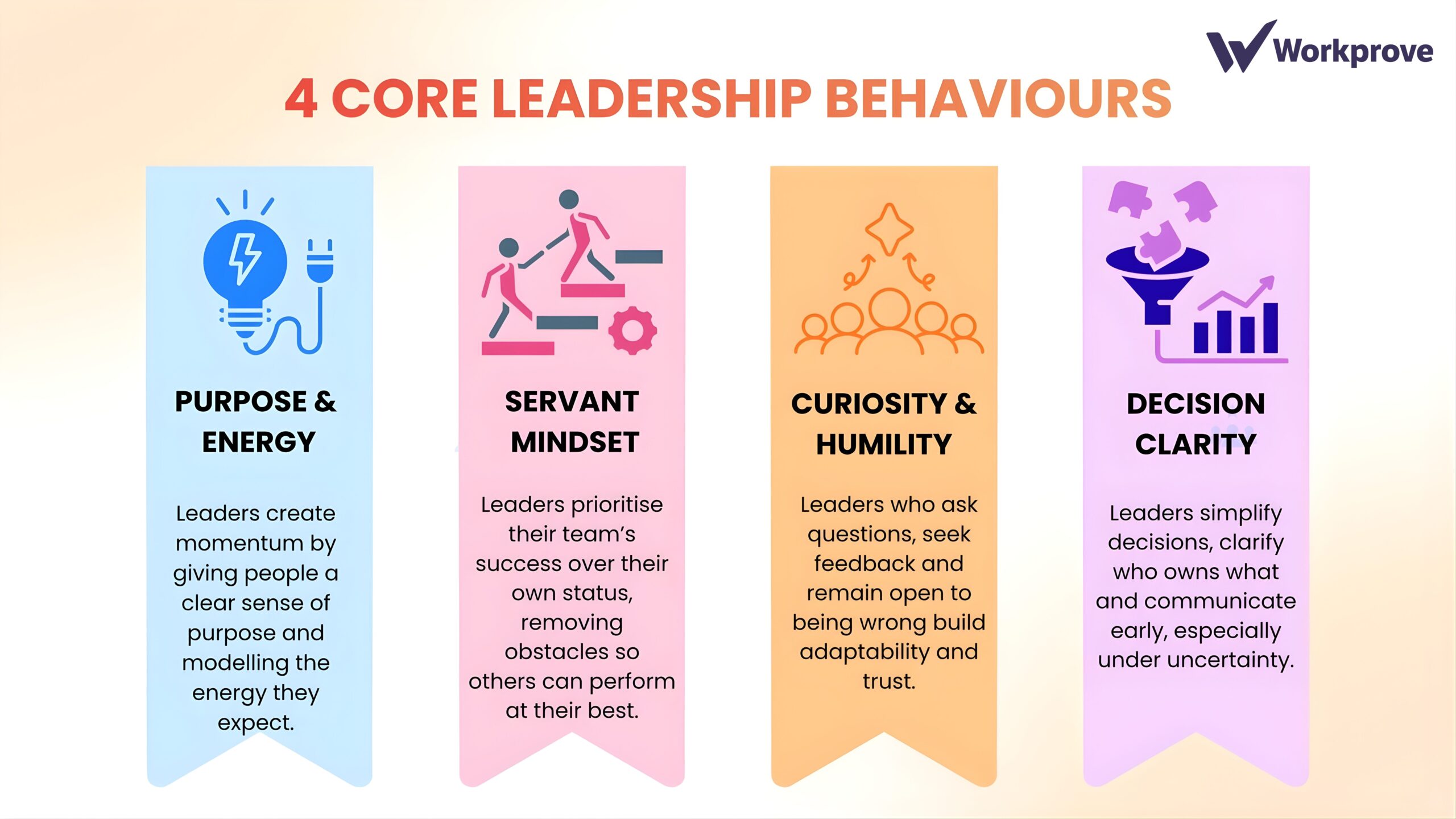
Effective leadership is a balance of innate traits, learned behaviours, and adaptable styles. A leader’s style may be what people see, but it’s the underlying behaviours like integrity, empathy and clear communication that ultimately sustain real impact. Without those foundations, even the most thoughtful leadership style fails to deliver. (Barends et al., 2023).
👉 Suggested Reading: Kolb’s Reflective Cycle: Complete Guide with Examples. A practical model that helps leaders turn experience into learning through structured reflection, improving judgement, self-awareness and adaptability.
Leadership Styles
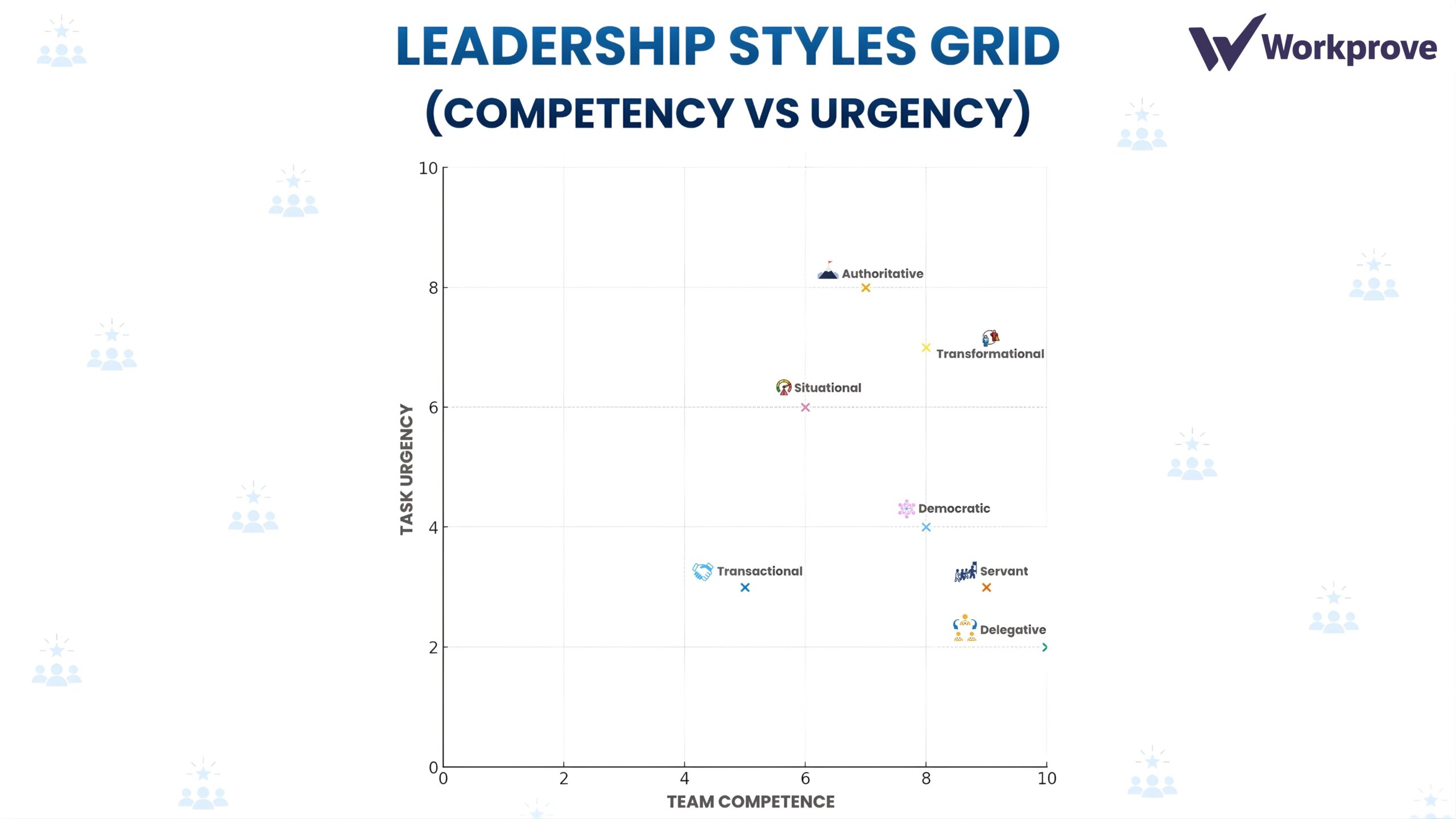
Leadership is rarely one-dimensional. The most effective leaders shift their approach as circumstances change (see leadership style grid for better clarity), balancing clarity with autonomy, structure with empathy, and control with trust. The following styles capture the main ways leaders influence performance, each with distinct strengths, limits and contexts.
Authoritative leadership
Authoritative leaders combine clarity of vision with decisive direction. They articulate a compelling goal, rally people around it, and then allow them space to deliver. This approach works best in periods of ambiguity or transformation, like when a team needs focus more than consensus.
Think of a product leader launching a new service: they define the destination, explain the rationale and let their experts determine the route. The challenge lies in balance; too much authority slides into rigidity, while too little dilutes purpose. A useful reflection: When did you last set a clear direction and then step back to let your team own the outcome?
Democratic leadership
Democratic, or participative, leadership thrives on collaboration. The leader invites ideas, encourages discussion and guides the group toward a shared decision. It’s a powerful style for generating creativity, trust and buy-in, particularly when teams are experienced and motivated.
A marketing head planning a campaign might hold an open workshop, gather perspectives, and synthesise them into a unified strategy. Yet this inclusivity comes with a trade-off: decisions take longer, and clarity can blur if no one finalises direction. Who did you involve in your last major decision, and how did that influence the result?
Delegative (laissez-faire) leadership
Delegative leaders trust their people to operate with minimal interference. They set boundaries and expectations, then step aside. This works beautifully in expert teams where autonomy drives innovation.
For instance, a research lead who outlines project goals and lets specialists run their experiments. But without shared accountability and checkpoints, freedom can turn into drift. The key is discernment: knowing when empowerment accelerates performance and when it risks fragmentation. What are you delegating today, and does your team have what they need to deliver confidently?
Transformational leadership
Transformational leaders lift people’s sights beyond immediate tasks. They inspire through purpose, model the behaviours they expect, and invest in growth. Under this style, performance is a by-product of belief. A transformational leader might reframe a project not as “meeting targets” but as “setting new standards for our industry,” fuelling pride and commitment. It excels during change, innovation and cultural renewal.
However, vision must be anchored in reality; inspiration without execution quickly becomes noise. How often do you connect your team’s work to something bigger than metrics?
Transactional leadership
Transactional leadership is pragmatic and disciplined. It defines expectations clearly, monitors results and rewards or corrects accordingly. In stable, process-driven environments like operations, logistics, and compliance, this clarity ensures reliability and fairness.
It works because it eliminates ambiguity: people know what success looks like. But the risk is over-reliance. A purely transactional approach can stifle initiative and leave teams disengaged once incentives fade. Great leaders use transactions as the foundation, not the ceiling. Are your systems motivating performance or merely maintaining it?
Servant leadership
Servant leaders invert the traditional hierarchy: they see their primary role as enabling others to succeed. They listen first, remove obstacles, and cultivate long-term trust. This approach builds loyalty, resilience and sustainable culture, especially in purpose-driven or people-centric organisations.
For instance, picture a team leader who consistently asks, “What can I do to make your work easier?” rather than “Why isn’t this done yet?” The danger is paralysis when decisions need to be made fast. The art lies in pairing empathy with decisiveness. When was the last time you acted purely in service of your team’s growth?
Situational leadership
Situational leadership is adaptability in action. It recognises that no single style fits every person or challenge. Instead, leaders adjust their behaviour by directing, coaching, supporting or delegating depending on the team’s competence and the urgency of the situation.
Example- A project manager might guide a new hire closely one week, then shift to a mentoring stance as confidence grows. It demands awareness, reflection and agility. Overusing one mode leads to frustration; fluidity builds trust. Do you consciously adapt your style, or does habit decide for you?