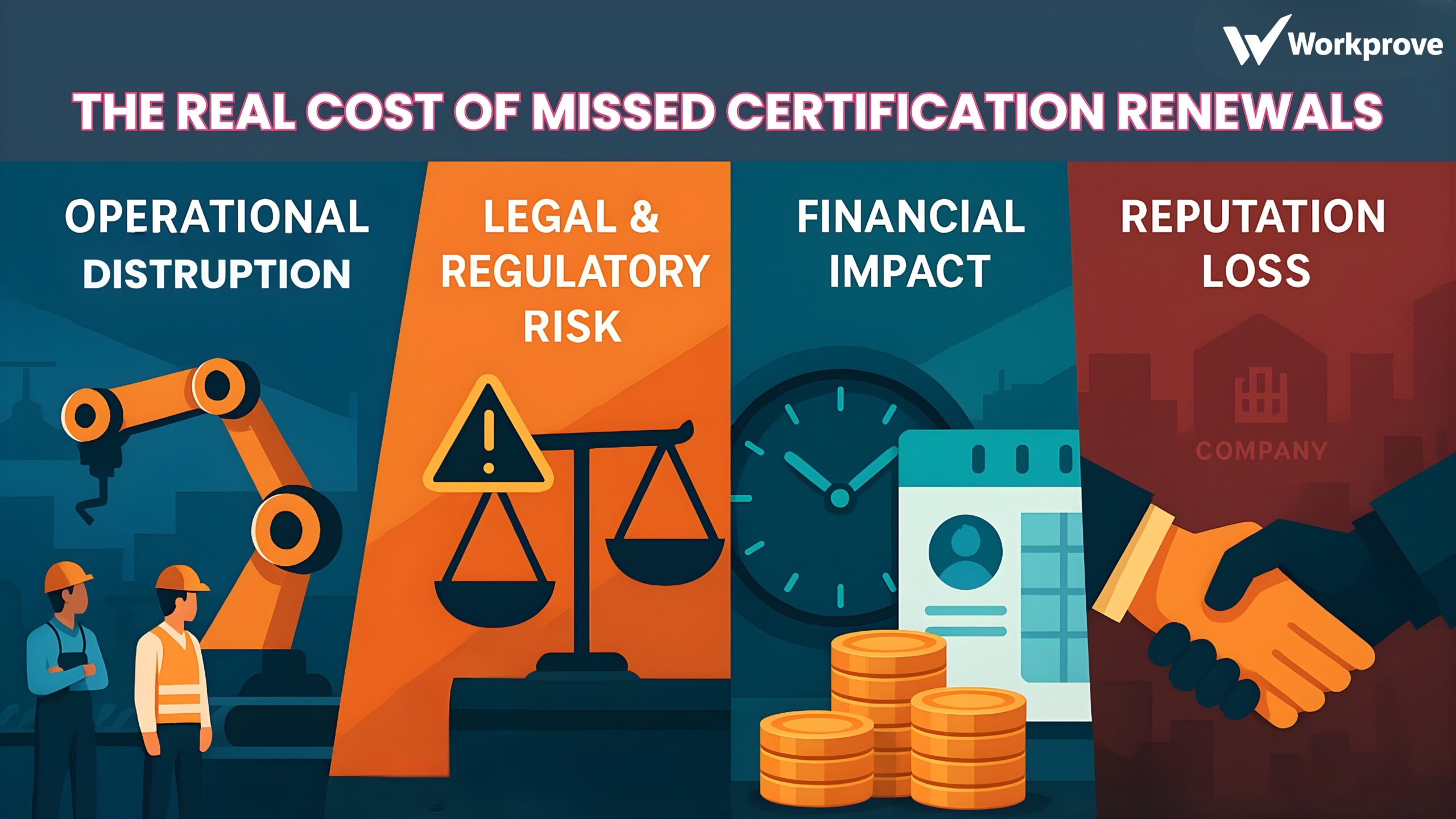
Thus, automation and certification renewal are not just convenient; it is a shield against fines, downtime, and reputational harm.
Which Industries Face the Greatest Risk?
While nearly every industry benefits, the following sectors face especially high stakes when certifications lapse:
| Industry | Key Certifications / Training at Risk | Risks if Lapse Occurs |
| Healthcare & Pharma | Medical licenses, clinical certifications, safety protocols | Unlicensed care, regulatory action, malpractice exposure |
| Construction / Engineering | Safety certifications (CSCS, scaffolding, forklift), structural engineering licenses | Site shutdowns, fines, project delays |
| Energy & Utilities / Manufacturing | Accidents, environmental violations, insurance issues | Compliance training, data protection certification, and AML licensing |
| Aviation & Transport | Pilot licences, maintenance certifications, safety training | Grounded flights, regulatory nonconformities |
| Finance & Corporate / Insurance | Compliance training, data protection certification, AML licensing | Legal penalties, data breaches, loss of trust |
Because failure in such sectors directly affects safety, regulatory standing, or huge revenue flows, implementing robust certification renewal automation shouldn’t be an option but must be foundational.
Best Practices for Automating Certification Renewals and Training Alerts
To begin with, centralise all records within a single, reliable system. Having training and certification data scattered across spreadsheets or folders often leads to errors and confusion. By consolidating everything in one place, organisations make audits simpler, ensure accuracy, and gain a clear overview of compliance at any moment.
Next, it is essential to layer notifications to avoid reliance on a single reminder. Traditionally, this could mean setting alerts 90, 30, and 7 days before expiry. However, in Workprove, reminders start 60 days before expiry and continue weekly through automated email summaries, maintaining visibility without overwhelming users. The dashboard and matrix further support this by providing live, up-to-date status tracking for every certificate.
Furthermore, organisations should assign responsibility clearly between employees and managers. Shared accountability helps ensure that no one assumes someone else is handling renewals, greatly reducing the chance of missed deadlines.
In addition, it is vital to automate escalations when deadlines pass unnoticed. By automatically alerting higher management, the system ensures that non-compliance is immediately visible and addressed before it impacts operations.
Finally, teams should continuously monitor dashboards that indicate whether employees are “compliant,” “at risk,” or “overdue.” These visual insights give managers the ability to act proactively, schedule training in advance, and maintain uninterrupted operations across the organisation.
Benefits of Doing Certification Renewals and Training Alerts
The organisation benefits when automation and certification renewal are implemented effectively:
- No surprises: Projects run without sudden stoppages.
- Audit Readiness: Regulators Require Up-to-Date Records.
- Efficiency: Admin teams save hundreds of hours.
- Accountability: Everyone knows their role in compliance.
- Trustworthiness: Clients view the company as reliable.
Evidence supports these benefits: one technology firm reduced its certification expiration rate from 15% to 7% in six months using automation (KPI Depot, 2023).
Moreover, with solutions like Workprove, organisations can achieve these gains seamlessly. Workprove integrates expiry alerts, escalation rules, and dashboards, transforming renewal tracking from manual firefighting into a proactive compliance process.
Example Automated Workflow
- Certification is logged when training is complete.
- Expiry date calculated and reminders scheduled.
- Alerts sent at 90, 30, and 7 days before expiry.
- Escalation triggered if deadlines pass.
- Renewal logged with a new expiry date.
- Dashboard updates compliance status.
Pitfalls to Avoid
- Assuming booking training equals renewal. Only completed and logged certifications count.
- Ignoring grace periods from certifying bodies. For example, the CCMC permits formal late renewal requests within 90 days of expiry but will deny any request submitted after 30 days without review (CCMC, 2024).
- Overcomplicating escalation paths delays action.
- Neglecting to maintain audit logs for proof of compliance.
How Workprove Simplifies Certification Renewal Tracking
At Workprove, certification renewals and training expiry alerts are not secondary features; they are a core strength. The platform helps organisations in regulated industries eliminate the risk of missed deadlines, costly downtime, and compliance failures.
Key features designed to support this include:
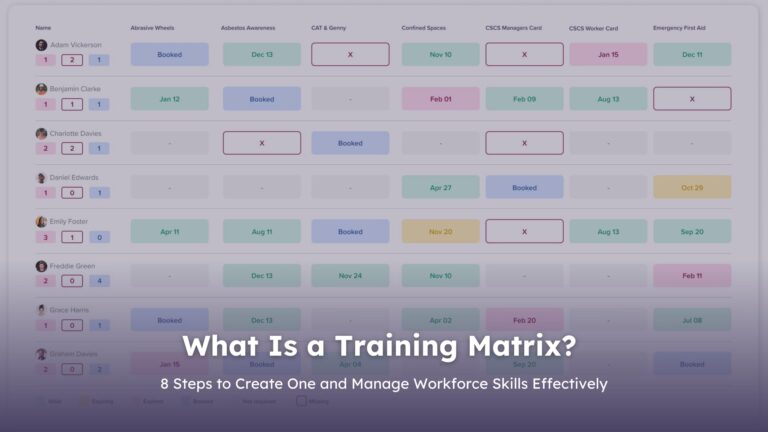
- The Workprove Matrix offers a clear visual snapshot of all certifications across individuals, teams, and departments.
- Automated weekly email reminders that notify managers and employees of upcoming expiries without manual effort.
- Hierarchical access and collaboration tools, enabling individuals, line managers, and the head office to act together in real time.
- The individual Workpass gives every employee ownership of their own certifications.
- The Refresher Training Planning Report, which identifies upcoming expiries and potential cost savings. For example, where several certifications are due to expire within months, the report highlights opportunities to book block refresher sessions, saving money and preventing lost productivity.
- Strategic scheduling insights, helping managers plan renewals around project deadlines to avoid workforce shortages or on-site stoppages.