Why a Training Matrix Is Important Across Many Industries
Many industries rely on a training matrix because it helps organisations maintain visibility over workforce skills, qualifications and regulatory training requirements. In sectors where safety, compliance and operational efficiency are critical, ensuring employees are properly trained and competent is essential.
A training matrix allows managers to identify skill gaps, plan training programmes and ensure that employees have the correct certifications for their roles. This is particularly important in safety-critical industries where training records and competency tracking are closely linked to compliance and risk management.
By using a training matrix, organisations can strengthen workforce capability, improve training planning and maintain a safer and more compliant workplace.
Which Industries Need a Training Matrix
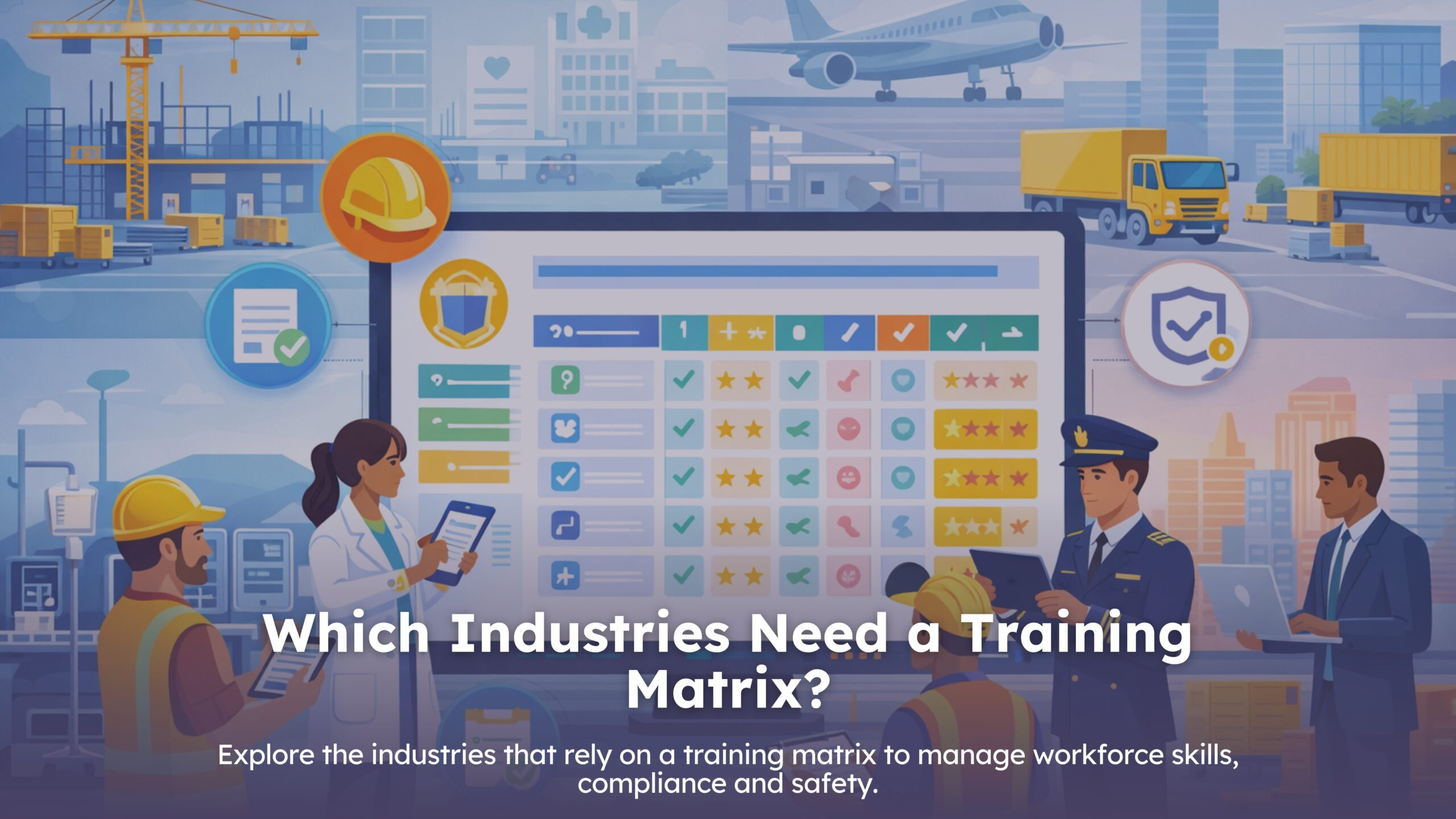
A training matrix can be useful across a wide range of industries because it provides a structured way to track employee skills, certifications and training requirements. Organisations can quickly see who is qualified to perform certain tasks and identify any gaps in workforce capability.
Today, many organisations also use digital solutions such as Workprove to manage their training matrix more efficiently, giving managers a clear overview of workforce competency, training progress and compliance requirements in one place.
Some industries where a training matrix may be particularly useful include are listed below.
However, any organisation that has a need to track and manage the training of its employees could benefit from using a training matrix.
1. Aviation
The aviation industry has strict regulations and industry standards that must be followed to ensure the safety of passengers and crew. By using a training matrix, aviation organisations can better plan and schedule training activities, and can also facilitate compliance with regulations and industry standards.
2. Healthcare
Healthcare professionals must have a high level of knowledge and skills in order to provide safe and effective care to patients. A training matrix can help to ensure that all healthcare personnel are properly trained and qualified to perform their duties, and it can also identify any gaps in training that need to be addressed. A training matrix is an essential tool for ensuring that all healthcare personnel have the necessary knowledge and skills to provide high-quality care to patients.
3. Manufacturing
Manufacturing operations can be complex and require a high level of knowledge and skills from employees in order to be carried out safely and effectively. A training matrix is an essential tool for ensuring that all manufacturing personnel have the necessary knowledge and skills to perform their duties safely and effectively, and to help the organisation achieve its goals and improve efficiency.
4. Construction
Construction can be a dangerous industry, due to the potential for accidents or injuries to occur on the job site. Some common hazards in construction include falls from heights, equipment-related accidents, and exposure to hazardous materials. A training matrix is an essential tool for ensuring the safety and effectiveness of construction personnel.
5. Transportation
The transportation industry can be dangerous due to the potential for accidents or injuries to occur while transporting passengers or goods. Some specific dangers in the transportation industry include vehicle accidents, injuries from handling cargo, exposure to hazardous materials, fatigue and violence against transportation workers. A training matrix mitigates these dangers and helps protect the safety and health of their employees.
6. Energy
Training compliance is important in the energy industry for a number of reasons:
- Safety: The energy industry can be dangerous due to the potential for accidents or injuries to occur, particularly in operations such as oil and gas extraction or power generation. Proper training can help to reduce the risk of accidents and injuries by teaching employees the skills and knowledge they need to perform their duties safely.
- Efficiency: Proper training can help employees to work more efficiently and effectively, which can improve productivity and reduce costs.
- Compliance: The energy industry is subject to a range of regulations and industry standards that must be followed to ensure the safety and reliability of energy production and distribution. Proper training can help employees to understand and comply with these regulations and standards.
- Quality: Proper training can help employees to produce higher quality work, which can improve the overall performance and reputation of the organisation.
- Career development: Training can help employees to develop new skills and knowledge, which can enhance their career prospects and contribute to the long-term success of the organisation.
A training matrix in the energy sector helps to ensure the safety, efficiency, and effectiveness of operations, and to support the career development of employees.
7. Retail
A training matrix is good for the retail industry because it helps to ensure that all employees are properly trained and qualified to perform their duties, which can improve customer service, increase efficiency and productivity, reduce errors, enhance compliance, and support career development.
8. Hospitality
Areas a training matrix helps improve within the hospitality industry are: improving customer service, increasing efficiency, enhancing compliance.
Overall, training is an essential aspect of the hospitality industry, as it helps to ensure the quality and effectiveness of operations, and to support the career development of employees.
9. Telecommunications
If a training matrix is not used in telecommunications the risks resulting from training gaps include decreased efficiency and productivity, decreased customer satisfaction, increased risk of errors, difficulty complying with regulations and industry standards, difficulty identifying and addressing training needs.
10. Finance
In finance a training matrix identifies training gaps around key types of training such as Financial analysis and modelling, accounting, regulatory compliance, financial software, industry-specific knowledge.
Conclusion
Across industries such as aviation, healthcare, manufacturing, construction, transportation and finance, the need to track employee skills and training is becoming increasingly important. A training matrix provides organisations with a structured way to ensure that employees have the right knowledge, certifications and competencies to perform their roles safely and effectively.
By clearly mapping training requirements and employee capability, organisations can identify gaps, improve workforce planning and maintain compliance with industry regulations.
Today, many organisations are moving beyond spreadsheets and manual tracking. Dedicated Platform like Workprove enable organisations to manage training matrices digitally, providing a clear overview of workforce competency, upcoming training requirements and compliance status in one place.
As industries become more regulated and skills requirements continue to evolve, having a centralised system to monitor training and competency is no longer just helpful, it is essential for building a safer, more capable and future ready workforce.