Common Skills Audit Mistakes to Avoid
Auditing qualifications rather than competence.
Certificates confirm that a person passed an assessment at a specific point in time. They do not confirm current capability. A skills audit that records qualification expiry dates without assessing applied competence is measuring the wrong thing.
Using the same assessment standard for all risk levels.
A task that creates minor inconvenience if done incorrectly does not require the same assessment rigour as a task where error creates serious harm. Skills audit design should be proportionate to risk.
Assigning assessment responsibility without providing assessment guidance.
Asking line managers to assess competence without giving them defined criteria, a structured method and clear recording requirements produces highly subjective, inconsistent data.
Treating the audit as a one-off project.
A skills audit is most valuable when it generates live, actionable data rather than a static document. That also could be the major limitation for using the skills audit template to fill, update and check records manually. Organisations that conduct audits every two or three years are measuring historical competence, not current workforce readiness.
Failing to act on what the audit finds.
This is the most consequential mistake. An audit that identifies known gaps and generates no documented response creates a liability. If an incident occurs after a competence gap has been formally identified, the absence of a mitigation record is difficult to defend.
Building a Skills Audit Process That Sustains Itself
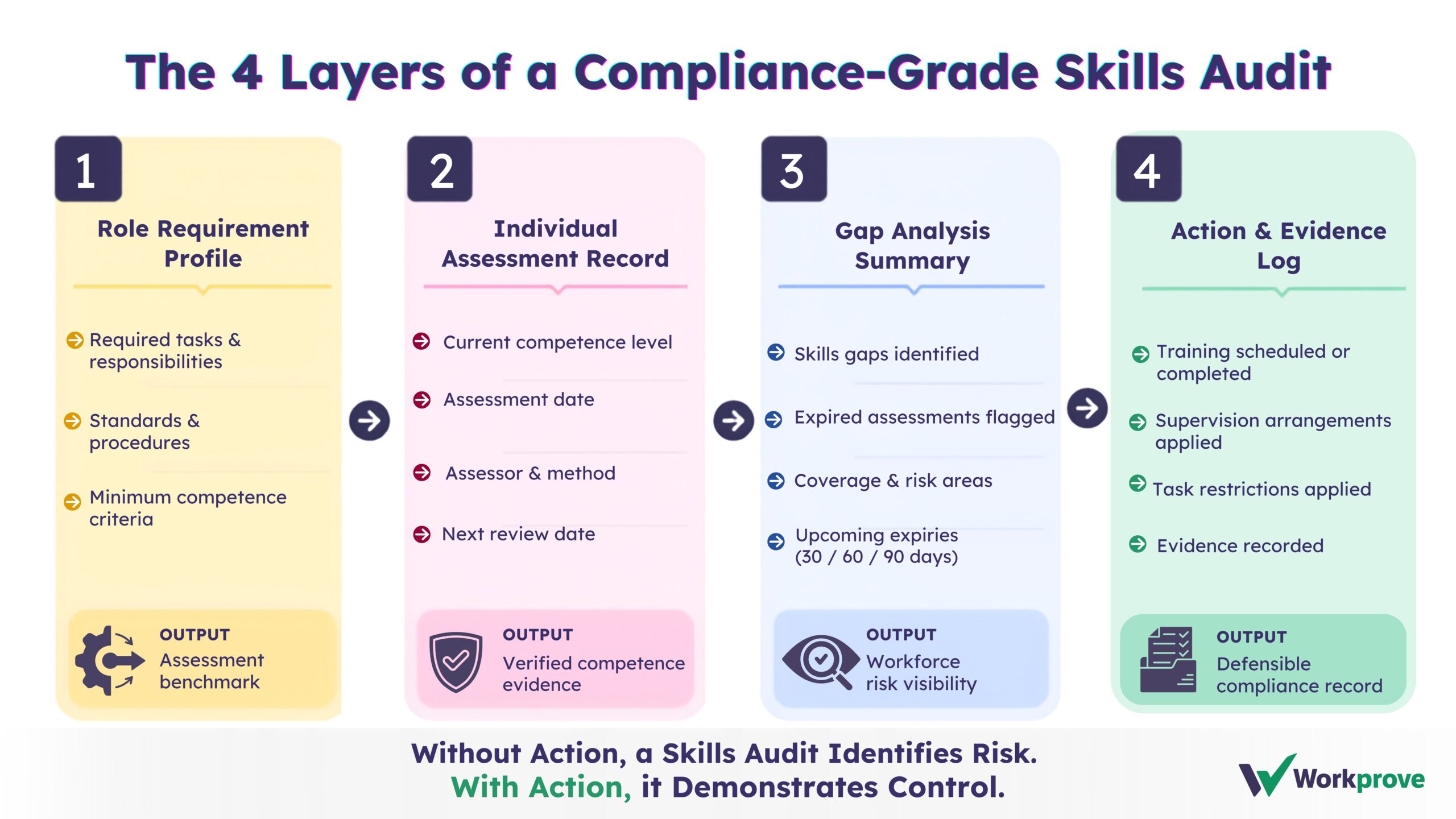
The difference between organisations that extract lasting value from skills audits and those that conduct them as periodic compliance exercises comes down to three structural decisions.
First, connect the audit to role requirement profiles rather than generic competency lists. When role requirements change, the audit criteria should change with them. This means the audit stays calibrated to operational reality rather than drifting into a historical record.
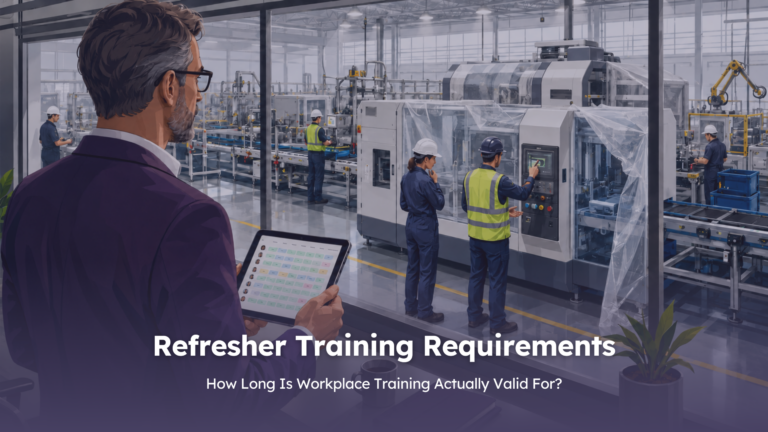
Second, build in structured reassessment triggers rather than calendar-based cycles. Calendar cycles (annual, biennial) miss the events that actually change competence requirements: equipment changes, procedure updates, regulatory changes, incidents, extended absences. Trigger-based reassessment is more responsive.
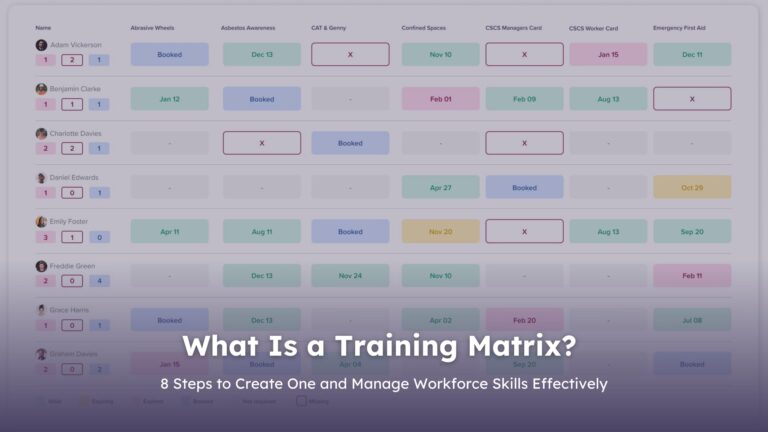
Third, use the audit to generate ongoing visibility, not periodic snapshots. The question an operations director or compliance manager should be able to answer at any point is: “What is the current competence status of my workforce against the requirements of their roles?” If that question requires a new audit to answer, the audit process is not providing adequate ongoing value.
Need a Ready-Made Skills Audit Template?
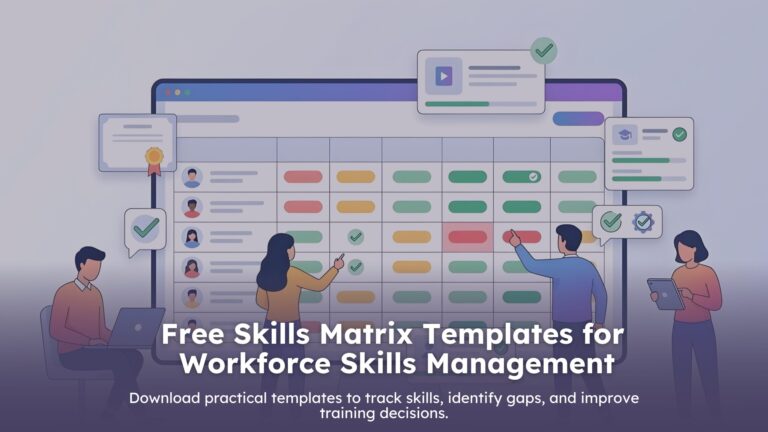
Rather than building your own framework from scratch, download our free skills audit template, including:
✓ Skills audit planning sheet
✓ Competency assessment framework
✓ Skills gap analysis tracker
✓ Action planning log
✓ Audit sign-off record
Download Free Skills Audit Template
Using Workprove to Support Your Skills Audit Process
Workprove is designed for organisations where workforce competence and compliance evidence need to be maintained continuously, not captured periodically.
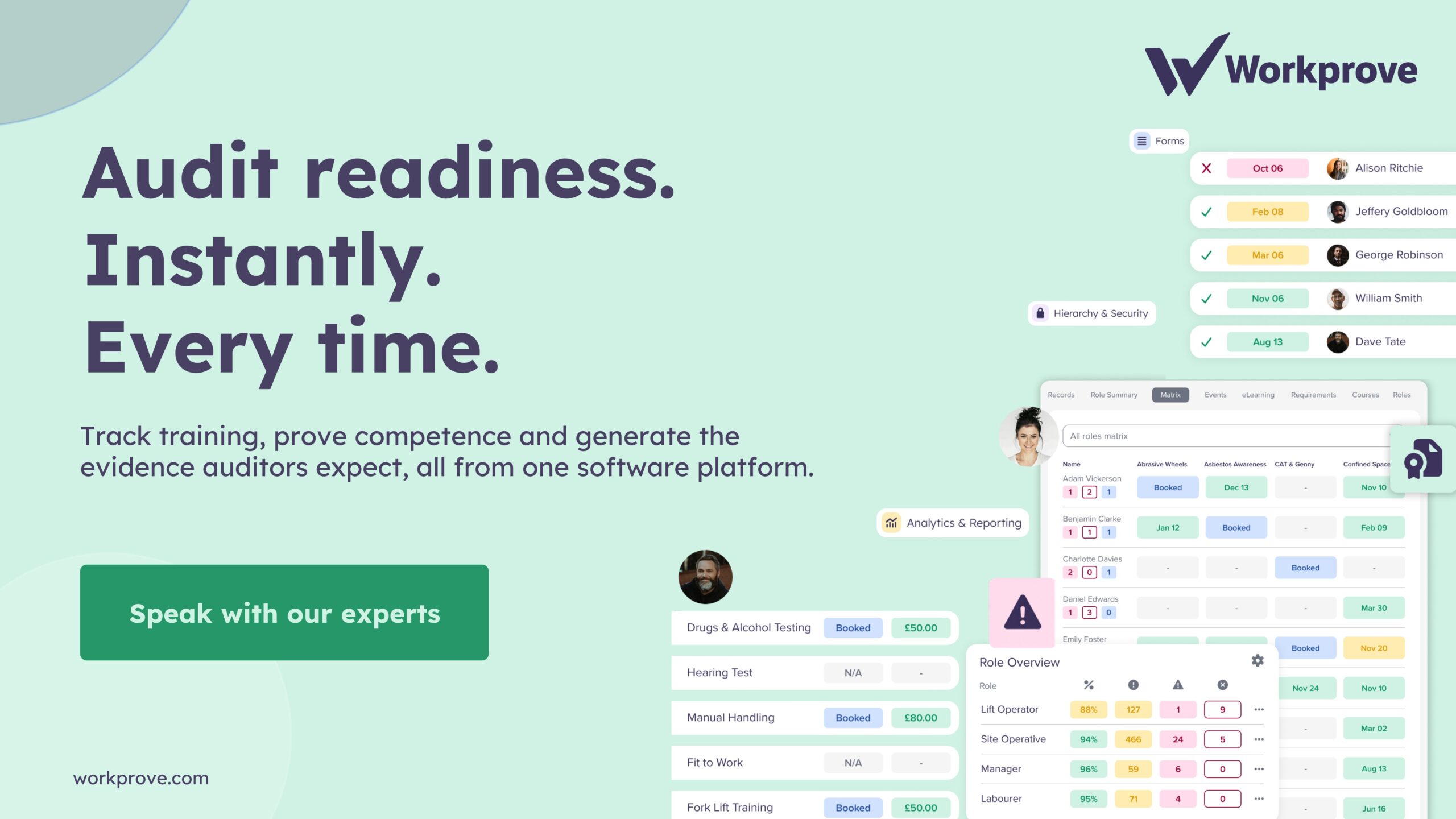
The platform supports the full skills audit cycle: defining role-specific competency requirements, recording and evidencing assessments, surfacing gaps and expiries before they create risk, and maintaining a defensible audit trail that does not depend on spreadsheets or manual chasing.
For organisations preparing for regulatory inspection, managing a large or distributed workforce, or operating in high-risk environments where competence evidence needs to be immediately retrievable, Workprove provides the structure that most standalone skills audit templates cannot.
Speak with Experts Take a Product Tour