Why does my company need a training matrix?
There are many benefits to using a employee training matrix, including:
- Improved employee performance: When employees are trained on the skills and knowledge they need to be successful in their roles, they are more likely to perform well.
- Reduced turnover: Employees who feel that they are being invested in are more likely to stay with their company. A training matrix shows employees that their company is committed to their development.
- Improved compliance: Many companies are required to provide training to their employees in order to comply with industry regulations. A training matrix can help to ensure that all employees are receiving the required training.
- Reduced costs: A training matrix can help to reduce the costs associated with training by identifying and prioritising the training needs of employees.
Where do I start building a training matrix?
This is a good opportunity to identify and define roles and responsibilities within your business. Look at the tasks your workforce may need to carry out and identify the training, skills and knowledge they would need to execute them in a safe and competent way. You may need to take independent advice on this and there is some good advice on the HSE website too. The law and guidelines may differ depending on what country you are in, so if in doubt, check.
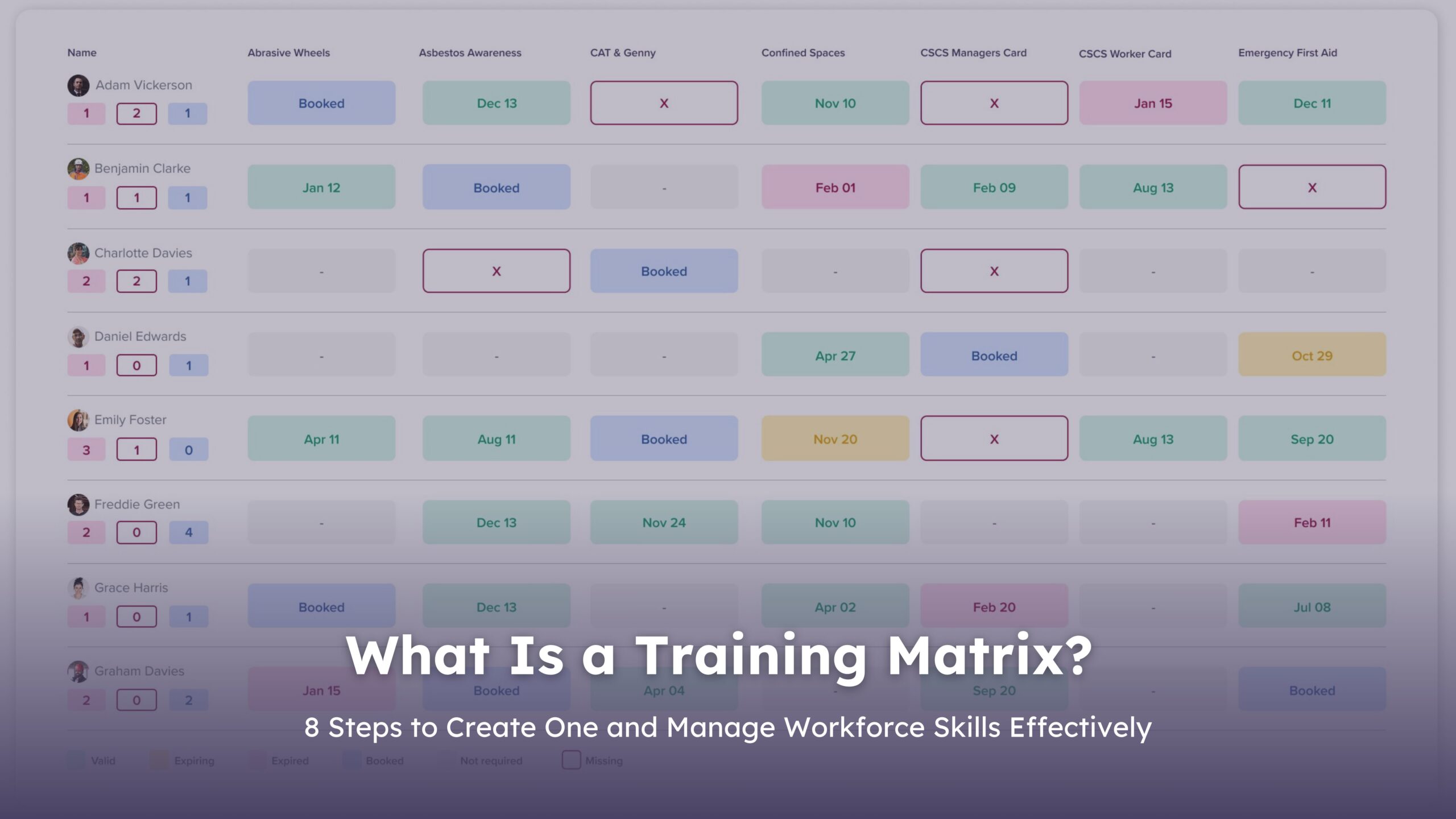
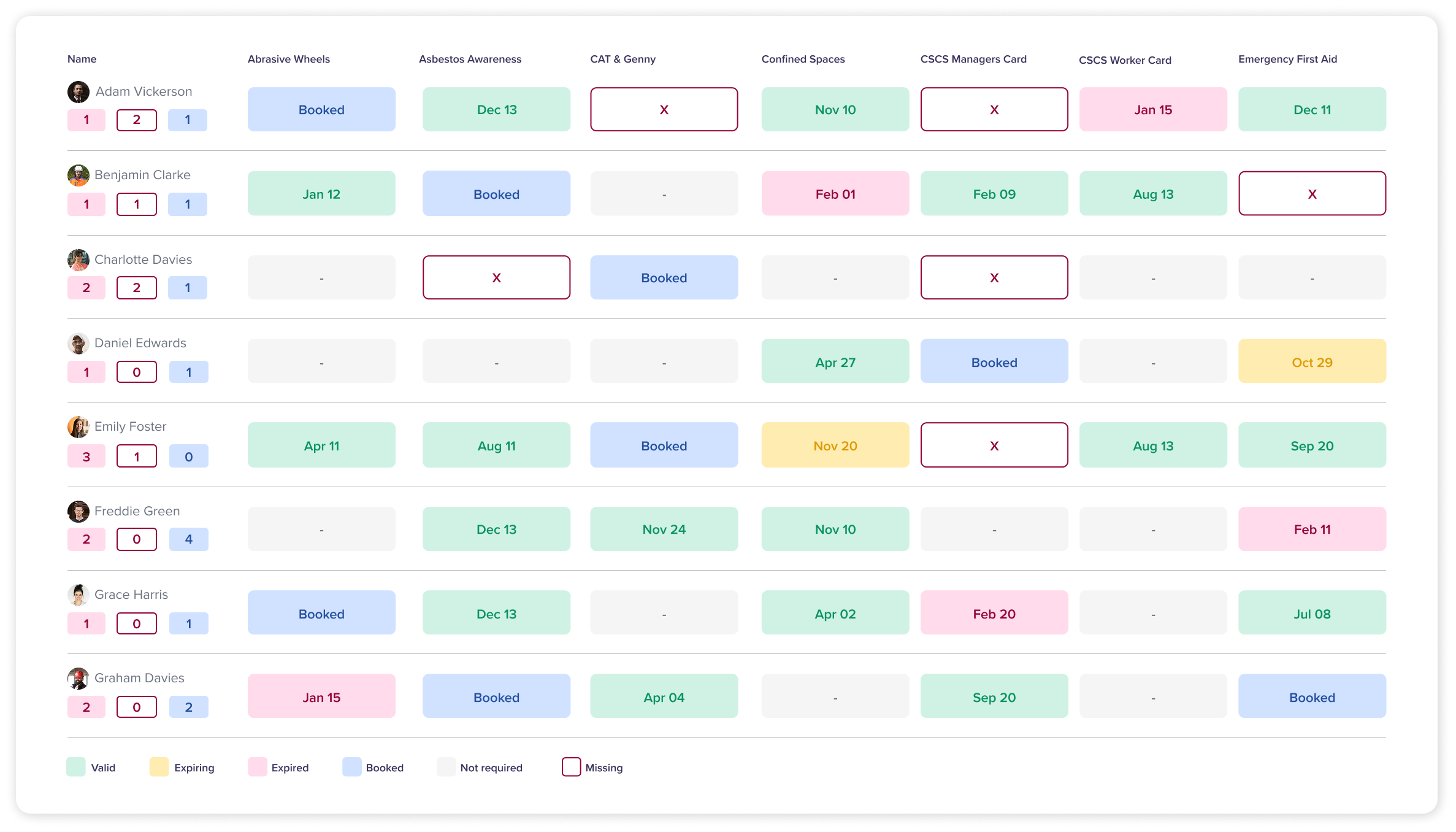
Usually you would list your workforce names in a column along the left of your page, and then list the training/skills or competency in a row along the top. Look at each individual and work through the list of training requirements, recording whether it is a requirement for their job role or not. Where there is a requirement, record if the person holds the necessary certificate or qualification and where possible, the expiry date. If there is a requirement and their certificate is missing, record this also.
What are the benefits of maintaining a training matrix?
As your training matrix fills up with data, you will begin to see gaps, shortages in skills and even where there is a saturation in a particular skill.
This data will allow you to ensure continuity and productivity by quickly identifying trained members of your workforce to carry out certain projects. You will know who can be re-deployed during periods of peak in demand or if a person is off sick. We are all humans after all and unfortunately sickness and periods of absence happen.
The data your matrix holds can help you to plan a training schedule which in turn allows you to ensure there are enough staff to cover those off the job training and take advantage of cheaper block booking costs. It will also help you to plan for succession and up-skilling your workforce. This helps to keep your workforce feeling valued and in turn, help with retention of key players within your organisation.
Know your workforce have been trained and their training is in date. Being proactive and ensuring that your staff are only working on tasks that they are adequately trained to do protects them, and you.
What are the risks of not maintaining a training matrix?
Managing your workforce skills and training records without a matrix will become a logistical nightmare, even with a small number of employees. You will likely experience difficulty in identifying suitably trained personnel, miss certificate expiry dates and spend much more on training in the long run.
You run the risk of employee’s carrying out roles that they are not trained to do or using expired certification. And here’s where things snowball…
Risks include:
- Increased workplace accidents and incidents
- Poor safety culture
- Poor staff retention
- Audit failure
- Loss of contracts
- Improvement Notices
- Prohibition Notices forcing you to stop work and costing you money
- Prosecution
- Fines
- Custodial sentences
- Civil claims
- Loss of reputation
It makes sense to put steps in place to avoid these risks. Protect your workforce, protect your organisation and protect yourself.
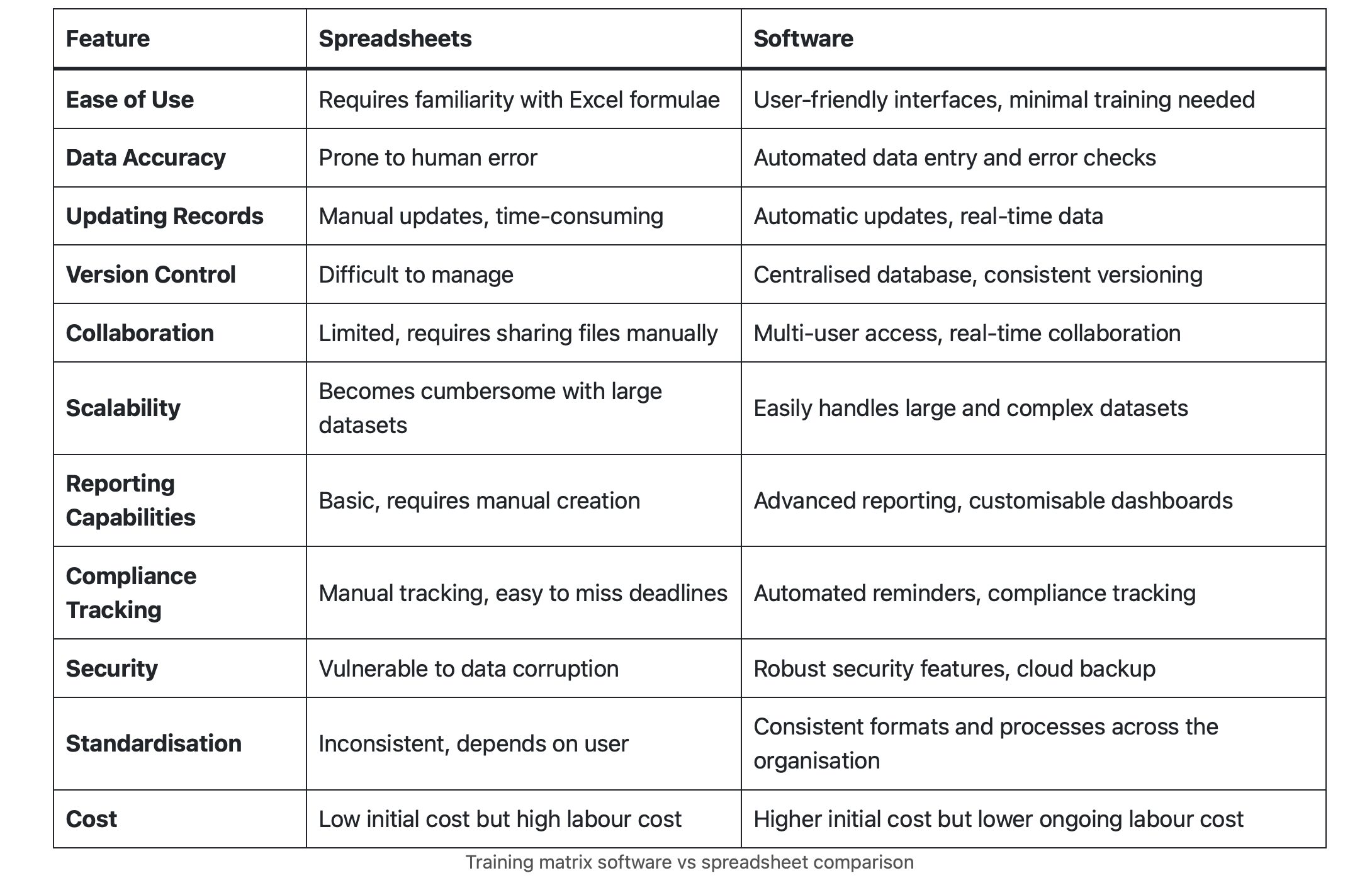
Training Matrix Spreadsheets vs Software