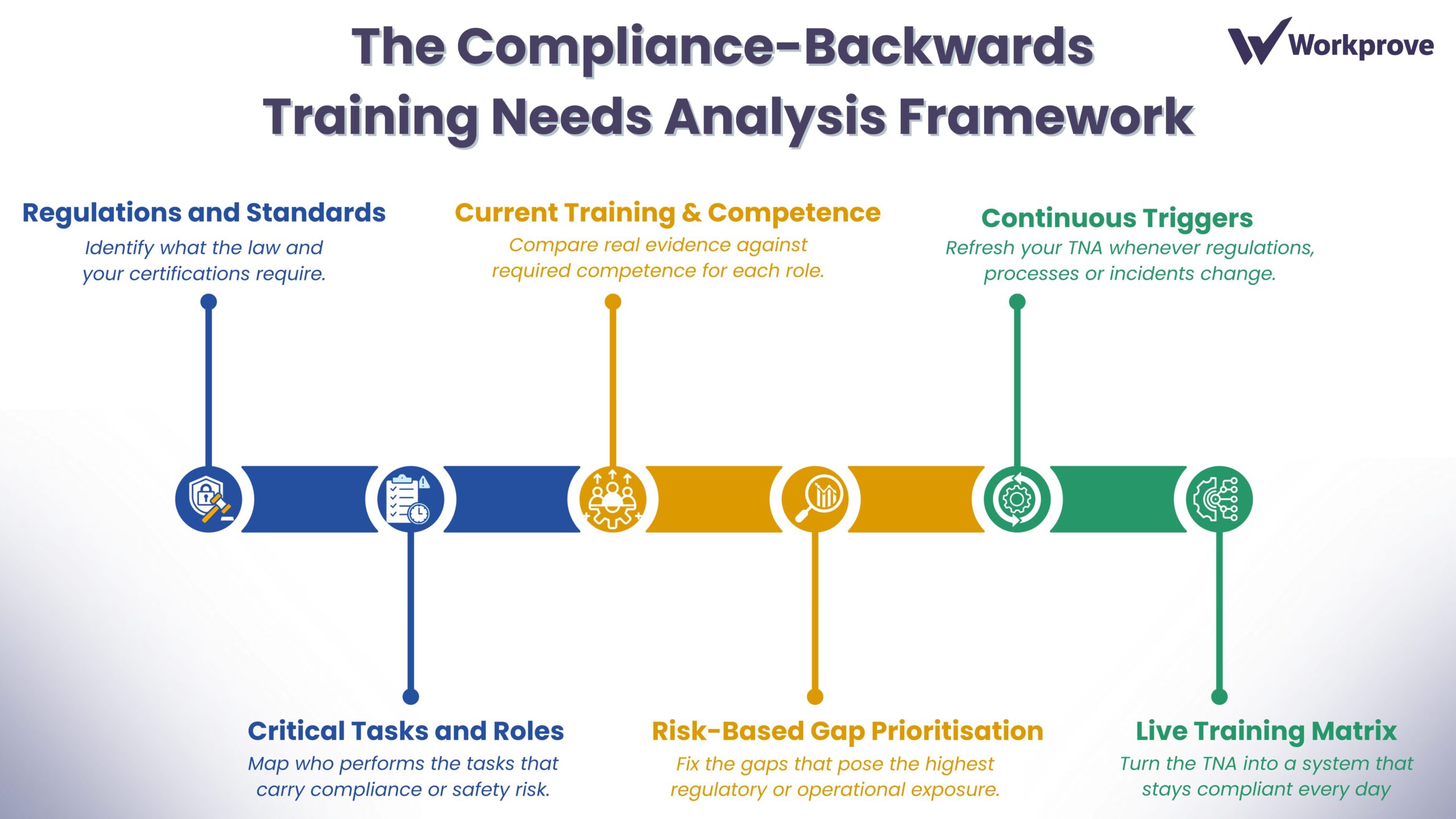
Following this, gaps must be prioritised based on regulatory risk, safety impact, operational criticality and likelihood of task execution. You do not treat all gaps equally. Critical tasks that are carried out often or autonomously must be resolved first. Less critical or infrequent tasks can be scheduled for regular training cycles.
Finally, because organisations evolve with new processes, hires, contractors, regulatory updates or incidents, the TNA should not remain static. Instead, define triggers for review. Any change in regulation, introduction of new equipment or processes, audit findings or incidents should prompt a fresh TNA cycle.
This compliance backwards approach establishes a clear and defensible link between what regulations require and what your organisation executes. It leaves little room for doubt in an audit.
Here is a systematically curated TNA template designed to help you apply this framework in your own organisation. Download it to map requirements, assess gaps and record evidence correctly.
Download the Ultimate Compliance TNA Template
Why a Live Training Matrix Determines Whether TNA Succeeds or Fails
Even a well-structured Training Needs Analysis does not guarantee compliance if it remains a static document. Organisations often complete a TNA report and file it away. Over time, as personnel change, processes evolve, and training expires, the system decays.
In practice, spreadsheets are prone to errors and lack scalability. Manual updates are inconsistent, reminders fail, and role changes or site transfers are often not recorded promptly. Certification experiences go unnoticed. Temporary or contractor staff often remain untracked.
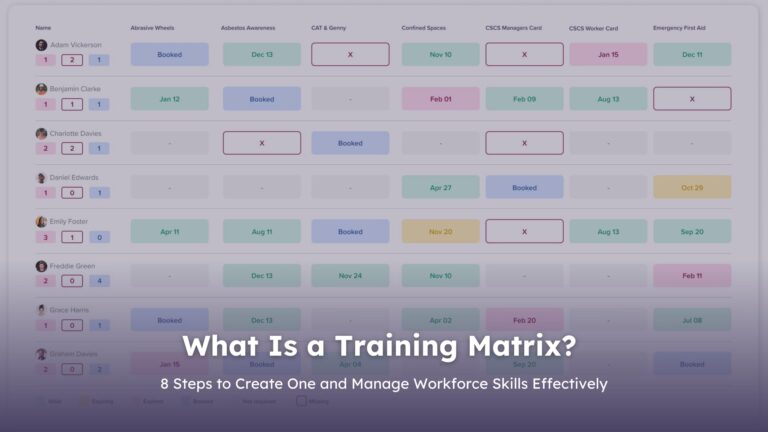
A live, digital training matrix is the only reliable way to prevent this slow drift. Such a system maintains a dynamic record of each person’s role, required training, competence evidence, certification expiry dates and recertification schedules. As roles change or new personnel join, the system updates automatically. Alerts for upcoming expiries or overdue training trigger action proactively.
With a live matrix, compliance teams gain real-time visibility into gaps. Frontline managers can see their teams’ competence at a glance rather than relying on memory. When auditors request training records, reports can be generated instantly, clearly, cleanly and defensibly.
In short, the difference between a good TNA and a truly effective one is not the analytical process itself. It is how that process is operationalised and maintained.
👉 Suggested Reading: Training Matrix vs Spreadsheets: Which One Actually Keeps You Compliant?
A clear breakdown of why spreadsheets fail under audit pressure and how a live training matrix prevents unexpected non-conformances.
How a Platform Like Workprove Converts TNA into a Daily Compliance Control
Once you have defined training requirements, roles and competence needs, the next challenge is maintaining that clarity and compliance every day. A platform such as Workprove can transform your TNA from a one-time exercise into a living, automated compliance control.
Workprove can digitise your entire training matrix, including roles, tasks, required courses, competence assessments, renewal cycles and evidence records. As employees join, change roles or move between sites, the system automatically assigns the training relevant to their new responsibilities. Recertification reminders, expiry tracking and automatic alerts ensure that no requirement slips through the cracks. Competence evidence, not just attendance, can be logged, managed and retrieved.
When an auditor requests proof that specific individuals are authorised for a task or trained to a certain standard, Workprove can generate real-time reports filtered by task, role or site. Because the records are centrally stored, properly time-stamped, role-linked and evidence-supported, the organisation can respond immediately with confidence.
With this approach, TNA becomes more than a risk mitigation exercise. It becomes a proactive control that keeps competence, compliance and readiness continuously rather than occasionally.
A Final Reality Check for Audit Readiness
Before concluding, consider these questions carefully. Can you trace every training requirement back to an applicable regulation, standard or internal procedure? Can you map which tasks are critical, who performs them and what evidence exists of their competence? Are contractors, temporary staff and site-specific personnel included under the same system? Do you log competence assessments as well as attendance? Do you have a process and triggers to refresh your TNA whenever circumstances change? And last, could you realistically generate a complete and accurate training and competence report for any sample chosen by an auditor in under ten minutes?
If you hesitate at any of these points, your TNA may not be as audit-ready as you believe.
Conclusion: Training Needs Analysis as a Strategic Compliance Control
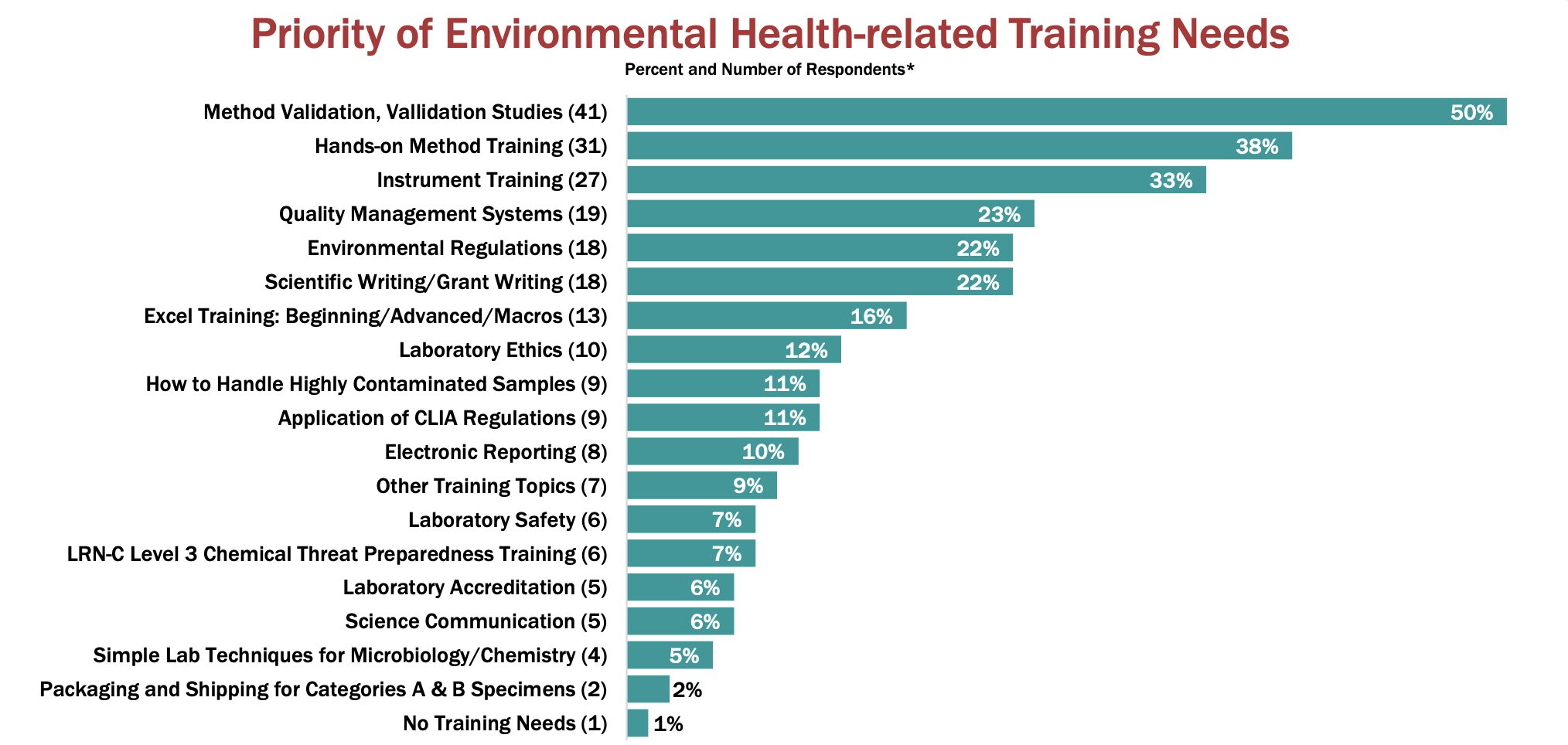
As audits become more stringent and regulators demand greater accountability, organisations must evolve their approach to Training Needs Analysis. Recent evidence from public health laboratories and life sciences organisations demonstrates that compliance depends not on occasional training efforts but on continuous, risk-based and documented competence management.
A robust, compliance backwards TNA, combined with a live, digital training matrix, transforms training from a reactive task into a proactive control. With this approach, organisations move from scramble and risk to discipline and readiness. They move from uncertainty to confidence.
FAQs
What is the main purpose of a Training Needs Analysis in compliance?
A Training Needs Analysis ensures that every employee performing a regulated or safety-critical task is trained and competent in accordance with legal, industry and internal standards. It protects the organisation from audit findings by linking training directly to regulatory requirements and operational risk.
How often should a Training Needs Analysis be updated?
A TNA should be refreshed at least annually, but it must also be updated whenever regulations change, new equipment or processes are introduced, responsibilities shift, or incidents or audit findings reveal new risks. Continuous updating prevents unexpected non-conformances.
Is a TNA mandatory for audits and certifications?
Many regulated frameworks expect or implicitly require a documented TNA. Standards such as ISO 9001, ISO 45001, and food safety schemes like SQF and BRCGS require organisations to define competence requirements, maintain training records and demonstrate role-based training logic. A TNA is the mechanism that proves this during audits.
References
Association of Public Health Laboratories (APHL). 2023. 2023 Environmental Health Training Needs Assessment Summary Report. APHL. Available at: https://www.aphl.org/aboutAPHL/publications/Documents/QSA-2023-EH-TNA.pdf.
Association of Public Health Laboratories (APHL). 2024. 2024 Public Health Laboratory Essentials Training Needs Assessment Summary Report. APHL. Available at: https://www.aphl.org/aboutAPHL/publications/Documents/QSA-2024-PHL-Essentials-TNA.pdf.
Lee, M.D. and Wiklund, M. (2023) ‘ComplianceWire ® 2023: Compliance Learning Benchmarking Study’. Available at: https://doi.org/10.13140/rg.2.2.20763.64800.