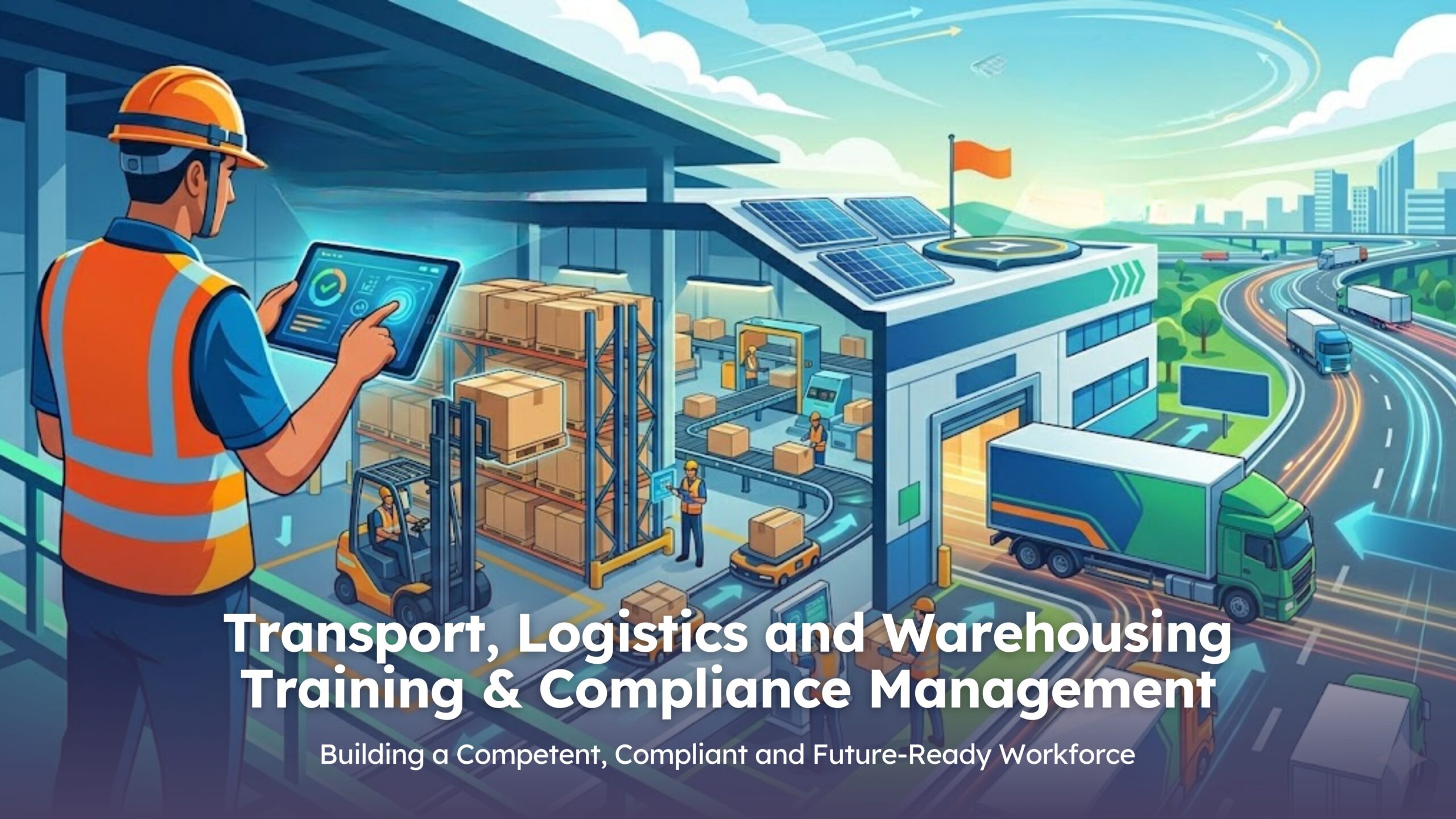
Transport, Logistics and Warehousing Training Management
Skip to content

Transport, Logistics and Warehousing Training and Compliance Management

Transport, Logistics and Warehousing Training & Compliance Management full guide blog

Introduction

Transport, logistics and warehousing form the operational backbone of modern economies. Every product, from raw materials to finished goods, relies on efficient movement, storage and distribution systems. In the UK, this sector underpins supply chains across construction, manufacturing, retail and healthcare, making it indispensable to economic stability and growth.

However, the industry is undergoing rapid transformation. Rising customer expectations, e-commerce acceleration, labour shortages, and tightening regulatory frameworks are reshaping how organisations operate. At the centre of these changes lies a critical challenge: ensuring that the workforce remains skilled, compliant and operationally ready at all times.

In high-risk, high-volume environments such as warehouses, distribution centres and transport networks, even a single compliance gap can lead to operational disruption, safety incidents or audit failure. This makes workforce visibility and competency assurance a core operational requirement rather than an administrative function.

This blog provides a detailed exploration of the sector, including its economic significance, evolving landscape, key operational challenges, and the growing importance of transport training and competency management. It also examines how digital solutions such as Workprove enable organisations to move from reactive compliance to proactive workforce assurance.

The Transport, Logistics and Warehousing Industry: Scope and Significance

The transport, logistics and warehousing sector encompasses a wide range of activities, including:

  • Freight transport by road, rail, air and sea
  • Warehousing and inventory management
  • Distribution and last-mile delivery
  • Supply chain coordination and planning

Together, these functions ensure that goods are delivered efficiently, safely and on time.

The sector also operates within complex, time-sensitive environments where delays, errors or non-compliance can have immediate downstream impacts across the entire supply chain.

Economic Contribution

The UK logistics sector is a major economic force. It contributes approximately £185 billion to Gross Value Added (GVA) and supports a vast network of businesses and employment (Logistics UK, 2024). The broader logistics market was valued at over USD 541 billion in 2024, with projections indicating sustained growth driven by digitalisation and trade expansion (IMARC Group, 2022).

Transport and storage alone accounted for £86.1 billion in economic output in 2023, reflecting the scale and importance of these operations (ReportLinker, 2023).

Growth Drivers

Several structural trends are driving growth and complexity in the sector:

  • E-commerce Expansion
    The continued rise of online retail has significantly increased demand for warehousing space, fulfilment centres and last-mile delivery networks. Effective transport training management ensures workforce readiness in this high-demand environment.
  • Infrastructure and Trade
    Ongoing investment in infrastructure and international trade agreements is expanding logistics capacity and connectivity.
  • Automation and Digital Transformation
    Technologies such as warehouse management systems, robotics and real-time tracking are reshaping operations, requiring new skills and competencies.
  • Sustainability Pressures
    Organisations are under increasing pressure to reduce emissions and improve environmental performance, making compliance-focused transport training management more critical than ever.

Warehousing Demand

The warehousing segment has experienced particularly strong growth. Large-scale warehouse development has increased significantly over the past decade, reflecting demand for storage and distribution capacity (Savills, 2024). In 2025, UK logistics space take-up reached 25.6 million sq ft, demonstrating continued market momentum (CBRE, 2026).

This growth places increasing pressure on organisations to scale transport training management at the same pace as physical infrastructure.

UK Logistics Market Growth data

Title: UK Logistics Market Growth
Source: CBRE (2026)

Workforce Dynamics and Operational Complexity

While the sector continues to grow, its workforce structure presents unique challenges that directly impact training and compliance.

A Highly Distributed Workforce

Logistics operations are spread across multiple locations, including warehouses, transport routes and customer sites. Employees often work in shifts, across regions, and in dynamic environments. This fragmentation makes maintaining consistent oversight of workforce competency extremely challenging, highlighting the need for robust transport training management systems.

Diverse Roles and Skill Requirements

The sector includes a wide range of roles, such as:

  • HGV drivers
  • Forklift operators
  • Warehouse operatives
  • Supervisors and site managers
  • Logistics planners

Each role requires specific training, certifications and safety competencies. Ensuring these requirements are met consistently demands a centralised transport training management approach.

High Turnover and Seasonal Demand

Labour shortages and fluctuating demand result in high workforce turnover and reliance on agency staff. Temporary workers often lack verified or up-to-date training records, increasing operational and compliance risk. A live transport training management system helps organisations verify competency in real time.

Why Training and Compliance Management is a Critical Challenge

Training and compliance are not just administrative functions in this sector, they are directly linked to safety, operational efficiency and legal accountability.

Fragmented Systems and Manual Processes

Many organisations still rely on spreadsheets or disconnected systems to manage training records. This leads to:

  • Inconsistent data across sites
  • Limited visibility into workforce competency
  • Time-consuming administrative processes

Manual tracking also increases the likelihood of human error, particularly when managing large, distributed teams.

This fragmentation makes it further difficult to produce accurate reports, respond to audits, or confidently verify compliance at the point of need.

Lack of Real-Time Visibility

One of the most significant challenges is the inability to answer a simple but critical question in real time:

Is every individual on-site fully trained and compliant for the role they are performing?

Without a centralised system, this visibility is often lacking. As a result, organisations operate with a degree of uncertainty, only identifying compliance gaps after incidents, inspections or audits.

In practice, this means decisions are often made without full confidence in workforce readiness.

Expiry and Renewal Risks

Certifications for equipment operation, safety training and regulatory compliance often have expiry dates. Missing a renewal can result in:

  • Non-compliance during audits
  • Increased safety risks
  • Potential legal consequences
  • Operational downtime and inability to deploy staff for critical tasks

In high-volume environments, manually tracking hundreds or thousands of expiry dates is both inefficient and unreliable.

Supply Chain and Contractor Compliance

Beyond internal teams, organisations must also ensure that contractors, third-party logistics providers and agency workers meet the same compliance standards.

Without a centralised system, verifying external workforce competency becomes time-consuming and inconsistent, increasing exposure to risk across the supply chain.

Regulatory and Safety Pressures

The sector is subject to strict health and safety regulations. Incidents involving untrained or non-compliant staff can have severe consequences, including financial penalties and reputational damage.

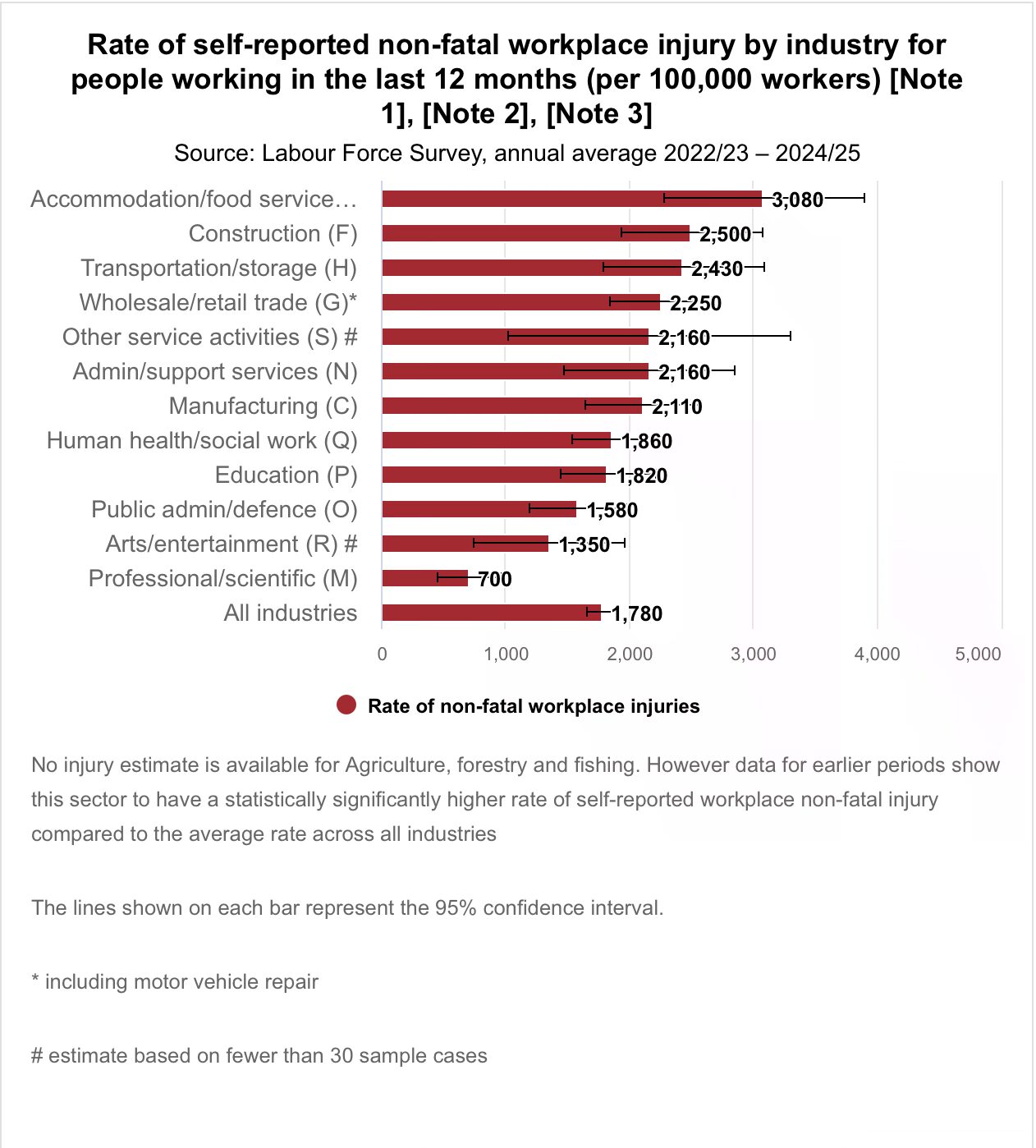
According to the UK’s health and safety regulator, workplace transport remains one of the most common causes of fatal and serious injuries in industrial settings (HSE, 2024). This highlights the importance of ensuring that only competent individuals perform high-risk tasks.

Injury by transportation stats HSE 2024

Title: Health and safety statistics
Source:Work-related ill health and injury by industry

The Real Operational Risk: When Visibility Fails

In logistics environments, risk is not theoretical, but is operational and immediate.

  • A forklift operator with an expired licence continues working unnoticed
  • An agency worker is assigned to a role without verified training
  • A site manager cannot confirm compliance status during an audit

These are not rare scenarios but are everyday risks in the absence of real-time workforce visibility.

A distribution centre begins a morning shift with 40 operatives. Two are agency workers, one has an expired forklift licence, and another is assigned to a role they are not certified for. The system does not flag it. The shift proceeds. Thus, this is how risk enters operations, not through failure, but through invisibility.

When visibility fails, organisations move from controlled operations to reactive firefighting, often discovering issues only after they have already caused disruption or risk.

The Shift Towards Competency-Based Workforce Management

To address these challenges, organisations are moving beyond traditional training management towards a competency-based approach.

This involves:

  • Linking training requirements directly to roles
  • Continuously assessing workforce competency
  • Using real-time data to inform operational decisions

A competency-based model also ensures that training is not just completed, but relevant, current and aligned with job responsibilities!

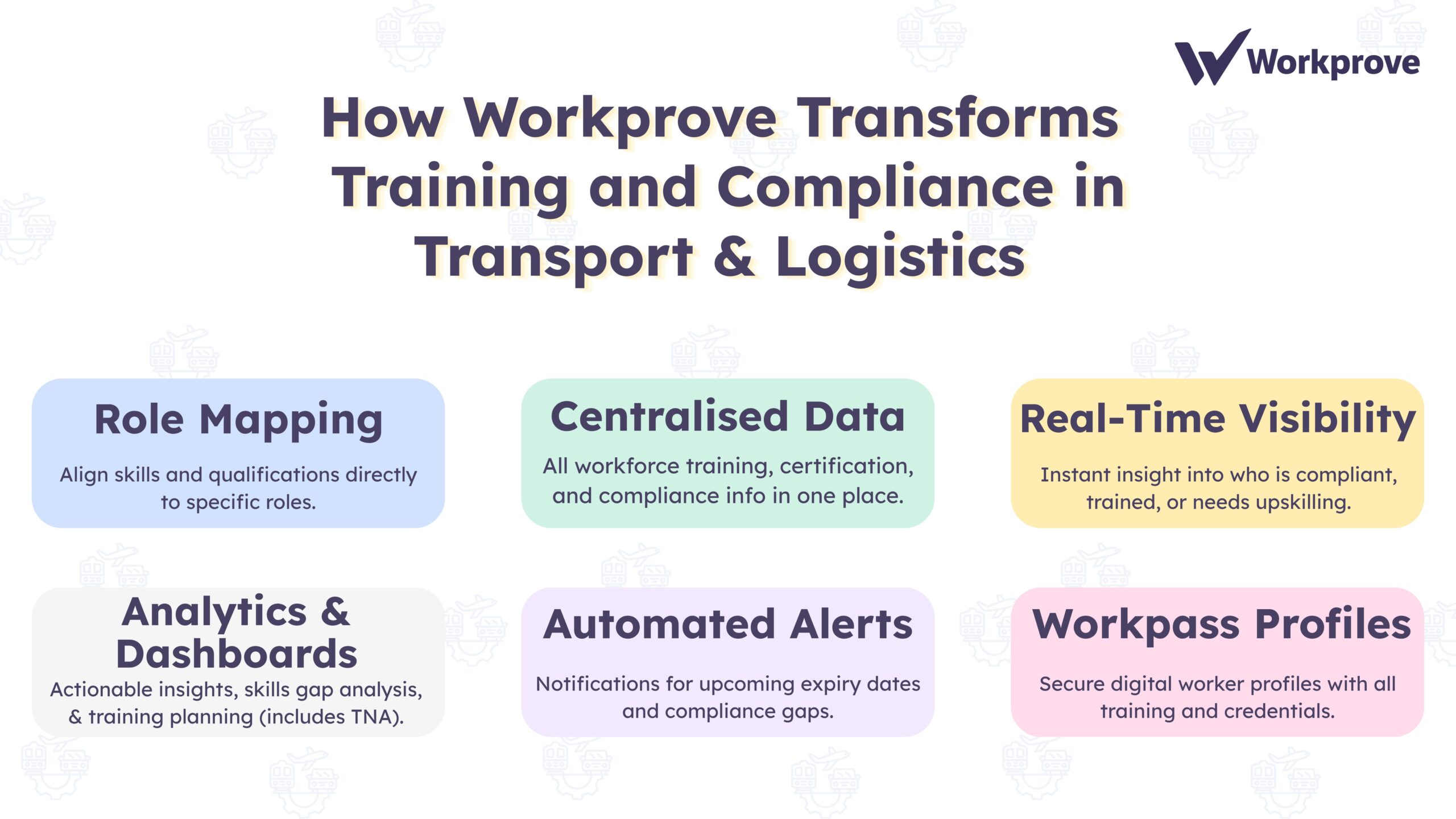
How Workprove Transforms Training and Compliance

Workprove is designed to address the specific challenges faced by industries like transport, logistics and warehousing. It provides a unified platform for managing workforce competency, training and compliance in real time.

From Fragmentation to a Single Source of Truth

Workprove centralises all training, certification and compliance data into one platform, eliminating the need for spreadsheets and disconnected systems. This creates a single source of truth for workforce competency across all sites, roles and stakeholders.

Live Competency Matrix

Workprove creates a dynamic, role-based competency matrix that maps each employee’s skills, certifications and training status. This allows organisations to instantly identify:

  • Who is compliant
  • Who requires training
  • Where competency gaps exist

This live operational visibility ultimately enables proactive decision-making rather than reactive issue management.

Role-Based Training Alignment

Instead of assigning training to individuals in isolation, Workprove links training requirements directly to roles. It supports:

  • Consistency across the organisation
  • Faster onboarding
  • Reduced risk when employees change roles

Thus, this ensures that no critical competency requirement is overlooked at the role level.

Automated Alerts and Notifications

The platform automatically tracks expiry dates and sends reminders to both employees and managers. This eliminates manual tracking and ensures that certifications are always up to date. Thus, significantly reduces the risk of expired licences or missed renewals going unnoticed.

Workpass QR Verification

Workprove enables instant, on-site verification of competency through QR-based Workpass access. Managers can quickly confirm whether an individual is authorised to perform a specific task, improving both safety and efficiency. This is particularly valuable in fast-paced environments where decisions need to be made quickly and confidently.

Centralised, Audit-Ready Records

All training and compliance data is stored in a single system, making it easy to:

  • Prepare for audits
  • Demonstrate compliance
  • Generate reports

Hence, organisations can move from scrambling for documentation to being continuously audit-ready.

Workprove in Transport, Logistics and Warehousing Environments

In this sector, Workprove delivers measurable operational benefits by addressing real-world challenges.

  • Improved safety and reduced operational risk
  • Faster onboarding of permanent and agency workers
  • Real-time visibility across sites, roles and shifts
  • Reduced administrative workload through automation
  • Stronger compliance across internal teams and supply chains

👉🏻 Explore how Workprove supports competency and compliance in transport, logistics and warehousing. 

how workprove supports training and compliance management in transportation, logistics and warehousing industries

Most importantly, it enables organisations to operate with confidence, knowing that workforce competency is continuously monitored and controlled.

The Future of the Industry and Workforce Management

Looking ahead, the transport, logistics and warehousing sector will continue to evolve rapidly.

Key trends include:

  • Increased adoption of automation and AI
  • Greater integration of digital supply chains
  • Rising demand for skilled and adaptable workers
  • Stronger regulatory and sustainability requirements

Also, as operations become more complex, the ability to manage workforce competency in real time will become a defining factor of operational success.

Conclusion

Transport, logistics and warehousing are essential to the functioning of modern economies, yet they face significant challenges in managing workforce competency and compliance. Traditional methods are no longer sufficient in an environment characterised by complexity, scale and regulatory pressure. Because without real-time visibility, organisations are exposed to unnecessary risk, operational inefficiencies and compliance failures.

Thus, By adopting a competency-based approach and leveraging smart platforms like Workprove, organisations can gain real-time visibility, reduce risk, and ensure that their workforce is always prepared to meet operational demands. This shift is not just about compliance, it is about building a safer, more efficient and future-ready organisation.

FAQs

What makes training management difficult in logistics and warehousing?
The combination of a distributed workforce, diverse roles, high turnover and manual systems makes it challenging to maintain accurate and up-to-date training records.

Why is real-time visibility important?
Real-time visibility ensures that only qualified individuals perform specific tasks, reducing safety risks and improving operational control.

What is a competency-based approach?
It is a system where training and skills are aligned with job roles, ensuring that employees are not just trained, but competent for their responsibilities.

How does Workprove improve compliance?
Workprove automates tracking, links training to roles, and provides real-time insights, ensuring continuous compliance.

Is this approach scalable for large organisations?
Yes, digital platforms like Workprove are designed to manage large, multi-site operations efficiently.

References

CBRE (2026) UK logistics market summary Q4 2025. Available at: https://www.cbre.co.uk/insights/figures/uk-logistics-market-summary-q4-2025. 

Health and Safety Executive (2024) Statistics – Industries, Hse.gov.uk. Available at: https://www.hse.gov.uk/statistics/industry/index.htm

IMARC Group (2022) UK Logistics Market Size, Share, Trends and Report, 2033. Available at: https://www.imarcgroup.com/uk-logistics-market

Logistics UK (2024) The Logistics Report summary 2024. Available at: https://logistics.org.uk/CMSPages/GetFile.aspx?guid=a6fc6902-4a7a-4276-8c4c-bbe641af74b7&lang=en-GB

ReportLinker (2024) Forecast: Value Added of Transportation and Storage in the UK 2024 – 2028, ReportLinker. Available at: https://www.reportlinker.com/dataset/a6dbf77f29c4811fef5fe72ca4ee0dfa08c3feca

Savills (2024) The Size and Make-Up of the UK Warehousing Sector.Available at: https://www.savills.co.uk/research_articles/229130/358461-0

You might also like

View All Resources
What is a training matrix blog
Blog

What is a Training Matrix? 8 Steps to Create One Effectively

Find Out More
EDI in safety-critical Industries and how workprove supports EDI- equity, diversity and inclusion
Blog

EDI in the real world: why frontline teams are being left behind

Find Out More
smarter training and compliance tools and platform in 2026
Blog

What to Expect from Smarter Training Management and Compliance Tools in 2026

Find Out More